Steven Campbell – Poised Murder and the Character of Hunt

Campbell (1953-2007) was a prolific painter ‘who placed performance and symbolism at the heart of everything he created’ [1], and whose imaginative work enhanced the reputation of Scottish art and culture on the international stage. He was interested in the ‘fictional structures of art’ [2], and was inspired by a wide range of things: from historical events and eras, to performance, literature, film and poetry – and he used the painted figure as a means to express his curiosity about all of this.
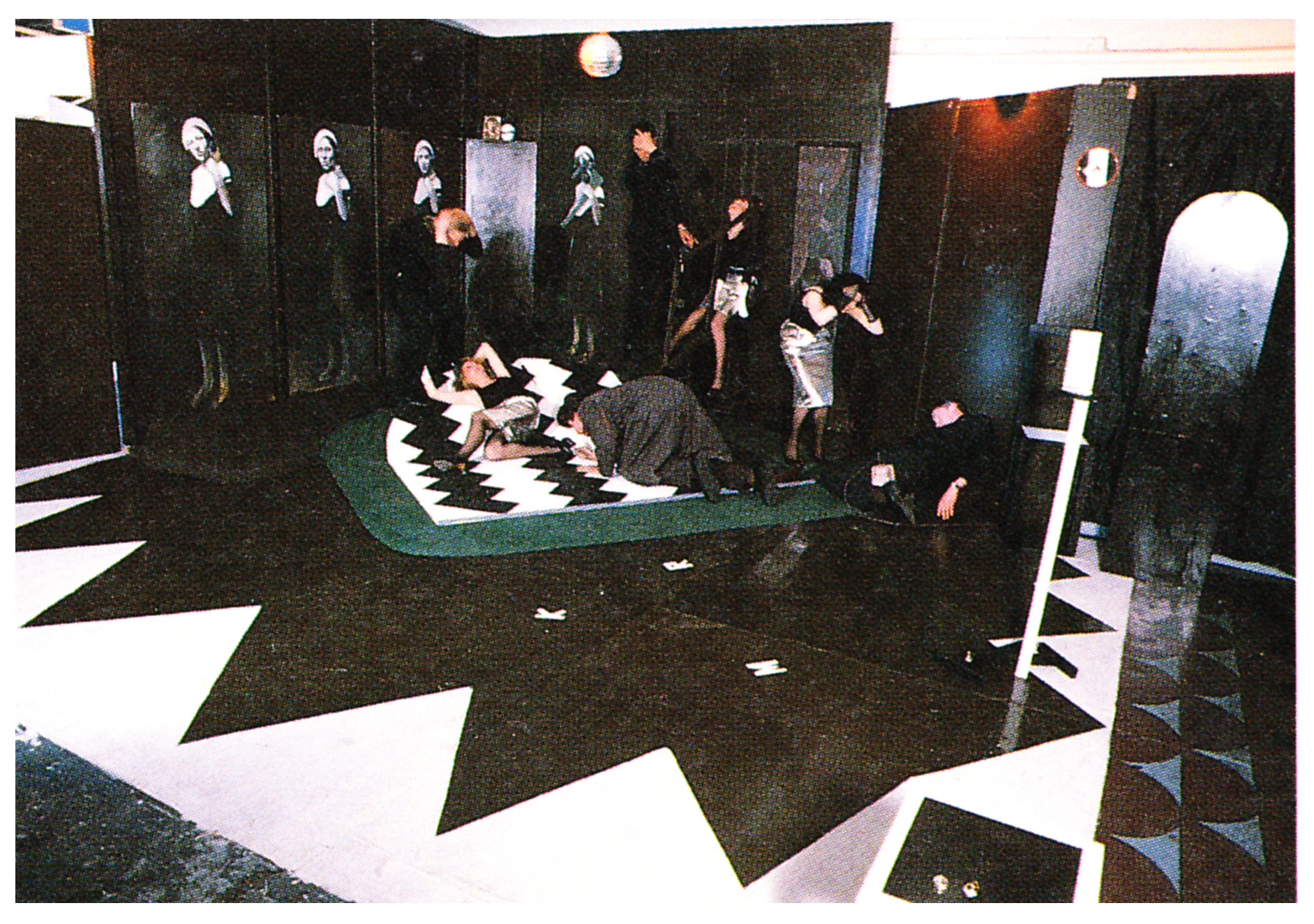
Steven Campbell, Poised Murder

Since his time at the Glasgow School of Art, Campbell was deeply fascinated by the figure. One of the first ways he approached this, was through performance. Above is a photograph taken in 1981 of a performance called Poised Murder, in which Campbell created an artificial and stylized environment, based on the glamorous aesthetic of black and white Hollywood movies in the nineteen thirties and forties [3]. The actors in the performance dressed in clothes of this era: the men wearing black polo necks, medallions and Brylcreem in their hair; the women in silver skirts, fishnet tights and high heels. 

The performance lasted 15 minutes, and the actors adopted murderous poses in time with music. In the middle of the scene, a detective crawled around on all fours, trying to solve the murders as they were taking place. You can see here that Campbell was interested in fiction, in theatrical actions and gestures – in danger and murder – and in creating characters that attempted to solve, often completely unsolvable, mysteries.

This interest in performance and theatricality continued on into Campbell’s paintings: his work becoming a stage where characters could inhabit an unreal world of painted scenery. As in his ‘Poised Murder’ performance, the figures that populate Campbell’s paintings adopt exaggerate poses, fixed in the centre of compositions that have their own mysterious, bizarre and self-contained narratives.

The detective crawling around on all fours in Poised Murder, transformed into other characters that he would use in his paintings: characters that are detectives, hikers, hunters and travellers, and are comparable to artists in the sense that they’re always searching or hunting for something, attempting to discover and unravel some sort of truth. Campbell liked to explore the role of the artist as detective, but like the detective in Poised Murder – crawling pointlessly around searching for clues and uncovering nothing while murders take place all around him – Campbell was very much aware of the often ridiculous, comedic and futile nature of such a grand search for truth. The predicaments his characters find themselves in in his work, reflects this.

Steven Campbell, Third Fire Today

During his final year at the Glasgow School of Art, Campbell created a character called ‘Hunt’, inspired by a 1940s-style murder magazine [4]. Hunt is a very shady, ambiguous character, whose personality seems to be in a constant state of flux. The painting Third Fire Today shows Hunt standing on the edge of looting and violence, and we’re unsure whether he’s been participating or not. He’s dressed in a brown shirt – the uniform of a Nazi foot soldier. He’s also got a Hitler-style haircut, and we’re unsure what terrible crimes he may or may not have committed. 

Hunt, as a character, seems to represent the temptation of evil. The writer Duncan Macmillan describes him as a sort of Doppelganger, ‘a personification of the hidden dark side that exists in all of us’ [5]. Hunt isn’t entirely evil, however, and he’s not a straightforward villain: he’s just a very impressionable character who gets drawn into bad things. In this sense, this makes him far easier to relate to. Hunt makes us consider what we’d be capable of in certain circumstances, and the potential for wrongdoing that exists in all of us. 
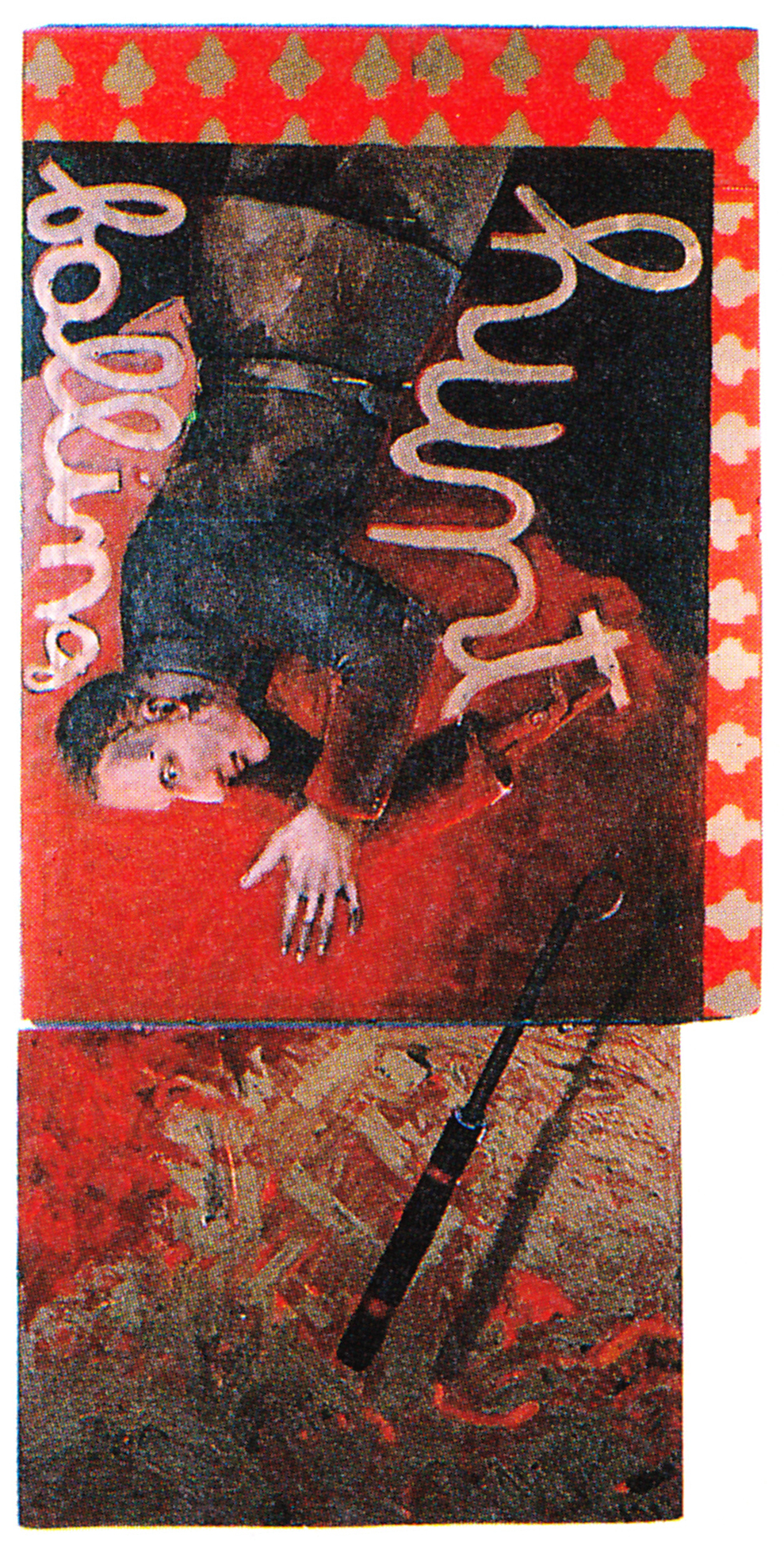
Steven Campbell, Hunt Falling

The above painting is called Hunt Falling. Falling is an in between state: you’re neither up nor down – and in a sense Hunt is always suspended like this, between good and evil. According to Campbell, Hunt got drawn into Nazi-ism because he was misguided, and his ‘Fall’ is his moral despair when he realizes, too late, his mistake.

Campbell was interested in this ‘in-between’ state in all of us, in our constant crisis of identity, and liked to explore the idea that art itself is a sort of in-between state: a state of flux between ourselves and our own interpretation of the world around us; and falling is like inspiration, stumbling forward into the unknown.
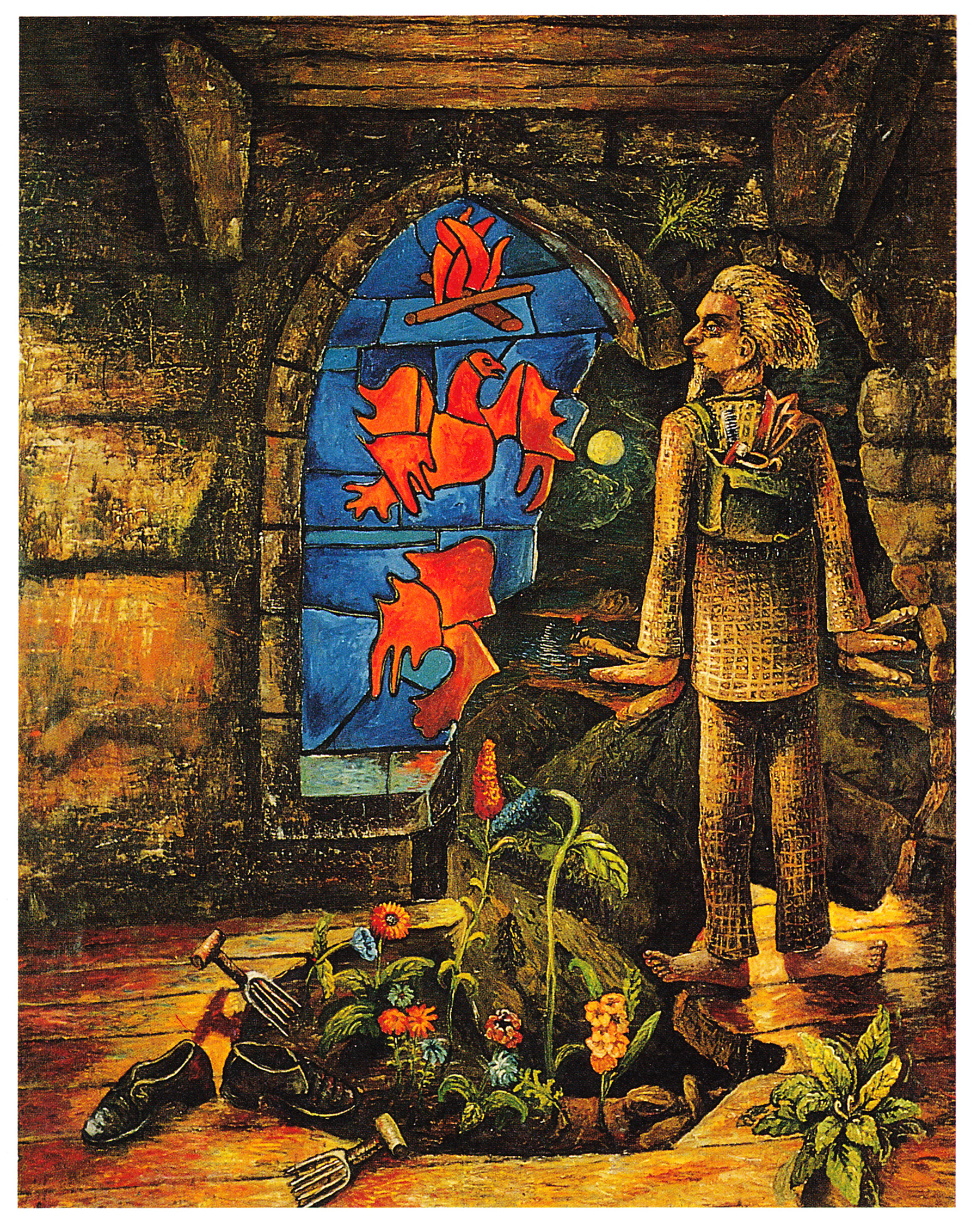
Steven Campbell, Flapping like an Aspen

Hunt then transformed into various other characters in Campbell’s later work. When he left art school, Campbell’s paintings began to feature Abraham Van Helsing, from Bram Stoker’s Dracula.

The above painting shows Van Helsing inhabiting a dark, gothic crypt with a stained-glass window behind him, and like Hunt, we’re not entirely sure what Van Helsing’s intentions are. He’s suspended somewhere between the darkness of the crypt, and the light of the window, and though there are flowers sprouting from the ground, we know a corpse might be buried beneath them. As the writer Duncan MacMillan says in his book on Campbell, Van Helsing’s engaged in the pursuit of the strange and bizarre, attempting to pin it down with a stake through its heart [6], just like an artist trying to discover the illusive goals of painting. Van Helsing haunts dark places, and like many artists, is obsessed with the ‘Undead’ – or, to put it another way – the history of ‘great’ painting.

The Trust hopes you’ve enjoyed finding out a little more about the intriguing cast of characters that inhabit Steven Campbell’s paintings, which we’ll be exploring further in future posts.

Footnotes:

[1] -The Herald/ Published Date: 16th November 2019

Jan Patience, ‘Artist aims to stretch our understanding of the human body’

[2] – p.13/ The Paintings of Steven Campbell: The Story So Far/ by Duncan MacMillan/ Publisher: South London Gallery/ Date Published: 1993

[3] – p.12/ The Paintings of Steven Campbell: The Story So Far/ by Duncan MacMillan/ Publisher: South London Gallery/ Date Published: 1993

[4] – p.13/ The Paintings of Steven Campbell: The Story So Far/ by Duncan MacMillan/ Publisher: South London Gallery/ Date Published: 1993

[5] – p.14 / The Paintings of Steven Campbell: The Story So Far/ by Duncan MacMillan/ Publisher: South London Gallery/ Date Published: 1993

[6] – p.16 / The Paintings of Steven Campbell: The Story So Far/ by Duncan MacMillan/ Publisher: South London Gallery/ Date Published: 1993

A major source used in this blog post was The Paintings of Steven Campbell: The Story So Far/ by Duncan MacMillan/ Publisher: South London Gallery/ Date Published: 1993 (p.12-16). If you’re wanting to find out more about the work of Steven Campbell, we would highly recommend getting this Duncan MacMillan book, which looks at Campbell’s work in a great deal of depth.

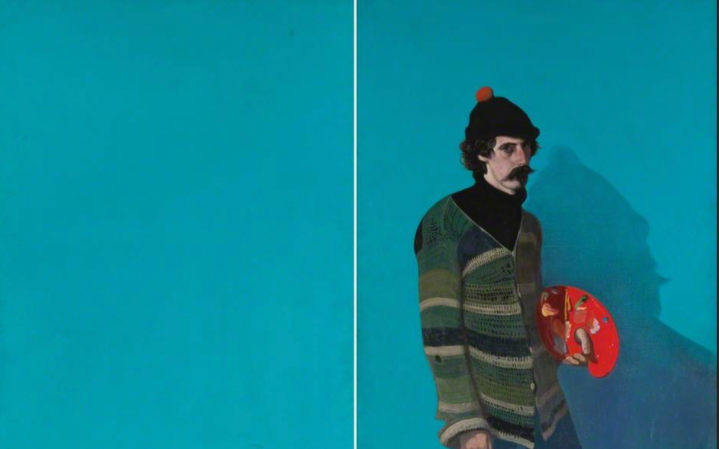
John Byrne 1940 – 2023

John Byrne 1940 – 2023

The Steven Campbell Trust has been deeply saddened to learn of the passing of John Byrne. John was a hugely talented and celebrated artist and friend, who we were privileged to have as a Patron of the Trust.

A remarkable man of many talents, we’ve been privileged to know and work with him for over 20 years. 

Steven greatly admired John’s work and was delighted to collaborate with him. In 2005 Steven met and became friends with John and they worked on portraits of each other.

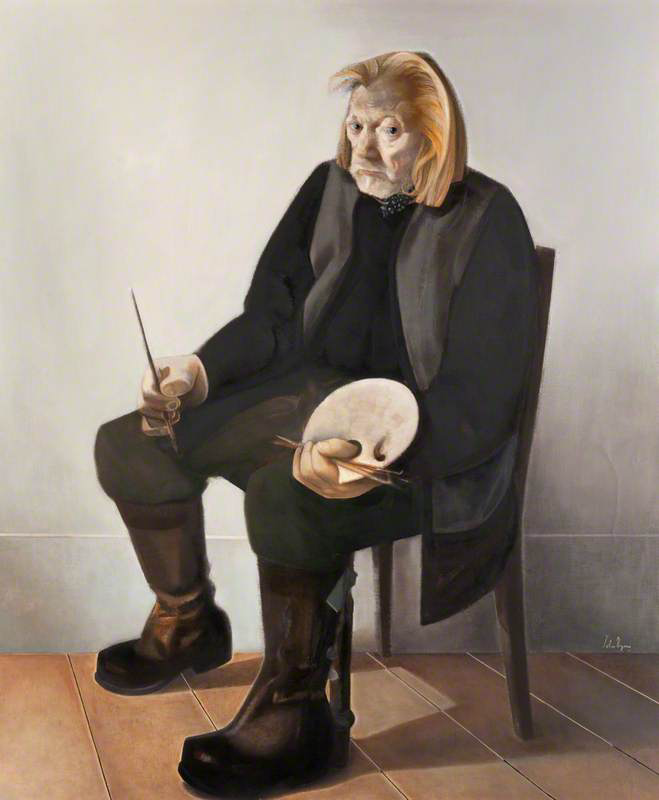
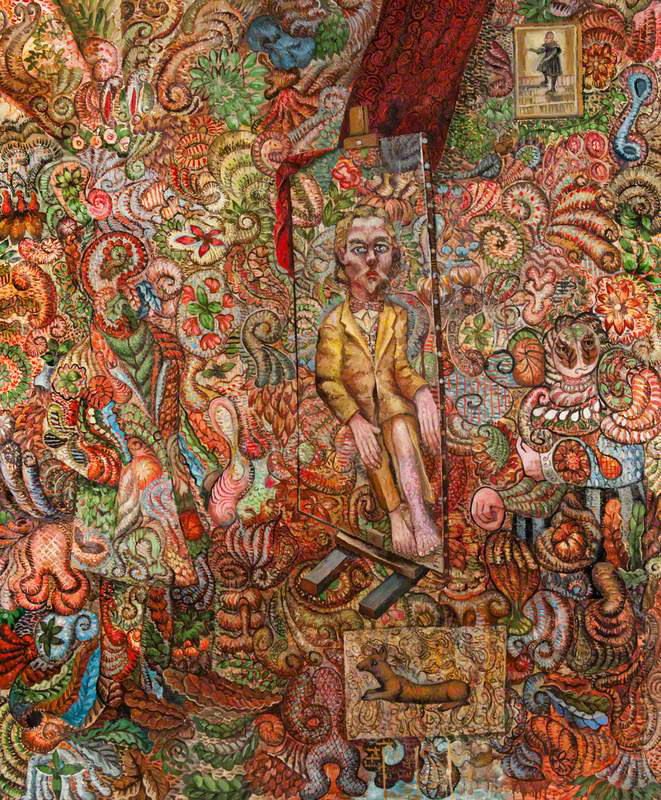
John’s life-sized painting depicts Steven as a looming solitary figure in black, seated and holding a palette and brushes. Steven’s portrait of John, Paisleycus Byrnicus Virus Invading Mr Gray, sees John at the centre of a rich Paisley pattern work, which makes reference to John’s birthplace. Both paintings are in the collection of Paisley Museum.

Our thoughts and love are with Jeanine & all who loved this wonderful man. His loss will be deeply felt by all.

The Steven Campbell Trust.

The Artist Steven Campbell

© John Byrne. All Rights Reserved, DACS 2023. Photo credit: Paisley Museum and Art Galleries, Renfrewshire Council Collections

Waiting – Paisleycus Byrnicus Virus Invading Mr Gray

https://artuk.org/discover/artworks/waiting-paisleycus-byrnicus-virus-invading-mr-gray-189935

Photo credit: Paisley Museum and Art Galleries, Renfrewshire Council Collections

Featured image, Self Portrait with Red Palette. © John Byrne. All Rights Reserved, DACS 2023. Photo credit: Glasgow Life Museums

Dressing Above Your Station

Dressing Above Your Station

31 March – 26 June 2022

Dressing Above Your Station is a virtual exhibition conceived and curated by Beca Lipscombe and Mairi MacKenzie. It is produced by Panel and developed in partnership with ISODESIGN and Rob Kennedy. 

Dressing Above Your Station is generously funded by Creative Scotland and Glasgow Life, the charity that delivers culture and sport in the city. It is supported by ISODESIGN and The Glasgow School of Art and presented by Tramway, part of Glasgow Life.

https://www.wearepanel.co.uk/projects/dressing-above-your-station

Steven Campbell Calendar, November & December 2021

November: 1992 Acrylic on Paper 178×149.2 cm
Pinocchio, The Habit of the Shrike 

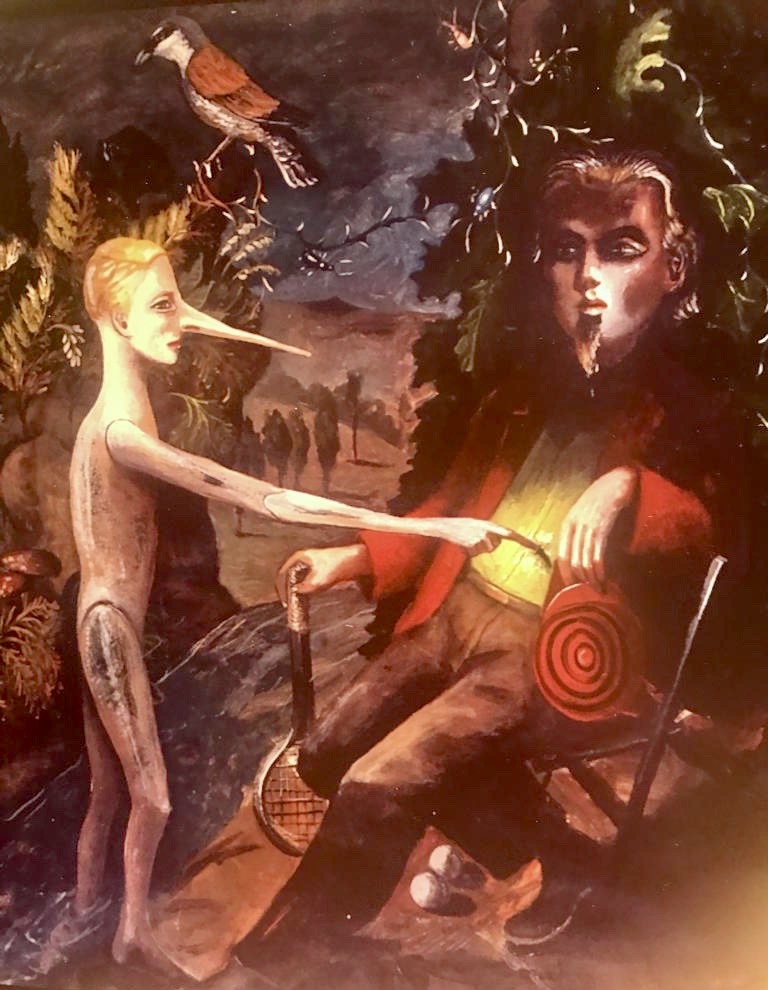
Pinocchio, The Habit of the Shrike, 1992 Acrylic on Paper, 178 x149.2 cm


The following extract is from the Catalogue essay by Michael Bracewell that accompanied Steven’s 2017 exhibition at Marlborough London.

‘For so often the young men in Campbell’s paintings, absorbed, swept along or subjugated by weird scenes, reminiscent of fairy tale or myth, but then skewed into absurdity, seem despite themselves to be (and are sometimes confirmed to be, in the titles of the pictures) seekers-after-truth, of one sort or another. They might be poets, amateur philosophers, witness participants in a dysfunctional’Pilgrims Progress’ – or perhaps just observers of these pursuits: chance bystanders, local boys, who had somehow become amnesiac victims, or protagonists in some cosmic game of ‘Cluedo’.

Murder mystery becomes art mystery, becomes “the myth of themselves” that Hynes identifies in his definition of the ‘charade’. Pinocchio, the Habit of the Shrike (1990) depicts a dark landscape with fir trees, a stream, toadstools at the foot of some rocks; and a figure that resembles Campbell himself, his face and upper body in semi shadow, casually yet ritualistically seated on a folded chair, his right hand resting on the handle of an upended tennis racket. A handsomely feathered shrike ( a bird that impales insects and small vertebrates on thorns or spikes, in order to tear them into more manageable pieces) perched on a briar. Meanwhile a gold haired Pinocchio figure, painted limbs scuffed and worn, his ‘liar’s’ nose  obscenely and viciously extended to a sharp point, reaches out his long right arm, and impales the seated figure’s stomach with his thin, pointed finger.’       – Michael Bracewell

Steven has revisited his depiction of Lytton Strachey complete with cricket cap only this time he puts himself, as artist, into the central role.
He has created the Pinocchio wooden boy who is resentful at the artists lack of ability to transform him completely into a physical reality. 

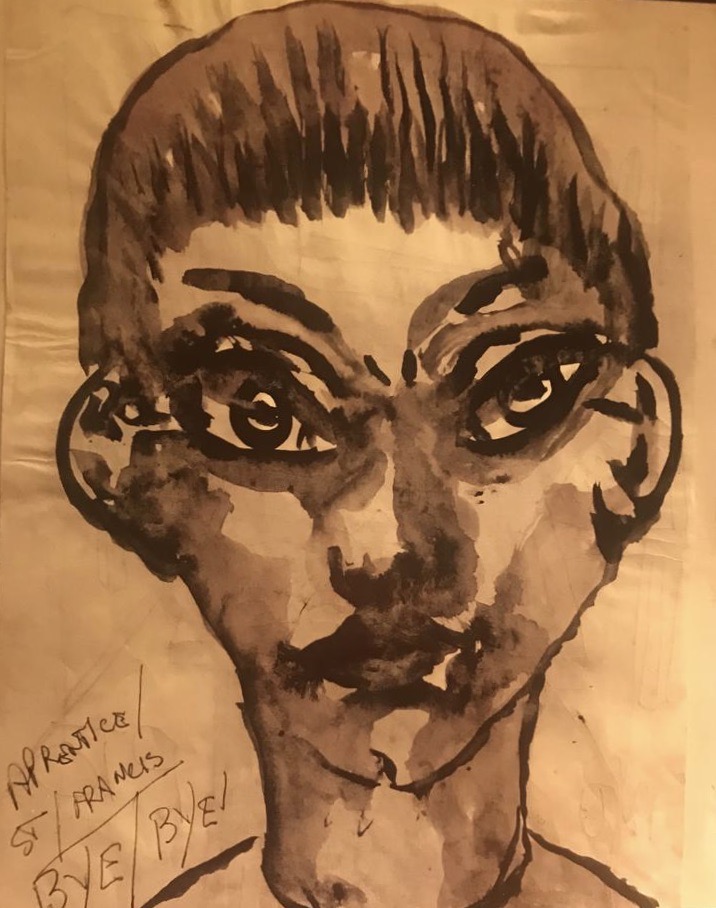
December: A4 size drawing
Ink on paper from a series of drawings and prints Steven did based on a merging of the life of St Francis of Assisi with the legend of the Apprentice pillar at Rosslyn Chapel.

Steven was not particularly religious but he was extremely spiritual and dearly loved St Francis and everything he represented.
We would make annual pilgrimages to the Church in Assisi which houses the amazing Giotto frescoes of the life of the Saint. I remember he even volunteered to travel out to help in the aftermath of the earthquake that caused such damage to the town and the church.


He also brought along a young Franciscan friar to talk at the creative arts project (9 V) that he had set up to encourage the teenagers of the 9 rural villages around Stirling to get involved in various cultural activities from life drawing to script writing, film directing, music etc. It still resonates today with the young people who attended it all those years ago. Several of whom went on to careers in the arts. 

Carol Campell

December 2021

STEVEN CAMPBELL CALENDAR, AUGUST

STEVEN CAMPBELL CALENDAR, AUGUST

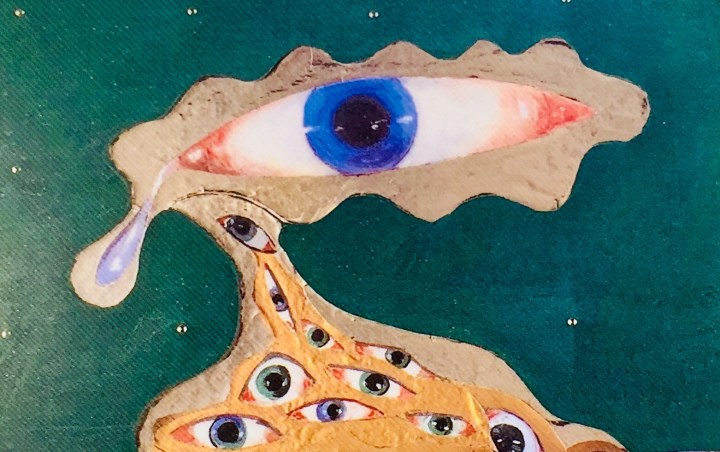
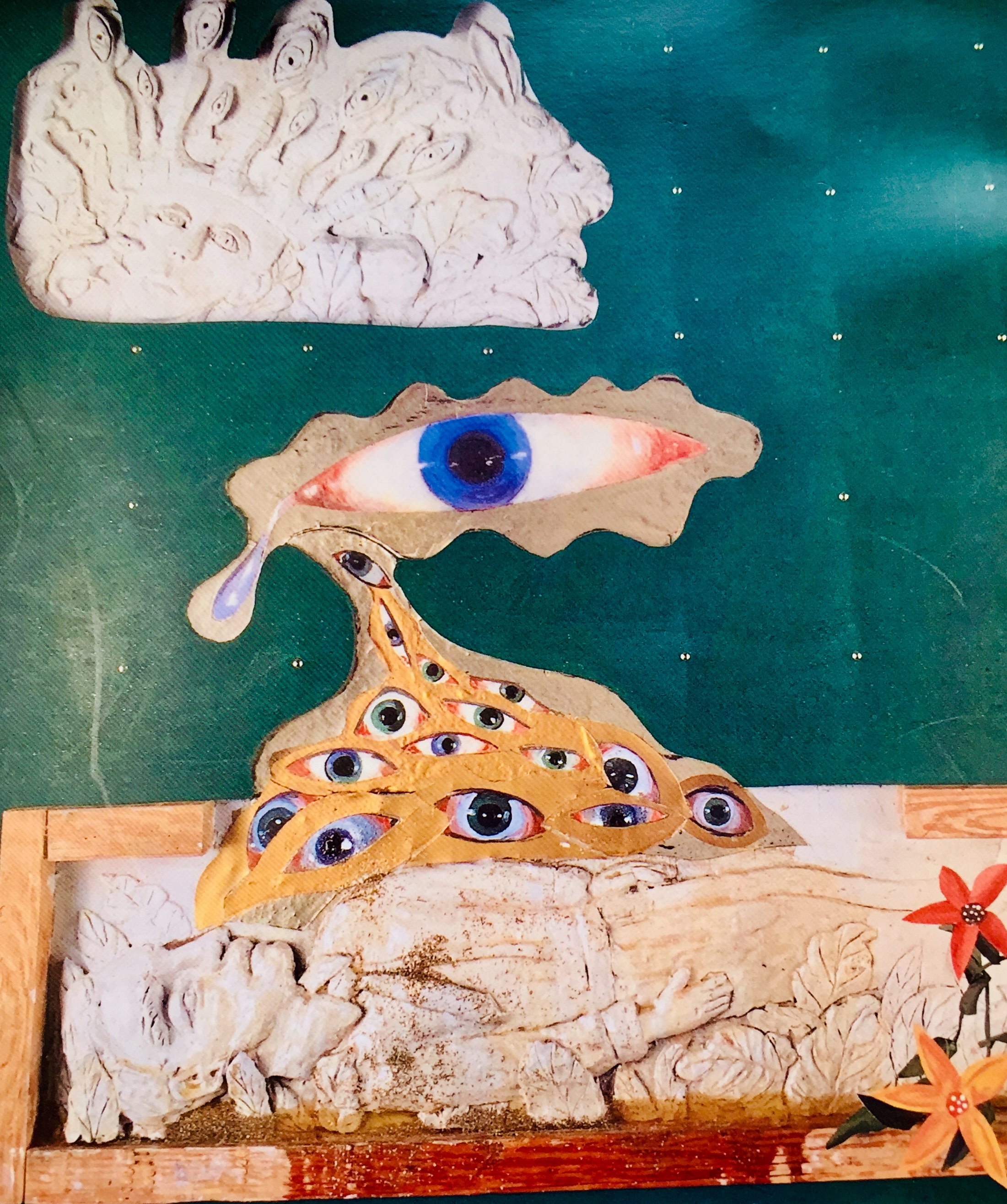
Harry to Heaven
Mixed media 1995

Harry to Heaven, Mixed media 1995

This piece was created for an exhibition called ‘Chesterfield Dreams’ at the Pier Arts Centre in Orkney in the Spring of 1996.
Steven had moved away from painting at this time and had found a new fascination in working with clay, found objects, velvet and leather fabrics and a resin called (if I remember correctly) Crystal Sheen, an epoxy coating that he used on several works and continued to use even when he returned to painting. You can see how he used it in a similar way to decorate the jewel like eyes on the crown in the  portrait of Joan Sutherland, a commission for the Glasgow Concert Hall.


Steven had been struggling with his own mental health issues for a number of years and had fallen out of the public gaze but he continued to work every day. As he said himself: ‘I have an impossibility not to work’ . . . listen to Stark Talk interview 2006: https://www.bbc.co.uk/sounds/play/p090x8hv


He was, as ever, endlessly reading, watching movies, listening to music and making his own crazy Campbell mix in his head. Alfred Hitchcock was a great favourite at this time, hence the title of the piece Harry to Heaven, the Harry referred to being the eponymous character from the movie The Trouble with Harry a black comedy from 1955, where a dead body is found and while no one in the hamlet really minds they all come up with theories as to how they are responsible.


I always feel it’s better to allow Steven to speak for himself whenever possible so the following is taken again from the Stark Talk radio interview in which he gives  his own opinion of his mental health at the time and his thoughts on the exhibition at the Pier.

STEVEN: You still have this other thing you know, of the pointlessness of it all. All these stupid questions of existence and everything. The constant echoes that go on in my mind all the time, it’s like constantly saying this, what’s the reason? Why? Why? Why? No reason! No reason! The impossibility of it all.

EDI: Well between 1993 and 2002,  that was the time between two big shows at The Talbot Rice Gallery


STEVEN: Jesus years! Why is it always 7?


EDI: That’s nine, that’s nine 


STEVEN: Is it 9? I thought it was 7…. I had one up in Orkney


EDI: Chesterfield Dreams


STEVEN: I loved that show! I mean who’d think of it, the back of a couch a sofa then cut a strange shape in it and then put in a white plaster sculpture inside it as if the chair itself is dreaming.

And that last sentence sums up for me everything I continue to miss from my life. The poetry of a mind that can see the dream where the rest of us only see the chair. 


STEVEN CAMPBELL 19/3/1953 – 15/8/2007

Carol Campbell

STEVEN CAMPBELL CALENDAR, JULY

STEVEN CAMPBELL CALENDAR, JULY

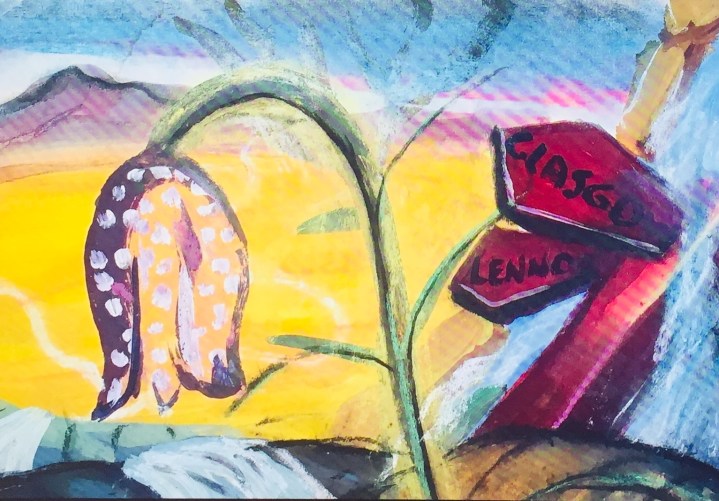
2 Preparatory sketches for ‘The Golden City’

A commission from the BAA Art programme 

Gouache on paper 1994 

In May 1994, the worlds largest commercial operator of airports, BAA plc, launched a different type of programme – an art programme – to enhance passenger, staff and business partner experience of all its airport environments and develop an art collection of national merit.

“I want to emphasise the importance of first impressions and the need to give our visitors a strong sense of Britain’s energy as soon as they arrive. That could be done if we used our airports, train links and ports as opportunities to give a fresh impression. BAA is determined to champion British artists at its airports.”

Tony Blair, Prime Minister.

Steven was approached to come up with an idea for a large painting for Glasgow Airport and the following is his own description as it appeared in the catalogue for BAA art programme: Art at the Airports.

“This painting is made up of three views of the City of Glasgow: the Clyde Estuary; the view from the countryside; a view from the University Tower.

The symbolism of the painting centres around the story of the emblem of Glasgow. It also takes account of St Mungo’s stories, trying to give history a vision. I’ve aimed to get the balance between nature and the city; the ‘Dear Green Place’, idea. 

It’s been tempting to add something dramatic, but it would have been the wrong thing to do for the location. It’s not the place to be dark and moody. No way. I want people to be uplifted; invigorated. I love Glasgow!”

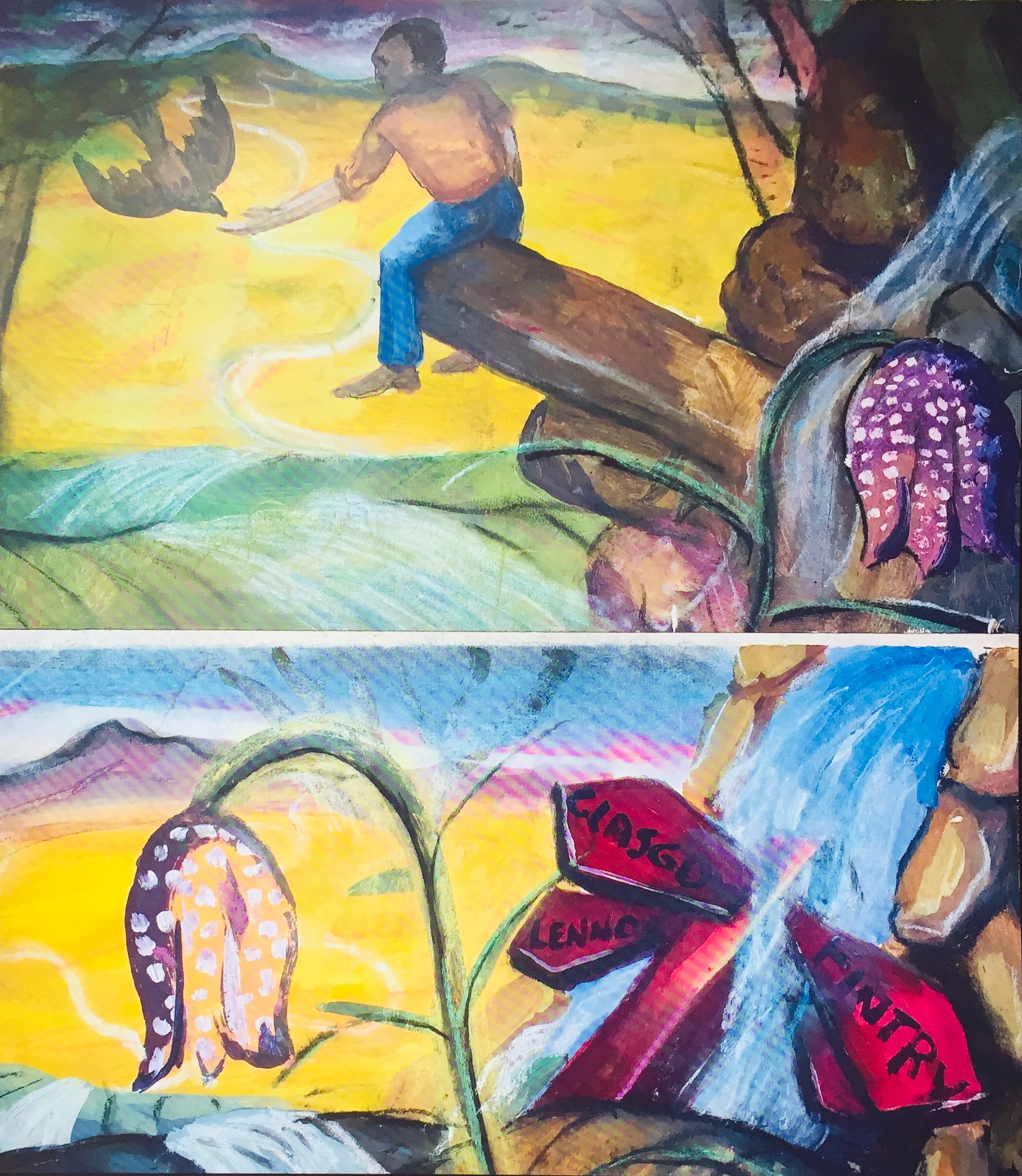
The two sketches shown here both feature fritillaries which are a nod to Mackintosh but also to the fact that they grew wild in the ground surrounding our farmhouse in the Fintry hills. The signpost was a leitmotif in Steven’s earlier work based around his invented character Hunt and often depicted Oxford to Salisbury, but in this case shows directions to areas surrounding our then home.  The background hills are the view that Steven often painted and form part of the vista that can be seen from our Kippen home. 

Carol Campbell

July 2021

Steven Campbell Calendar, May and June

May 2021

Oil on Canvas 2001

Green Man at the Crossroads

Over the years Steven was constantly researching new material. He could be inspired by a building, a view, an article he read, remembrances of times past, like us all, his mind was a sum of many parts. 

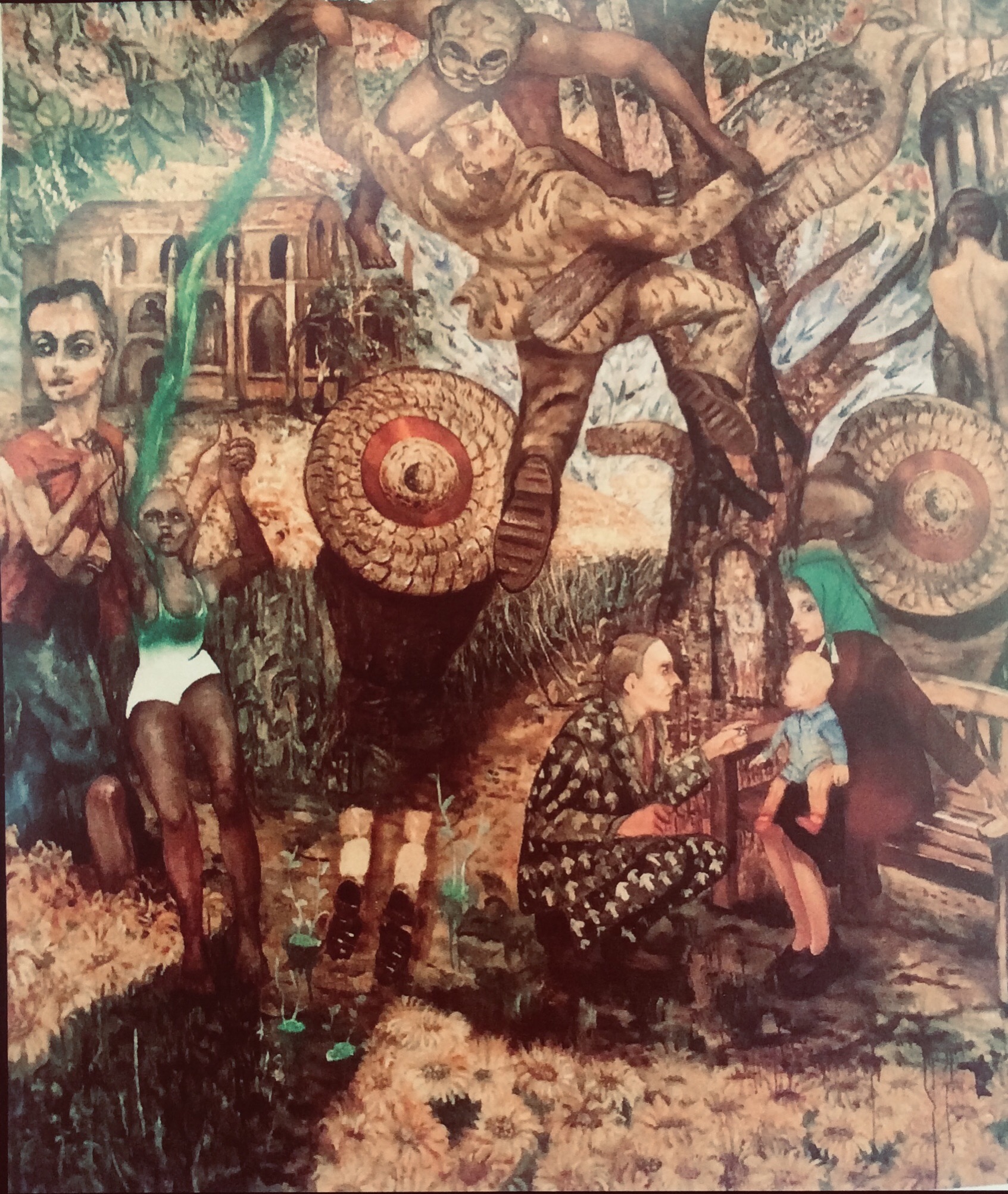
This particular image was made from just such a combination. The building top left is Rosslyn Chapel. He had been told of the existence of Rosslyn by his good friend the photographer Ron O’Donnell who took us there on a visit. From that point on he was captivated not only by the building, it’s extraordinary carvings with their hidden messages but by the story of the Apprentice Column. N

The story of the murder of the apprentice by his master was to feature in several works over the next few years. (Look top right to see the column and the apprentice.)

Moving across to the central figures we can see the Green Man in conflict with a falling figure dressed in a quasi prison suit of arrows. The Green Man is believed to symbolise the circle of life, death and rebirth. He is a pagan symbol that heralds Spring after a long winter and the renewal of lush vegetation such as can be seen in the mid ground and foreground of the painting.

I was listening to my good friend Edi Stark’s podcast with Steven and he talks about the crucifix in terms of composition and I now can see so often how he employs it in his work, as he does here.

‘The reason they did so many crucifixions in the Renaissance was nothing to do with the fact they were getting paid for it, it’s cause it’s the best thing you can use for a sense of composition in a painting. As soon as you’ve got a crucifix in a painting you’re on a winner right away. Cause you get that angle shot in there from the right, Jesus is hanging up the top so you get a tree coming in from the left and then low down  you have an opposite side and then you have something heavy down to the bottom to show the weight of the cross and all the rest of it but you always had the cross to start with . . . whereas I don’t!’

Easy to see all of that being employed here. The two round straw targets are the pmersonal experience . . . memory of the NY subway tragedy (mentioned in previous entries) where Steven witnessed a young black man with the bottom part of his legs missing after a failed suicide attempt. To the left we have the figure of the young woman being raised from the ground by the power of the Green Man, a symbolic birth of Spring while the group to the right with the child represents the 3 ages of man/woman.

Carol Campbell

May 2021

-——————————————————————————

June 2021

The Family of the Accidental Angel

Collage on Canvas 1991

174 x 121.5 cm

This collage was exhibited as part of the LOVE exhibition curated by Lynsey Young for Tramway.

The notes in the paperback which accompanied the exhibition read as follows: 

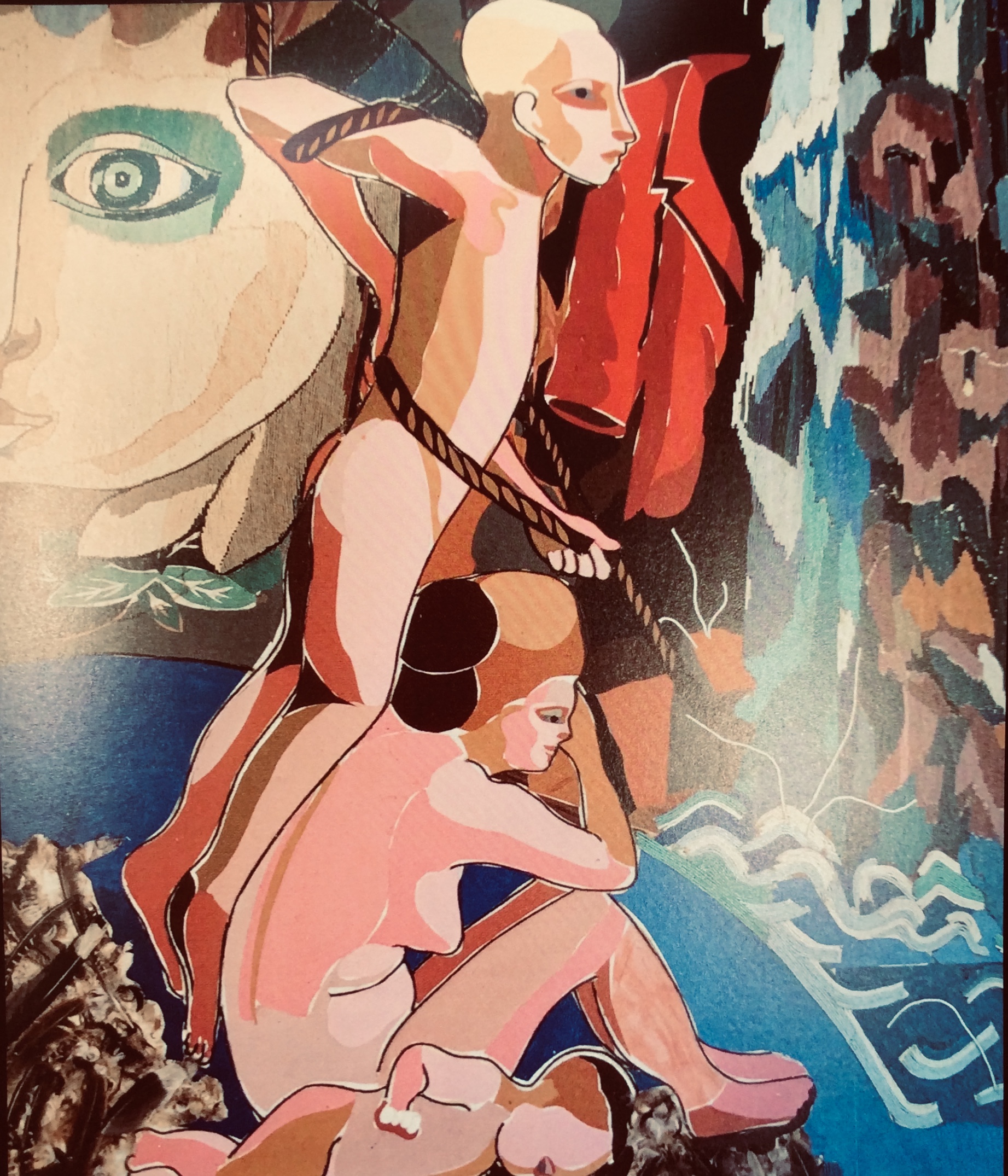
‘These large scale, predominantly two dimensional collages were each made over a period of weeks and months. Campbell worked on them relentlessly, going out of his way to make the process as labour intensive as possible and working instinctively with his materials which included feathers, found paper, textiles and tapestry kits that he completed himself.’

At this time we lived in a remote farmhouse where family life centred around our kitchen which was warmed by an ancient sky blue AGA. It doubled as our ‘tumble dryer’ as we would never have had such a modern piece of equipment, preferring always a good old fashioned pulley which I still swear by to this day. 

The area above the AGA had 3 thin poles secured to the wall with wooden batons so it was quickly commandeered by Steven as the ideal way to dry the painted string he would plan to use the following day. 

As was mentioned in the essay, this method of working was laborious and time consuming but that in itself was the key to his desire to make the process such an important part. The ritualistic nature soothed his mind in the same way that shell shocked WW1 veterans would create wonderful models from matchsticks. 

Instead of gluing the string directly onto the canvas and then painting on top, he would work out his colour palette for the area to be worked on and cut metre length pieces of string which would be individually painted and set to dry across the poles ready to be used the following day.

If you study the area, top left, which becomes the wing and the figure emerging/retreating from the waterfall you get some idea of the complexity and labour intensity of the task. The wing itself is akin to that of a butterfly alighting on a sun kissed rock to rest and it is the visual trick of the eye which seems to see it form an attachment with the figure giving him at once, in that moment of perception, the appearance of an Angel with the mother and child being akin to the Holy Family.

The figure in the waterfall referenced an old legend in the area where we lived that at the time of the Rising in 1745 some prominent Jacobites had hidden behind the waterfall ( close to our house) when being pursued by the English soldiers. Most likely untrue but romantic nonetheless and it was fun for our children to try it out. 

The following is again a quote from Lynsey Young’s writing for the exhibition:

‘The work progressed slowly and painstakingly at the kitchen table, amid the rhythms of family life, the resulting works are testament to Campbell’s modest needs, his restless imagination and his experimental nature but, above all, to his sensitivity to the world around him.

As he said himself, ‘I’m in art for the romance, the beauty of it.’

Carol Campbell

June 2021

Steven Campbell Calendar, April

Steven Campbell Calendar, April

No Title from the Extreme Sports Series
Oil on Canvas 
234 x 226cm

The paintings in this short series were completed or not (final piece still on wall in his studio) in the months leading up to Steven’s death, hence the fact that they remain untitled except for the overarching series name of Extreme Sports, which was what Steven had called them when describing the ideas to me.


It seems such a simple idea but at the same time so left field and such an insight into the workings of his mind, to take innocuous pastimes and by a shift in positioning, or an addition, completely turn the world upside down.


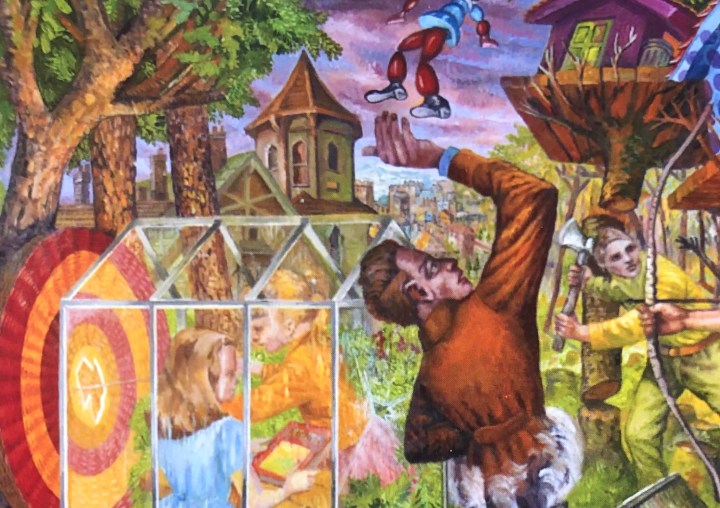
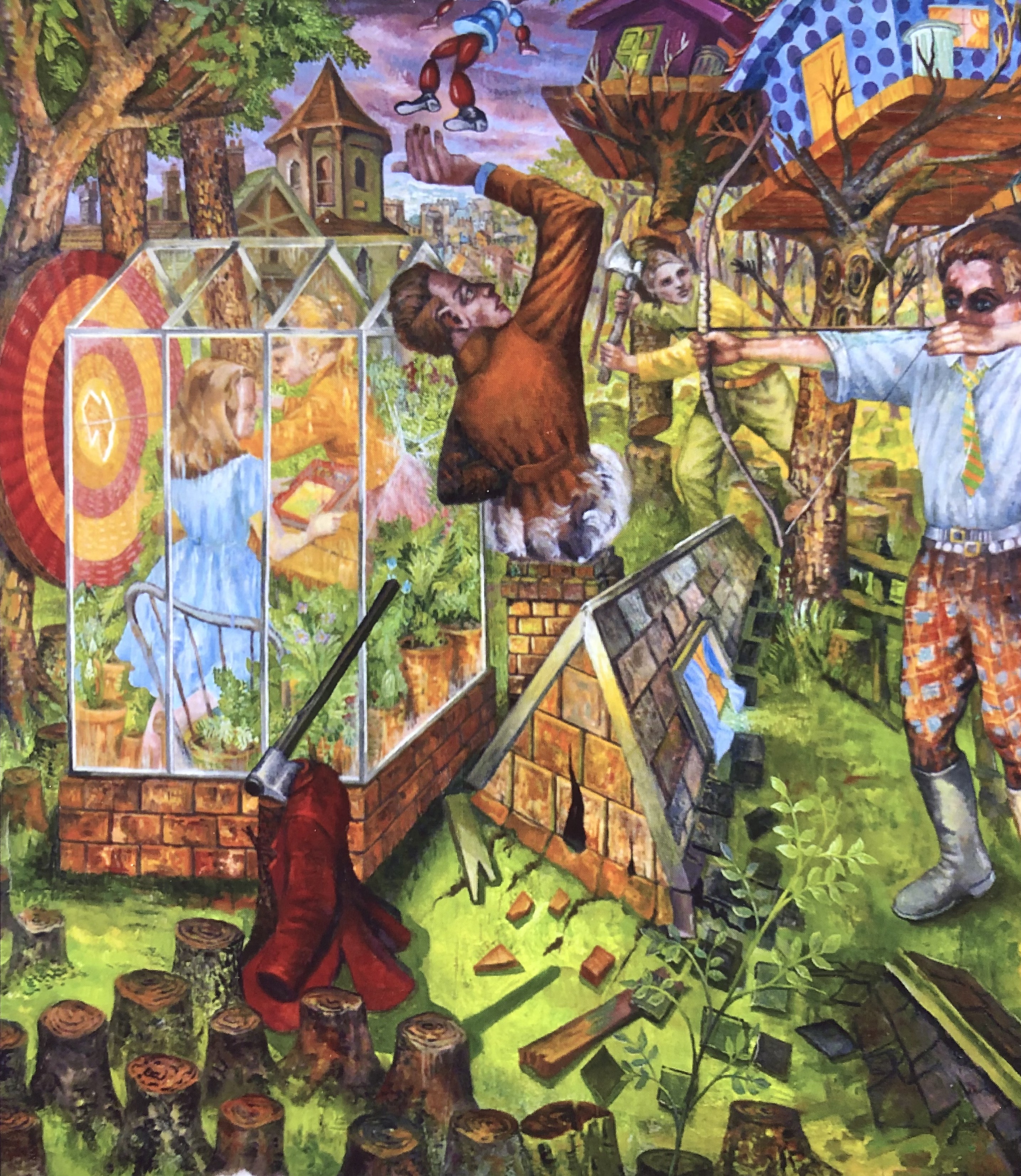
Here the two activities of gardening, a safe and homely pastime and archery, more dangerous it’s true but in a very disciplined way, combine to bring real threat. The little girls in their greenhouse remain blissfully unaware of the looming danger from the archer aiming for his target placed directly behind them. There is no certainty of the outcome one way or the other, but it has the frisson of danger which give rise to the series title.


Their protection lies in the figure emerging from the chimney seemingly harmless, but look again to see what he is reaching for above his head, a wooden puppet figure of Pinocchio – is he throwing it to save it from the smoke emerging from the chimney, with its implication of fire, or trying to grab hold, to draw it downwards to destruction, so the viewer decides is it to protect or destroy?


Similarly, the woodsman continues to cut the trees around them down . . . to fashion more Pinocchios? or to decimate the treehouses? an acknowledgment of the circular nature of our world and the recklessness of such easy unthinking destruction.


The background, top left, is, as ever a mix of Scottish and Italian buildings but the hills are those he painted most frequently being the ones he would see daily from our woodland home.  The figure of the archer on the right is dressed in his tartan trews and motorcycle boots, although he never owned a motorcycle and is a direct representation of Steven (a thank you here to Beca Lipscombe and Mairi MacKenzie for making me look with fresh eyes at the textiles and design elements in his paintings) and like Steven himself is dressed with two belts, both accurate depictions of his own, which he wore daily which now adorn the family ‘memory box’.

Carol Campbell

Steven Campbell Calendar, March

Steven Campbell Calendar, March

From the installation:
On Form and Fiction

Sad Dirty Little Angel
Acrylic and ink on paper
Created 1989 – 1990

This work is currently in storage at the National Gallery of Scotland having first been exhibited at The Third Eye Centre, Glasgow (currently the CCA) and most recently as part of Generation: 25 Years of Contemporary Art in Scotland.

The image I have selected is a personal favourite titled: Sad Dirty Little Angel. It is was one of the large acrylic works which rest against a backdrop of ink drawings on various subjects, which were of great interest to Steven while he was making the installation. These range from:


– The films of Tarkovsky most especially Mirror
– The architecture of Claude Nicolas Ledoux
– The writings and drawings of John Ruskin
– Cezanne’s Provençal landscape
– Chippendale furniture

Countless more associations are to be found by the viewer of the Installation, images of which can be found on the National Gallery’s website.

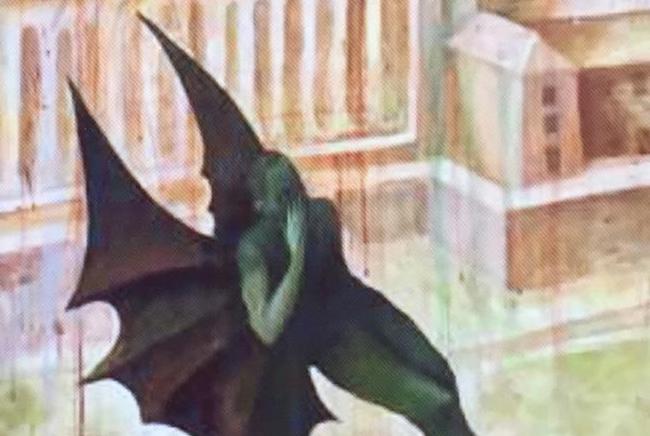
The painting shows a descending figure, more demon-like in appearance than Angel, but Steven tried to show its humanity and remorse with the hand raised to the face in a gesture of contrition while accentuating the idea of Lucifer’s fall from Heaven.

Lucifer whose name means Star of the Morning, had a high ranking position in the Angelic Host and was called ‘The Guardian Cherub’:

“So I drove you in disgrace from the Mount of God, and I expelled you, O guardian cherub, from among the fiery stones. Your heart became proud on account of your beauty, and you corrupted your wisdom because of your splendour. So I threw you to earth; I made a spectacle of you before kings” (Ezekiel 28)


The figure falls to earth in front of classical buildings drawn from influences of Ledoux’s architecture and reminiscent of renaissance Italy, a country held dear to all our hearts. 

I spoke at the beginning of my love for this image. I have always been drawn to the poetic side of Steven’s works, which in their complexity of imagery and cultural reference offer so many paths of interpretation to the viewer. For me it is the mix of longing and regret that hold great sway and touch upon what makes us human.

Carol Campbell