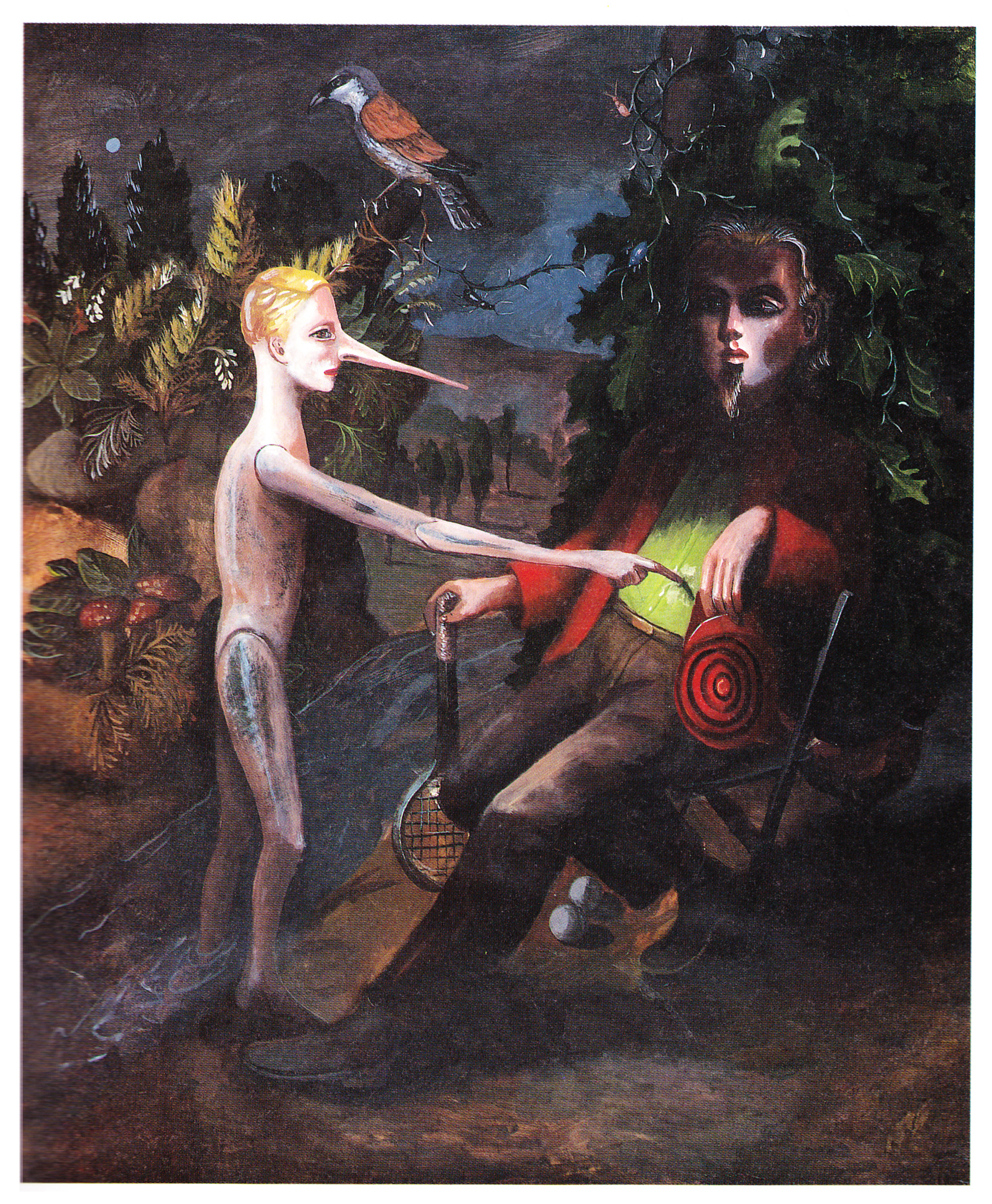
19/3/53 – 15/8/07
‘Wretched Stars Insatiable Heaven’

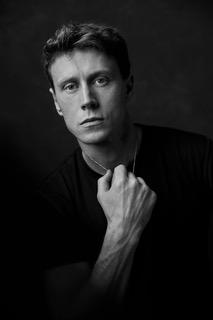
We are delighted and honoured to welcome BAFTA Award-winning actor George MacKay as the newest Patron of the Steven Campbell Trust.
A long-time admirer of Steven Campbell’s work, George’s enthusiasm for Steven’s extraordinary artistic legacy makes his support especially meaningful to the Trust. We are incredibly grateful that he has chosen to lend his name and encouragement to our work as we continue to celebrate Steven’s life, art, and enduring influence.
Speaking about his new role, George said:
‘It’s an honour to be asked to be a Patron of Steven’s Trust. I am a HUGE fan of his work, so this is a real privilege.’ ~ George MacKay
We would like to extend our sincere thanks to George for his generosity and support. His patronage will help raise awareness of the Trust and our mission to preserve and promote Steven Campbell’s artistic legacy for future generations.

The Steven Campbell Trust were delighted to attend the Directors private preview event at Glasgow School of Art on Thursday 28th May. It is always exciting visiting GSA each year to view the work of all the talented artists’ exhibiting their degree shows at the School of Fine Art. We would like to thank GSA for extending this invitation which was greatly appreciated, particularly Julia Malle, Academic Support Manager, The Glasgow School of Art.
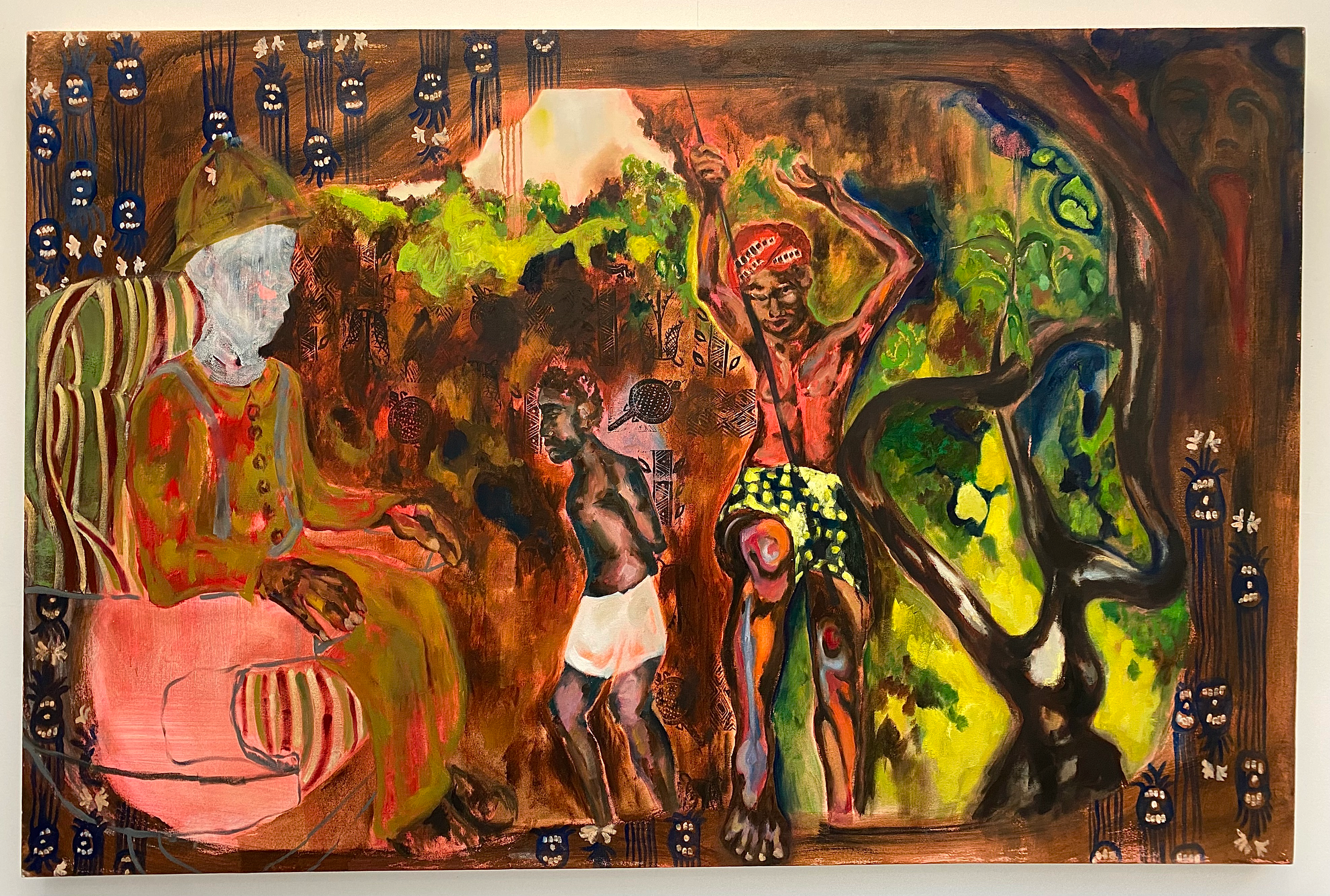
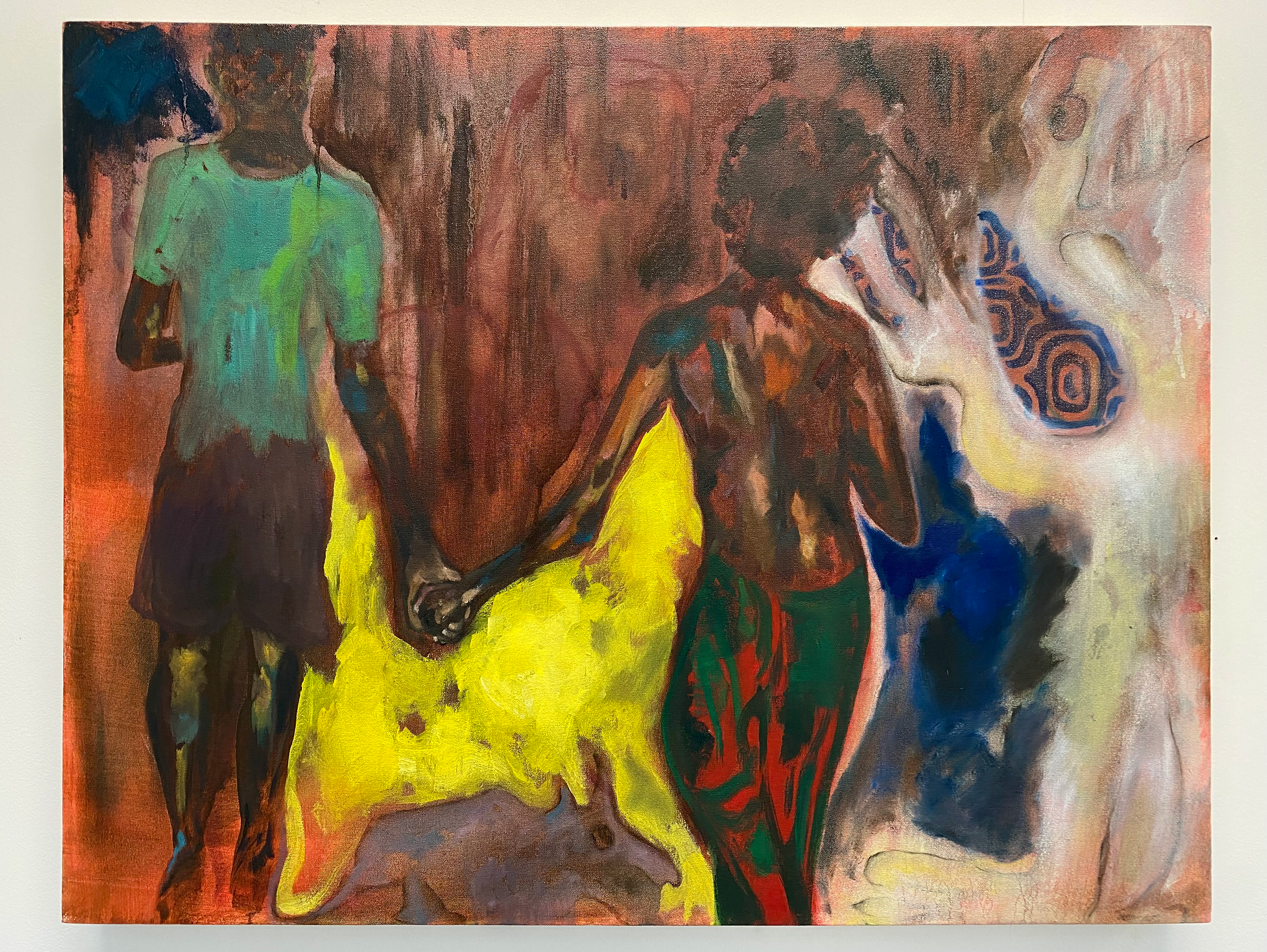
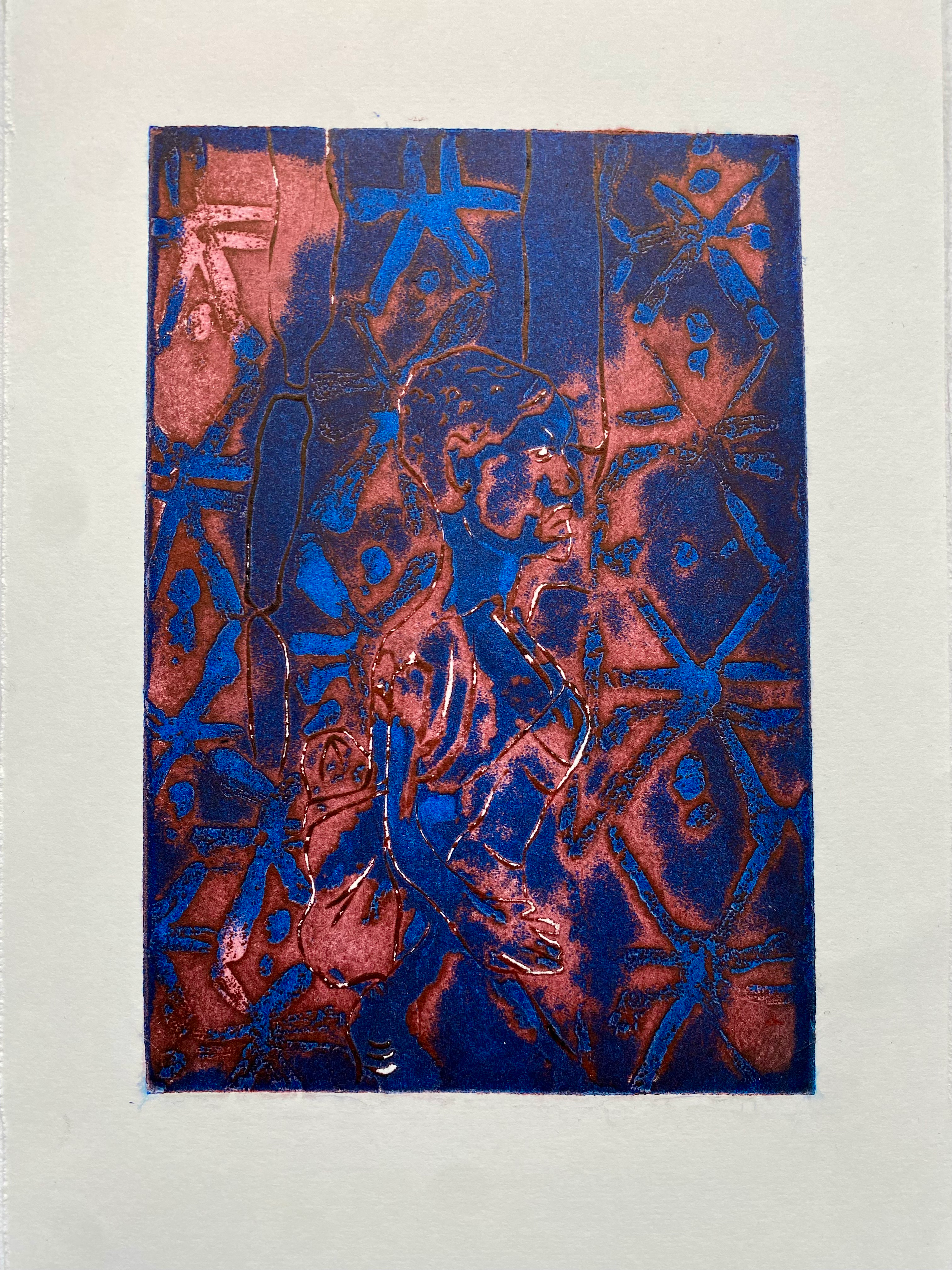
Each year we attend the Degree Show to make our annual award of The Hunt Medal, to an artist who we believe demonstrates poetic creativity in their work. After much discussion of the exciting work on show, we were unanimous in our appreciation of the work of Evie Robinson and are pleased to announce that Evie is the 2026 recipient of our Hunt Medal award. The Steven Campbell Trust would like to wish Evie much success in her future career.
Evie Robinson: Artist’s Statement
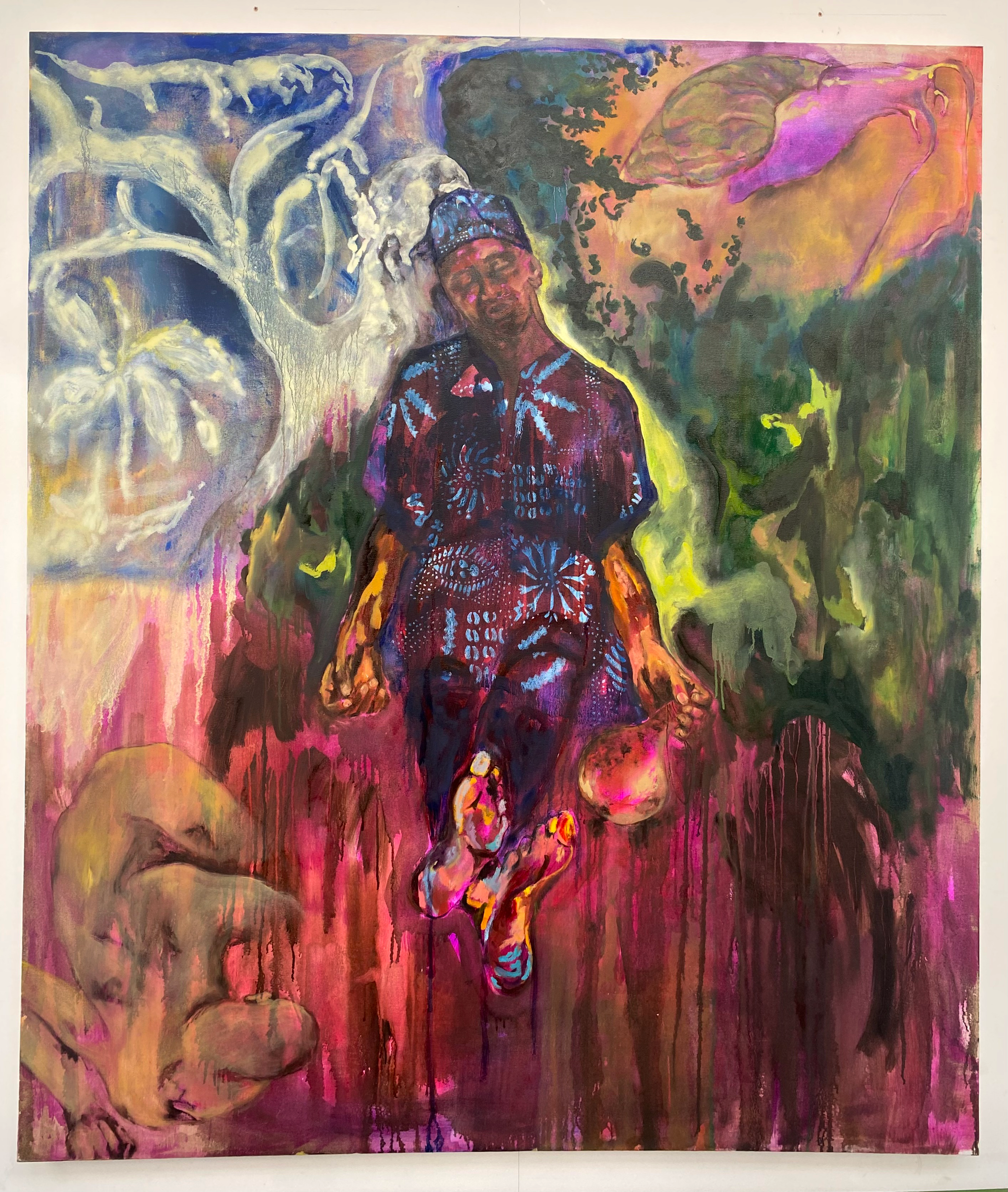
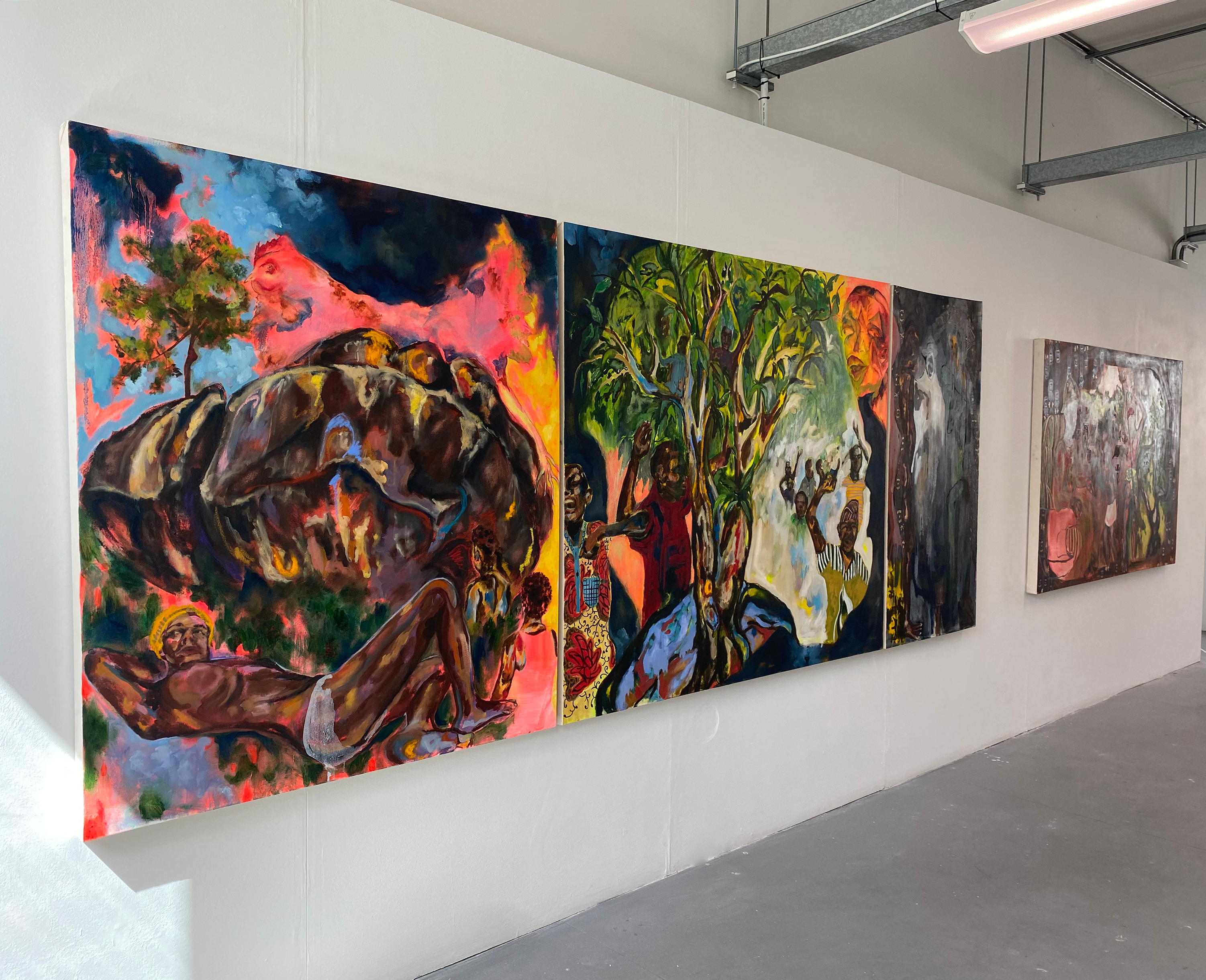
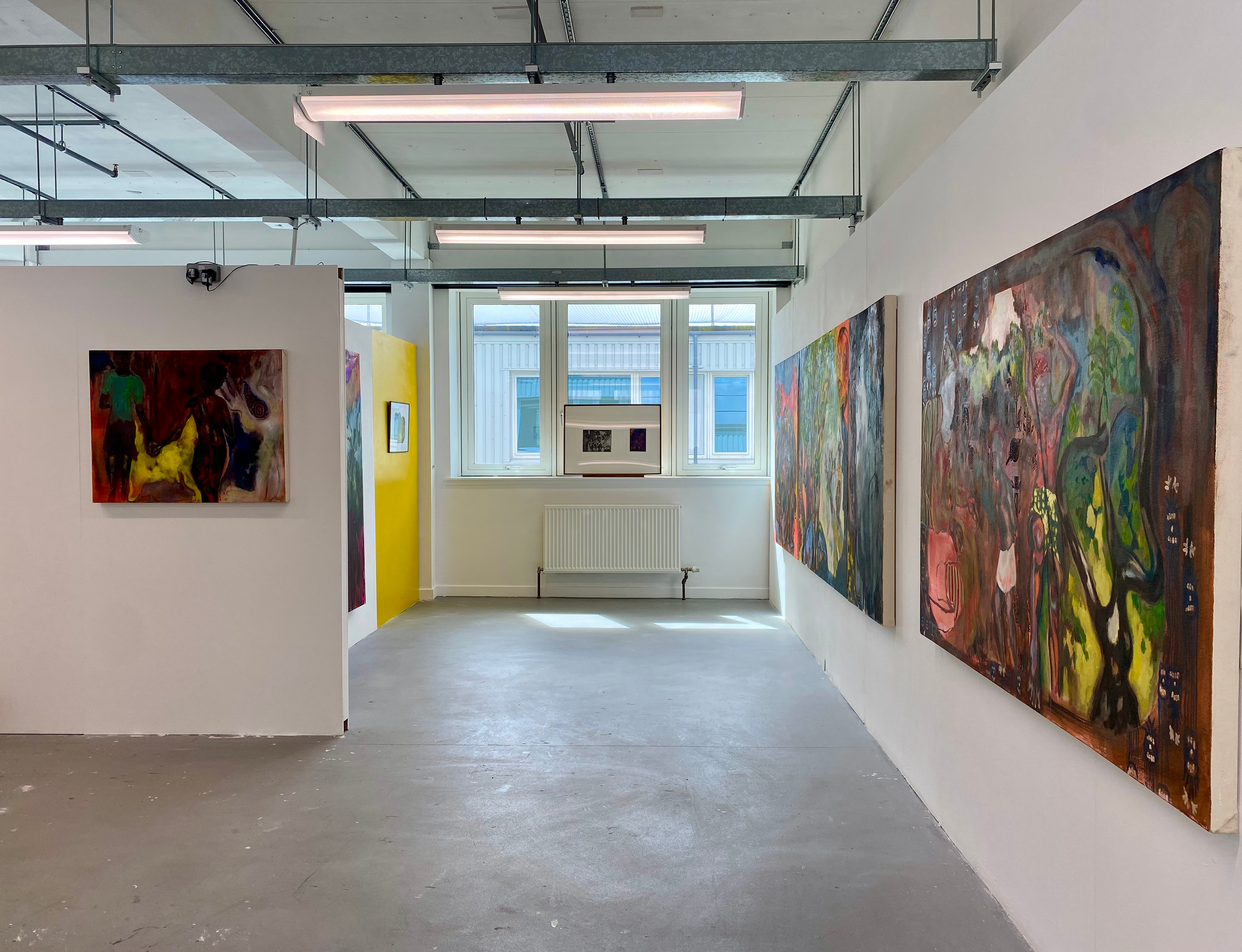
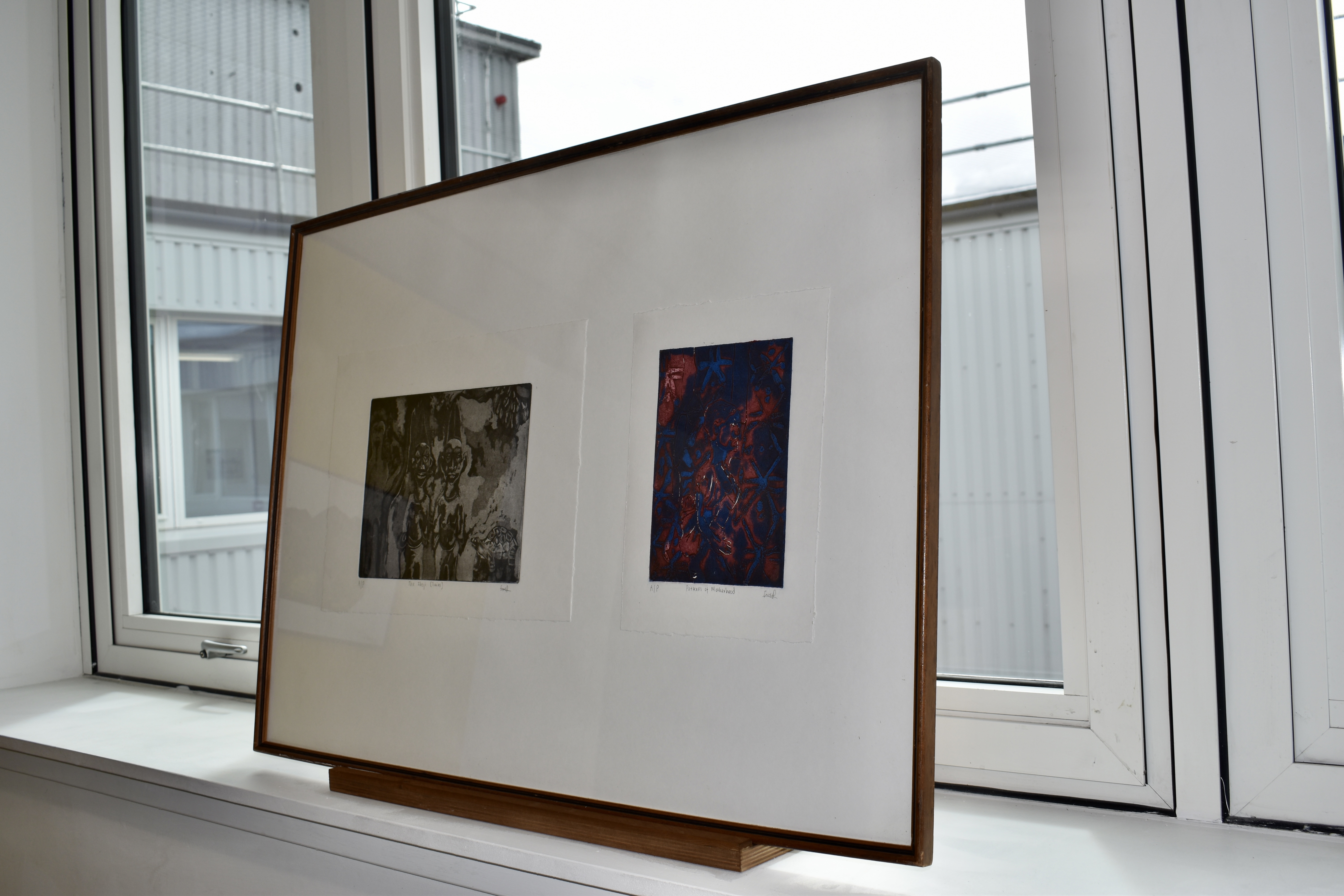
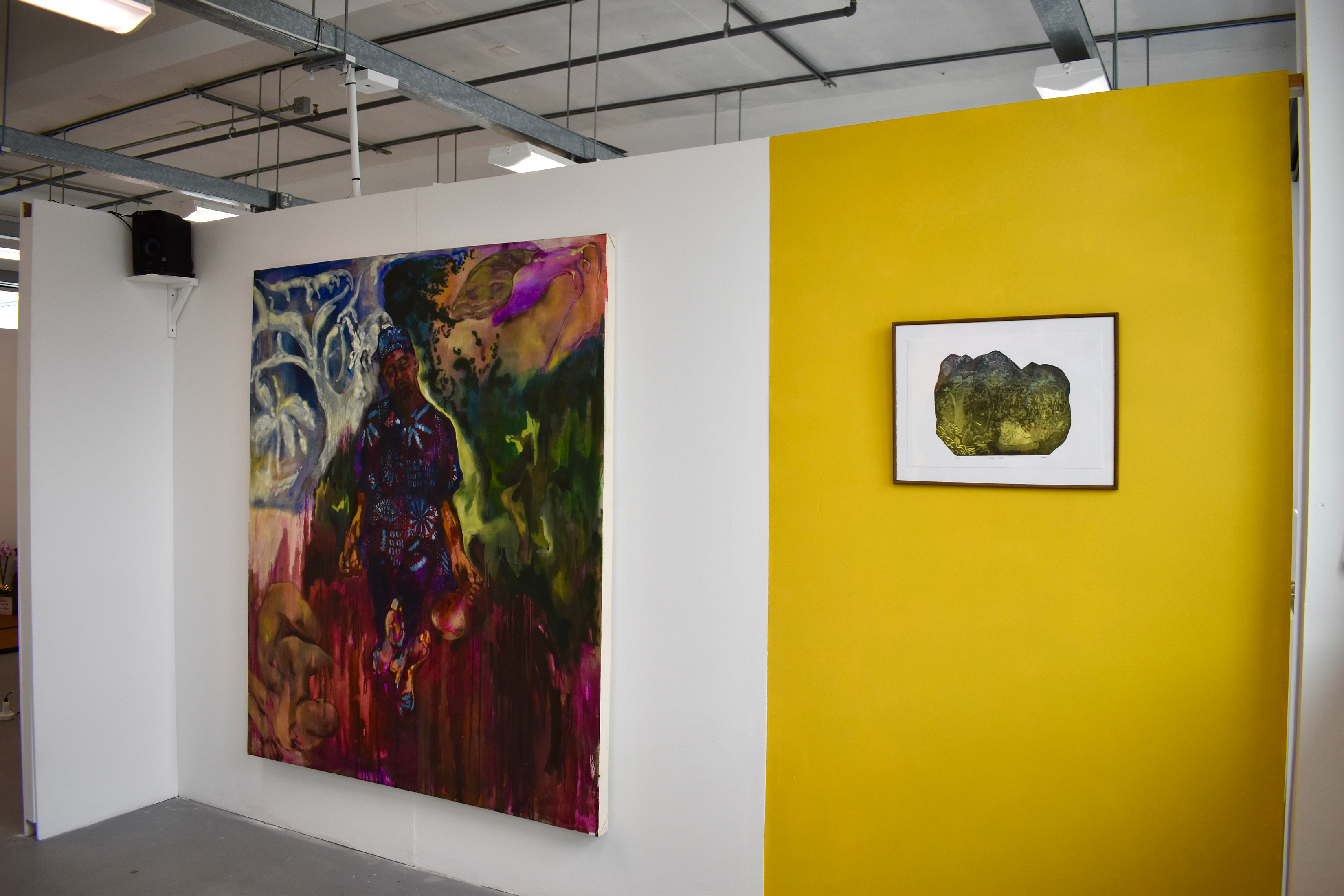
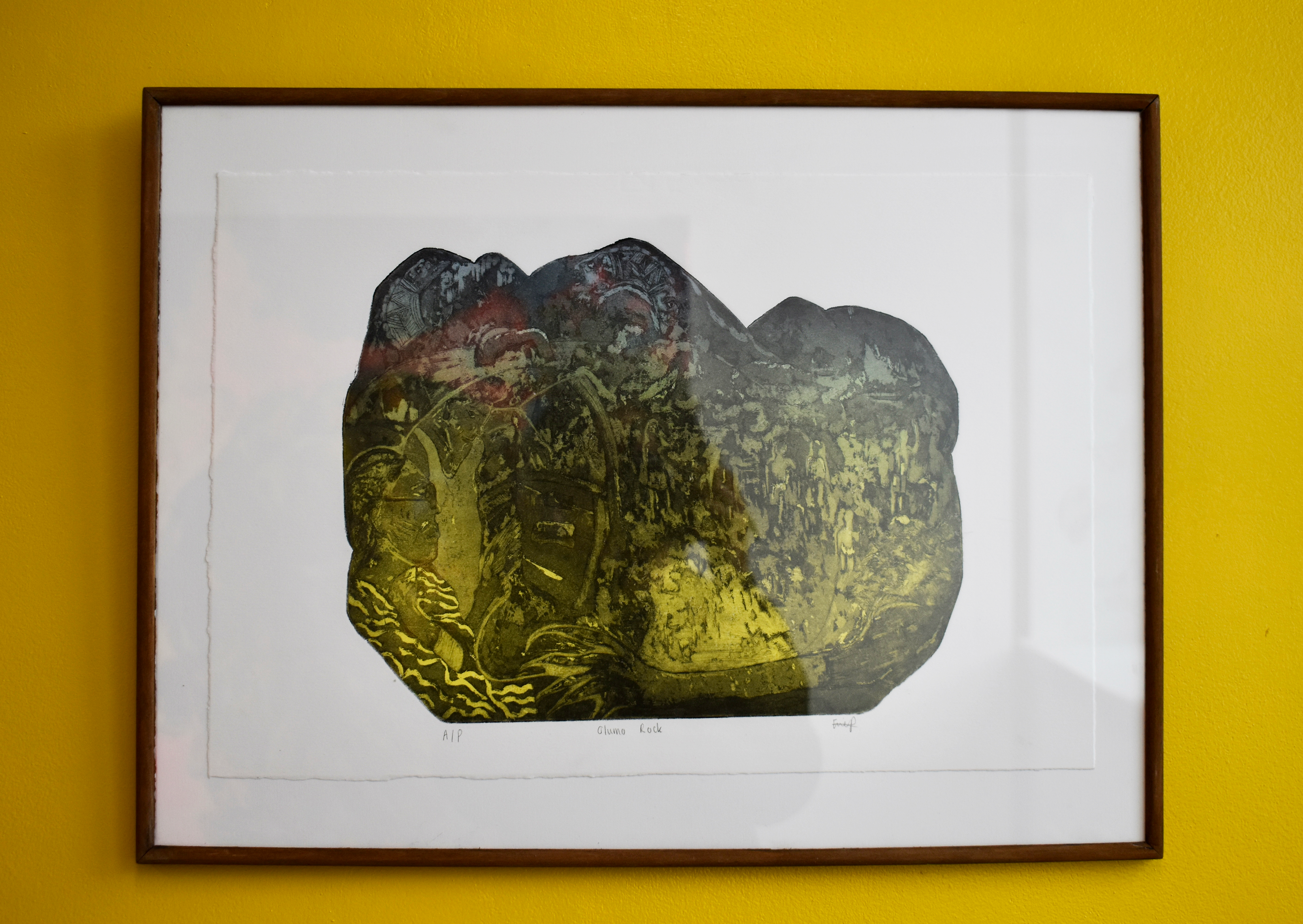
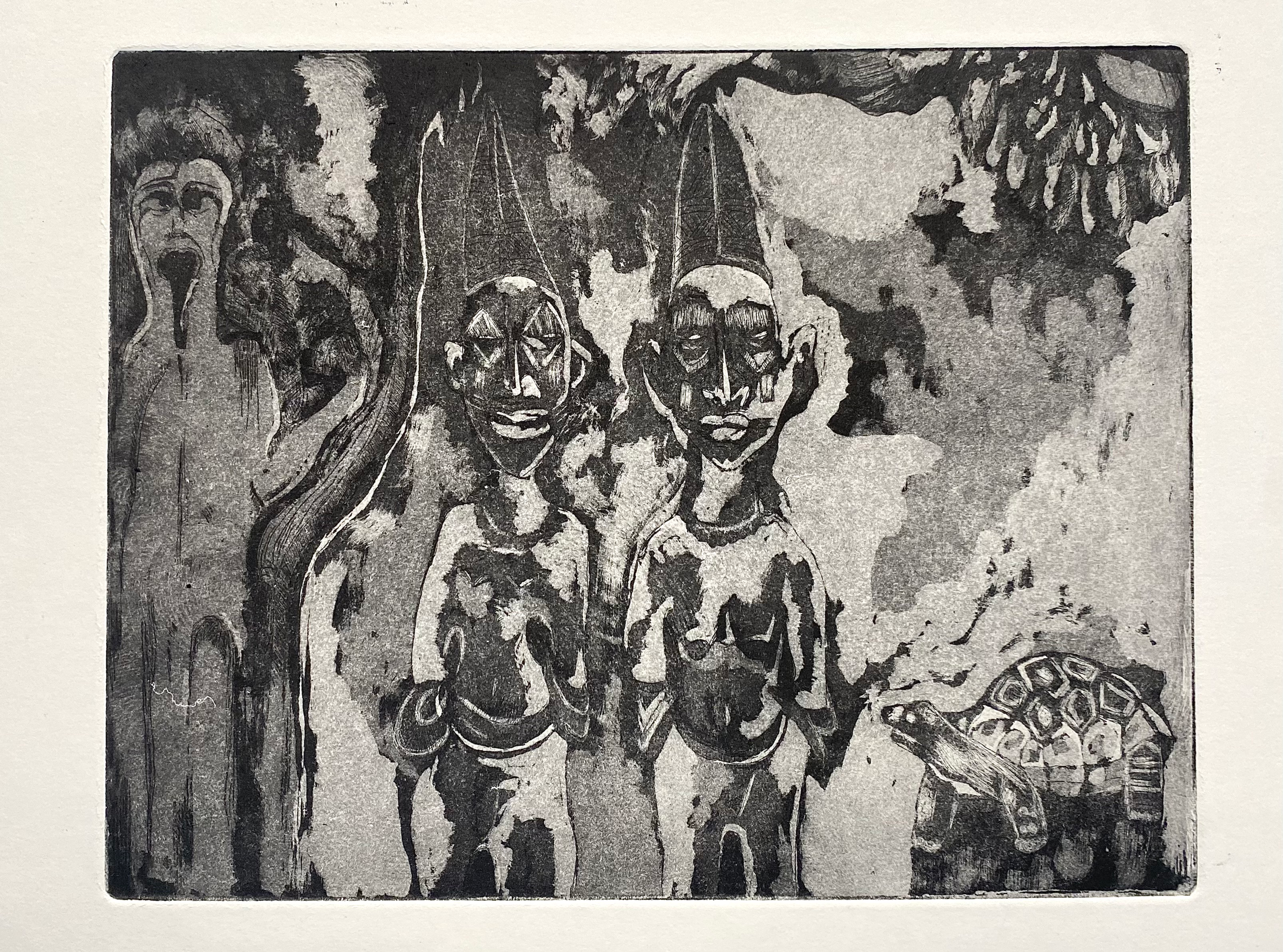
As an artist, my practice centres around my racial identity, by merging themes of culture, migration, memory, and storytelling. I use painting and printmaking to explore representations of West African communities. My paintings combine surreal figures, patterned backdrops and chaotic greenery, blurring the boundaries between cultural histories and memory. Here, playful, dreamlike worlds are formed that exist somewhere between past and present. My practice is an evolving process of sharing stories, of real and imagined west African histories.
Narratives fuel my work. Currently, I have been reading Yoruba folklore and creating oil pastel drawings inspired by these stories, combining and reworking elements from multiple drawings to develop references for my oil paintings. I mark the canvas through layered painterly techniques between areas of open space to evoke the instability of memory and reconstruction within my process of ‘Fictioning’, allowing the viewer to peer through the gaps within these constructed narratives. Executed in a distinctive vibrant colour palette, with fluorescent-coloured grounds of pink, yellow and purple to bring depth to the surfaces of my marks, reanimating these historical narratives through a contemporary language. Through this, I revive these stories, transforming them into celebratory pieces that invite viewers today to engage with them in a new light.
Ultimately, I aim to create immersive, otherworldly anachronistic spaces that invite viewers to experience my narrative wholly, transporting them into the setting of a Nigerian Community. Although my work holds historical context, it does not seek answers but instead invites the viewer into an imagined space where they can interpret and learn what they believe they see.
Evie’s Instagram – https://www.instagram.com/evierobinsonart/
Interview by Carol Campbell with Evie Robinson, GSA, 2026:
A selection of Evie Robinson’s work on show at the Glasgow School of Art:


Steven Campbell references the history of art and philosophy in order to create his own distinctive narratives and mythology. Literature too served as an inspiration for Campbell, and he was particularly drawn to the greats of the Gothic genre.
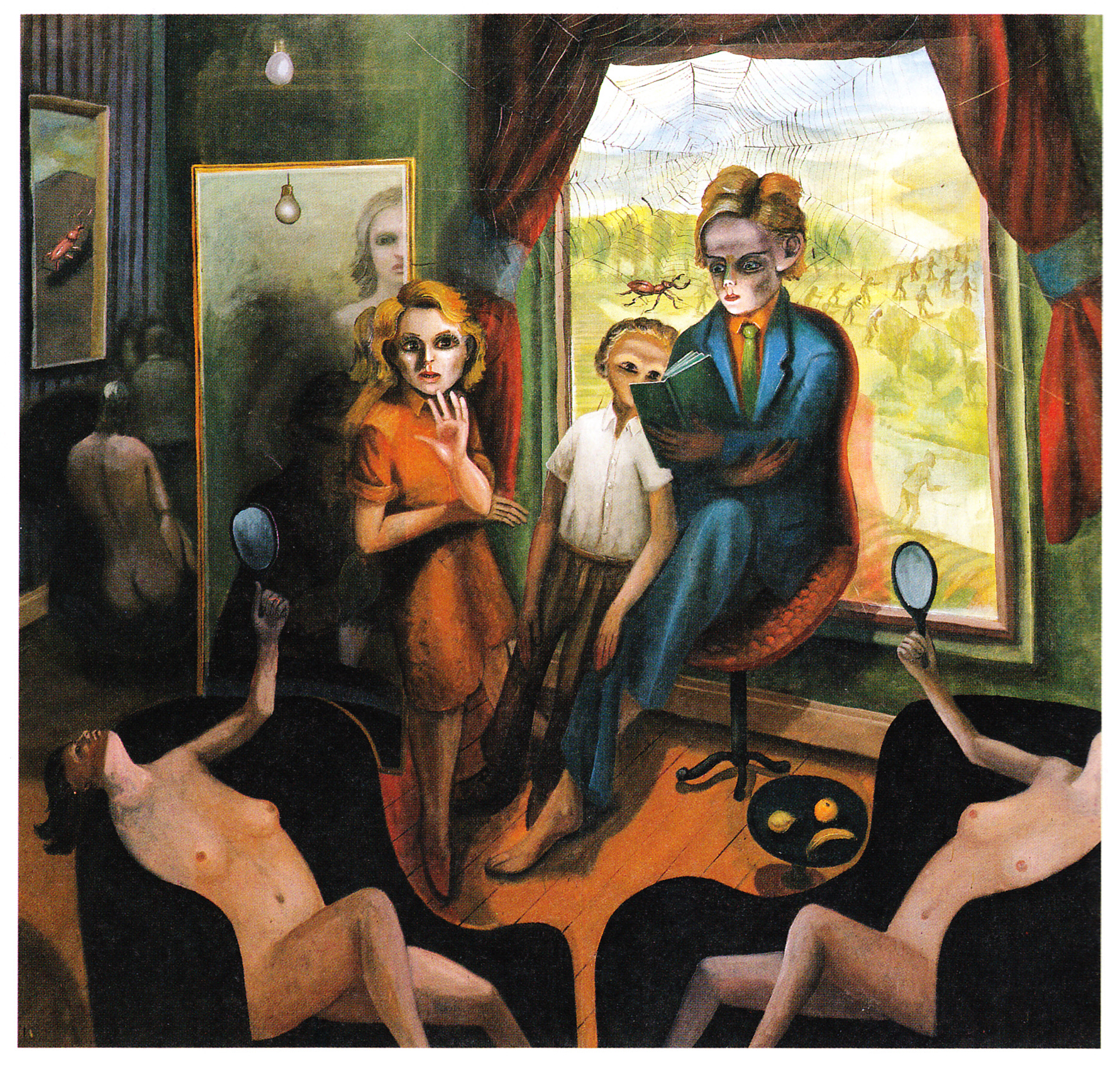
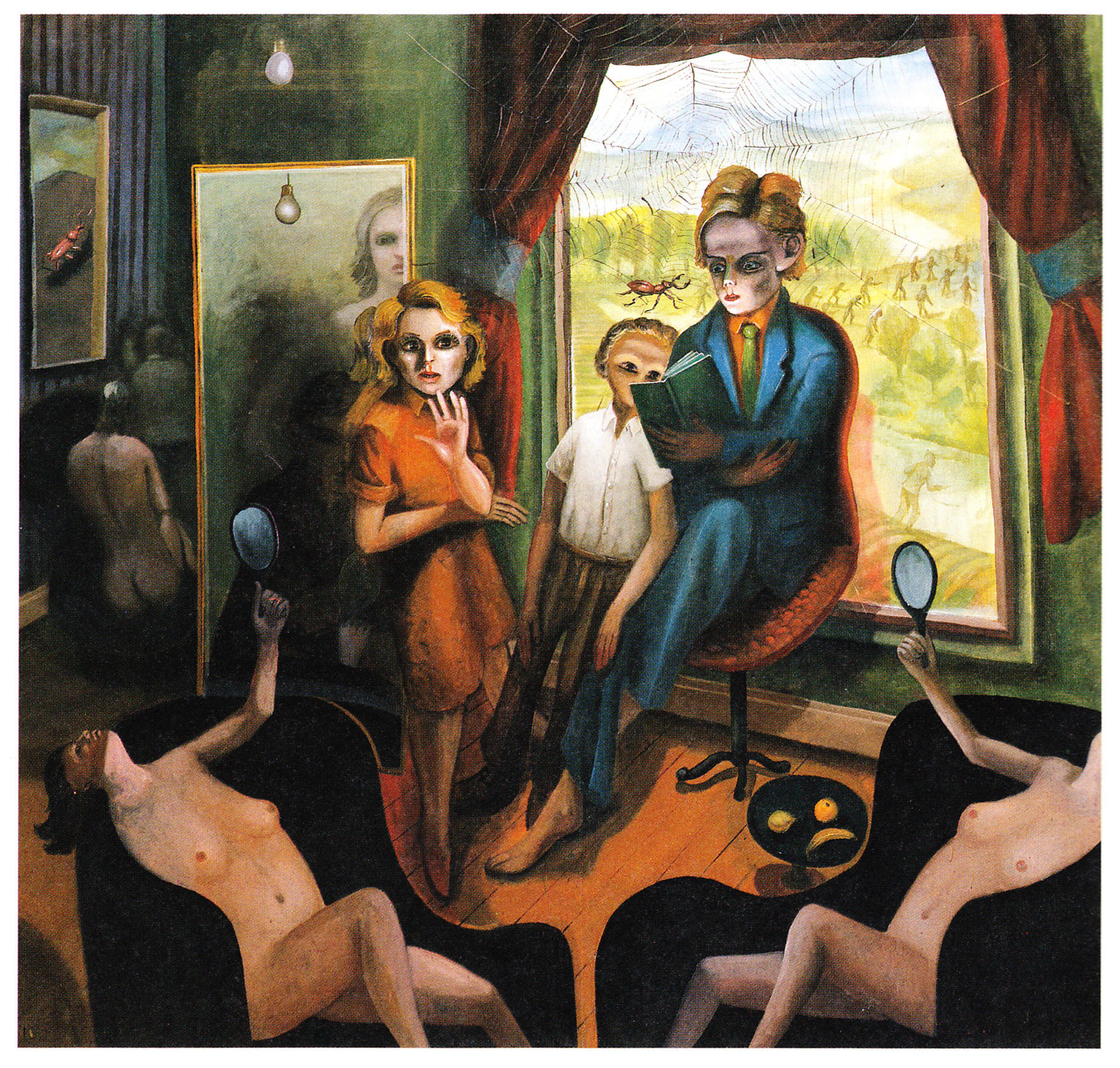
This nod to Gothic literature is apparent in Campbell’s painting Spider on the Window, Monster in the Land (above), a piece inspired by an Edgar Allan Poe story – a tale which, according to Campbell himself, ‘took its inspiration from a painting’ [1]
In Poe’s story, the protagonist looks through a window and sees a monster on the hill in the distance. Terrified, he looks again, realising that the monster is actually only a spider on the window. [2]
This seems to be the case in Campbell’s painting too, but on closer inspection, it becomes apparent that the artist has complicated matters by placing figures in the landscape, fleeing in fear – a pictorial trick that raises the question: is the insect located on the web in the window, or is it enormous and chasing people through the landscape beyond the glass?
As the writer Duncan MacMillan says in his book on Campbell, the artist is investigating ‘different levels of painted space, and depths of narrative reality’ [3], an idea that’s reinforced by the symbolism featured in the piece.
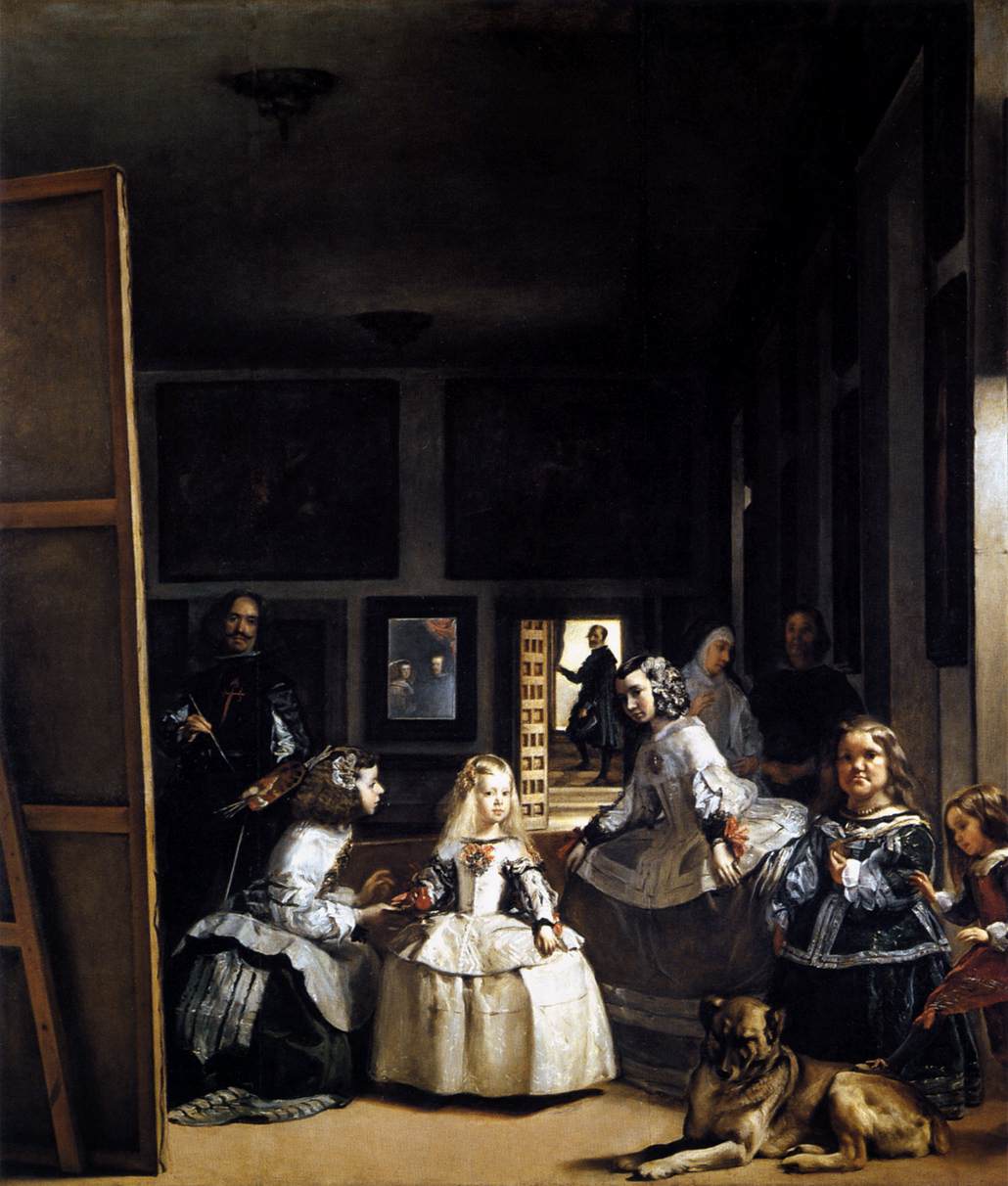
One of the characters in Campbell’s painting holds a book, perhaps intended to make us think of the stories we often use to interpret our own reality. There are also mirrors spaced throughout the composition: alluding to the different artists throughout history who have used mirrors as pictorial devices intended to peel back and expose the illusions contained in the picture plane itself. In this painting, there are two figures reflected in what appears to be a large mirror on the left of the central group. This device is reminiscent of the unconventional composition found in the painting Las Meninas, by the 17th century artist Velazquez, in which a mirror is used to explore the spatial relationship between the sitters and the artist himself.


In the top lefthand corner of Campbell’s piece, we see another mirror – or possibly another painting – reflecting (or depicting) an insect scuttling across a landscape, making us even more aware that everything in this scene is illusion. This unsettling sense of artifice is further amplified by the inclusion of the strange, dislocated nudes, two of whom hold up hand mirrors that reflect nothing. Again, Campbell disorients with ambiguity, calling into question the painted reality he presents to us.
To quote Campbell himself here: ‘The flatness of the window is like the flatness of the canvas and the flatness of the mirrors. I painted the chairs and the women in the foreground flat to play with this idea of distance and flatness and what a canvas is.’ [4]
This painting is a wonderful example of the intricate games Campbell liked to play with perception – all the while exploring the language and sign systems we use to construct our understanding of the world around us.
~Sources used in this blog post: The Paintings of Steven Campbell: The Story So Far/ by Duncan MacMillan/ Publisher: South London Gallery/ Date Published: 1993 (p.83 &111). If you’re wanting to find out more about the work of Steven Campbell, we would highly recommend getting this Duncan MacMillan book, which looks at Campbell’s work in a great deal of depth.
Footnotes:
[1] – p.83/ The Paintings of Steven Campbell: The Story So Far/ by Duncan MacMillan/ Publisher: South London Gallery/ Date Published: 1993
[2] p.111 – The Artist in Conversation/ Steven Campbell describes his recent paintings in conversation with Duncan Macmillan, Bollochleam, Wednesday 10 March 1993 / The Paintings of Steven Campbell: The Story So Far/ by Duncan MacMillan/ Publisher: South London Gallery/ Date Published: 1993
[3] – p.83/ The Paintings of Steven Campbell: The Story So Far/ by Duncan MacMillan/ Publisher: South London Gallery/ Date Published: 1993
[4] p.111 – The Artist in Conversation/ Steven Campbell describes his recent paintings in conversation with Duncan Macmillan, Bollochleam, Wednesday 10 March 1993 / The Paintings of Steven Campbell: The Story So Far/ by Duncan MacMillan/ Publisher: South London Gallery/ Date Published: 1993

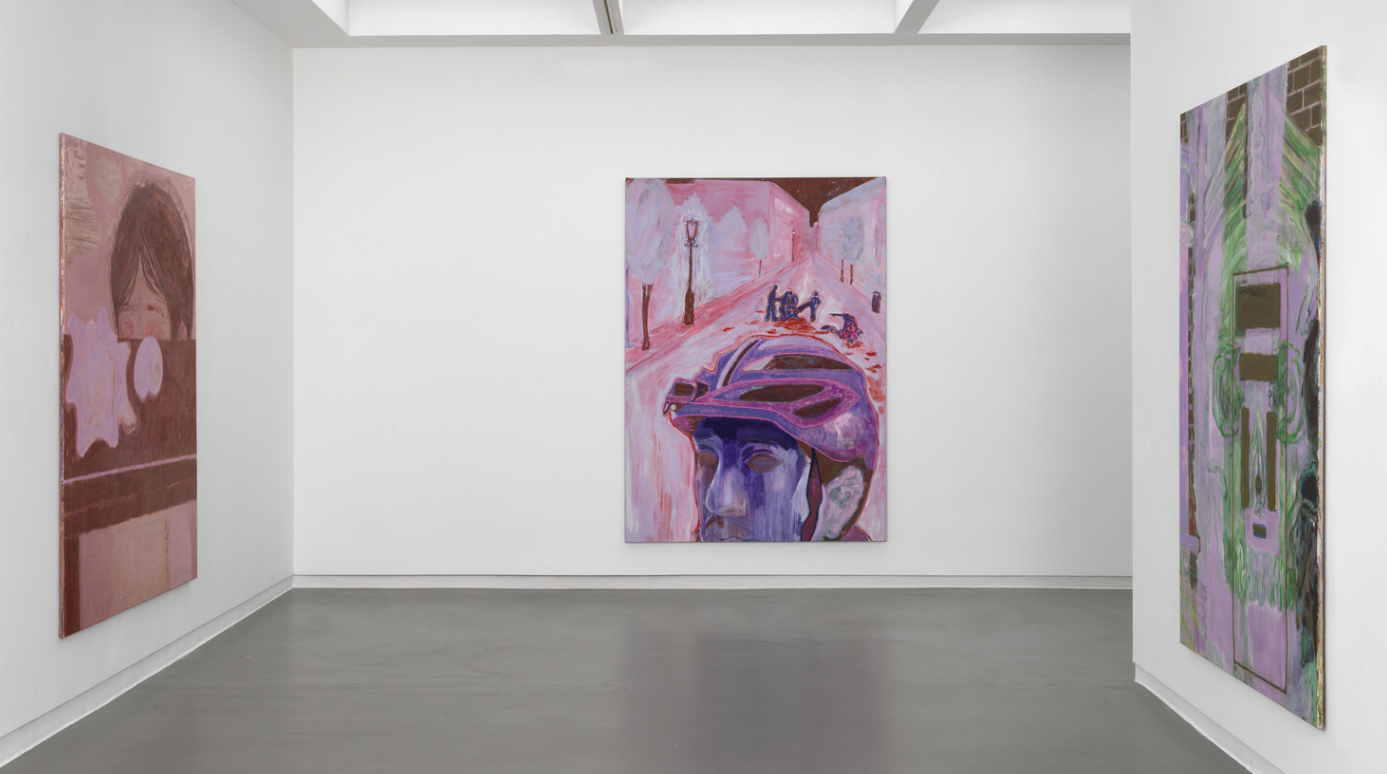
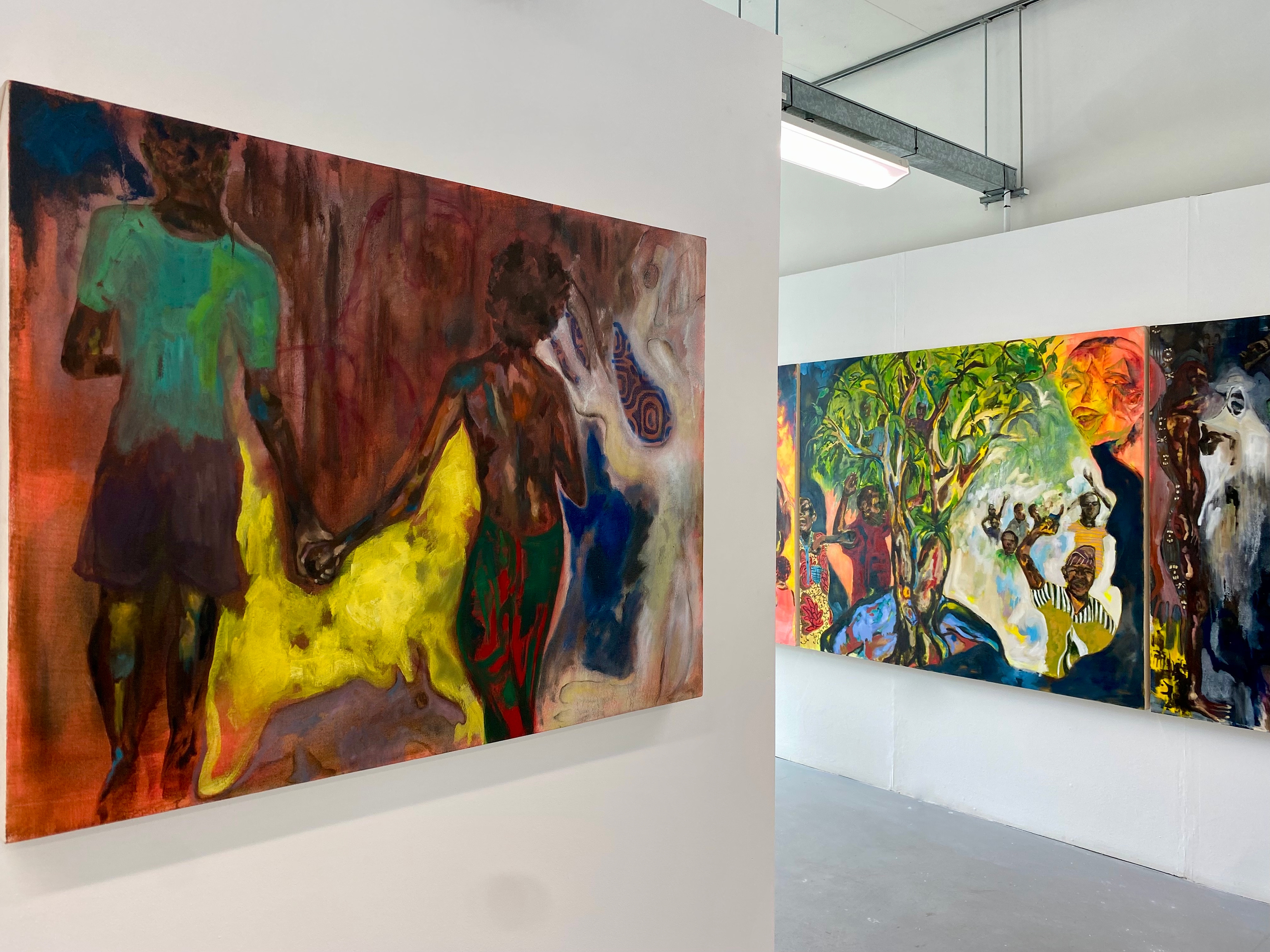
The Steven Campbell Trust would like to congratulate Leo Arnold on his new solo exhibition Autumn Journal, taking place at the Annet Gelink Gallery in Amsterdam, in which he ‘constructs a personal journal that hangs across the gallery: an intuitive and emotional register of his life lived in Amsterdam.’
Leo won the Steven Campbell Hunt Medal for Poetic Creativity in 2015, and we are delighted to see him continuing to fulfil his creative ambitions.
~Quotes and images were sourced from Annet Gelink Gallery’s website. For more information, please visit: https://www.meer.com/en/106603-autumn-journal

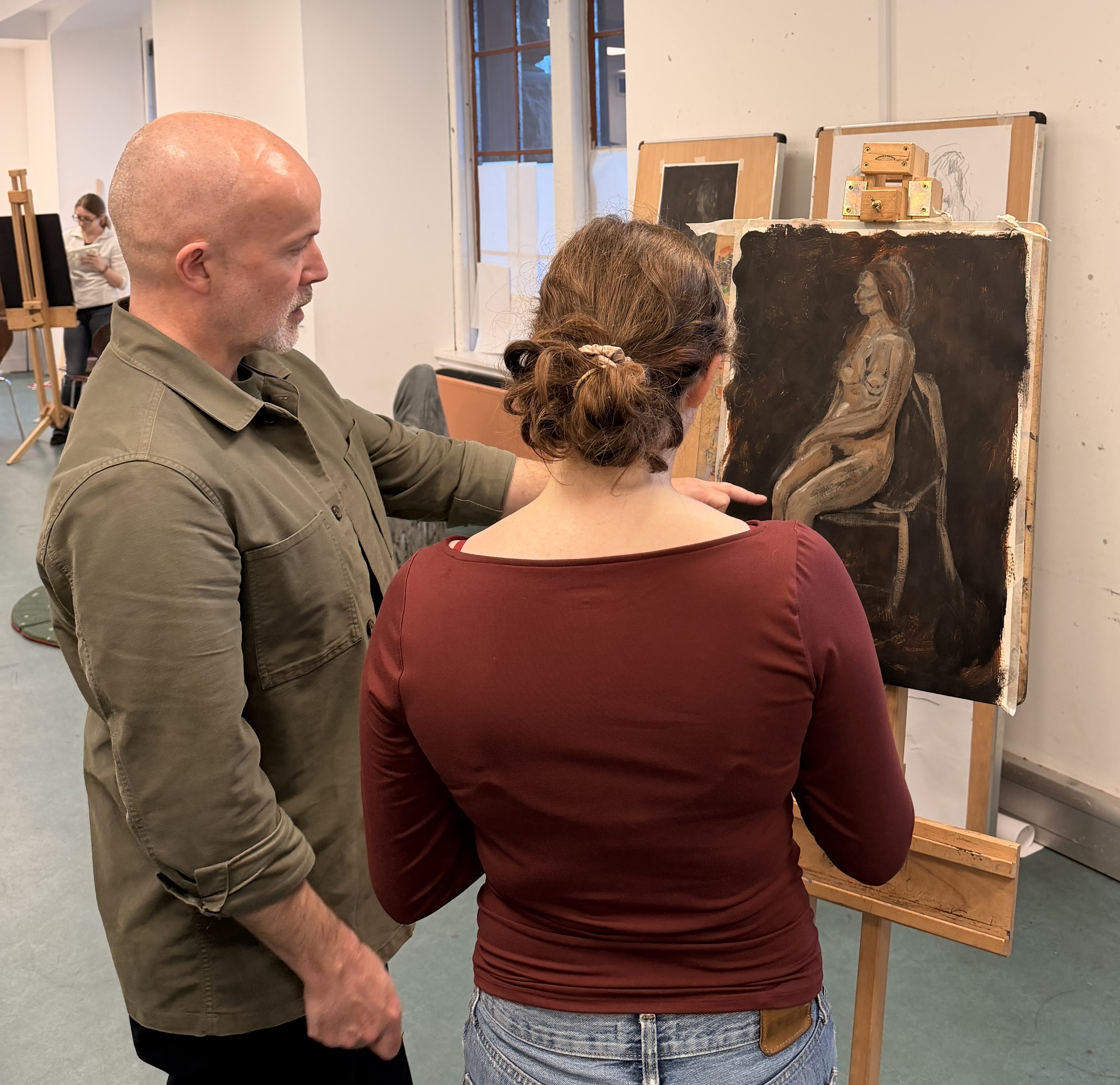
One of the ways that the Trust continues to honour Steven’s life and work is through activities and workshops for schools.
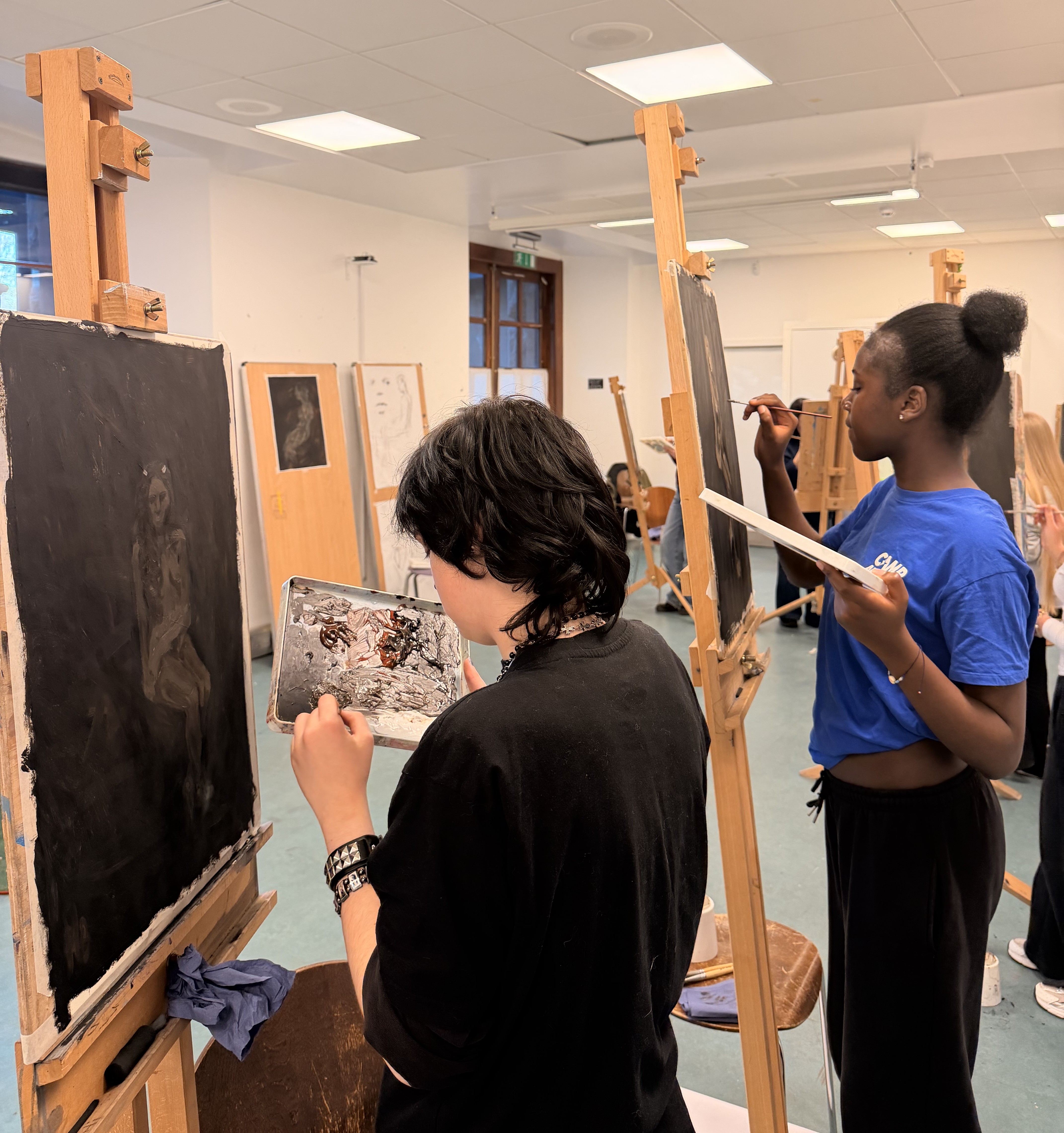
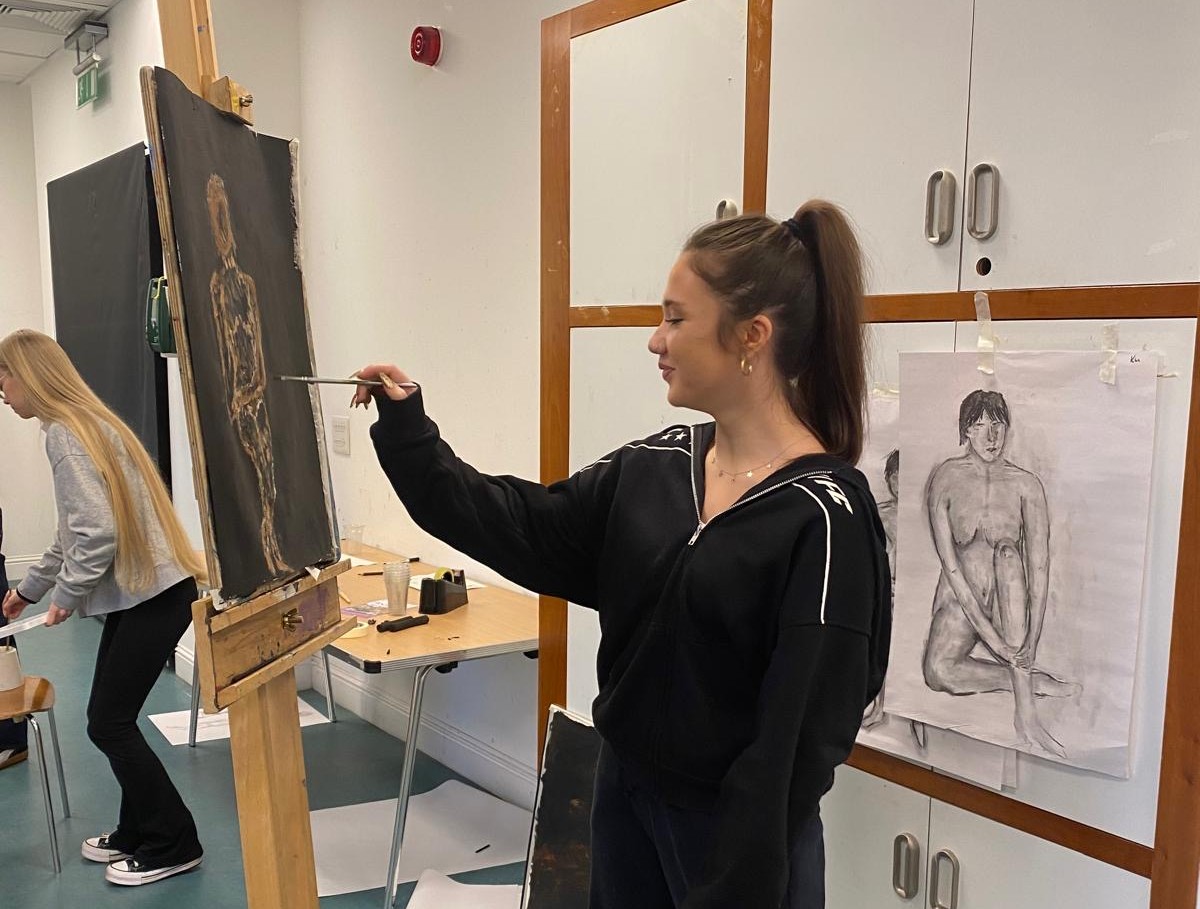
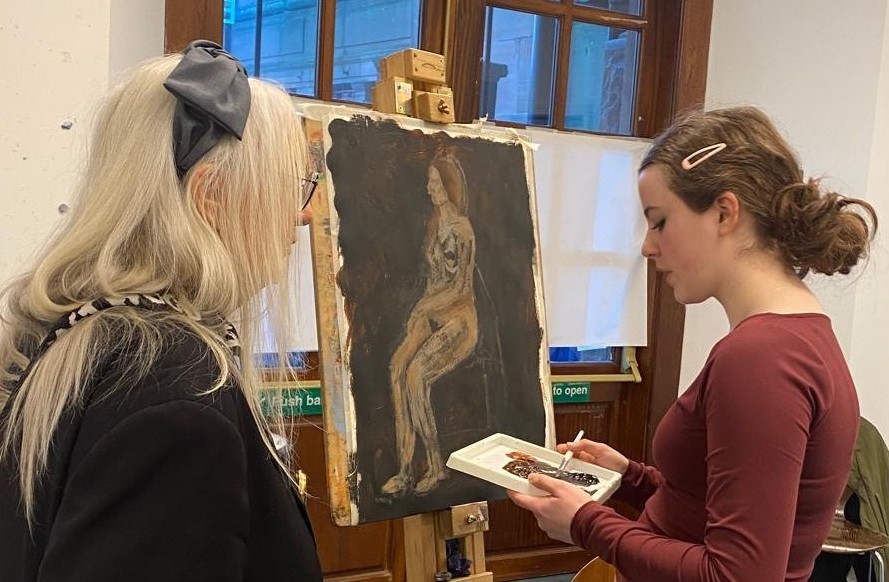
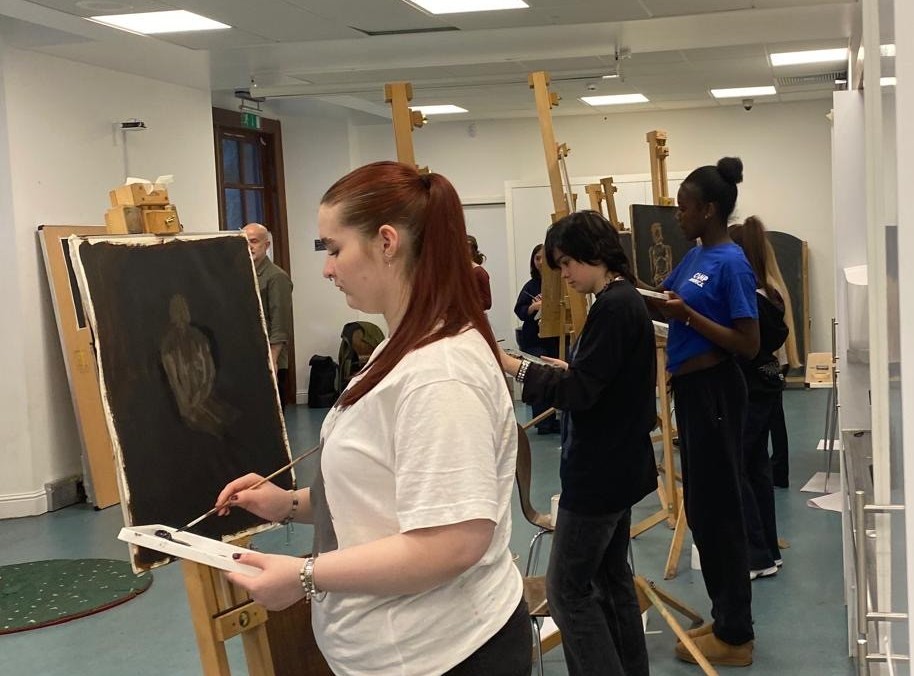
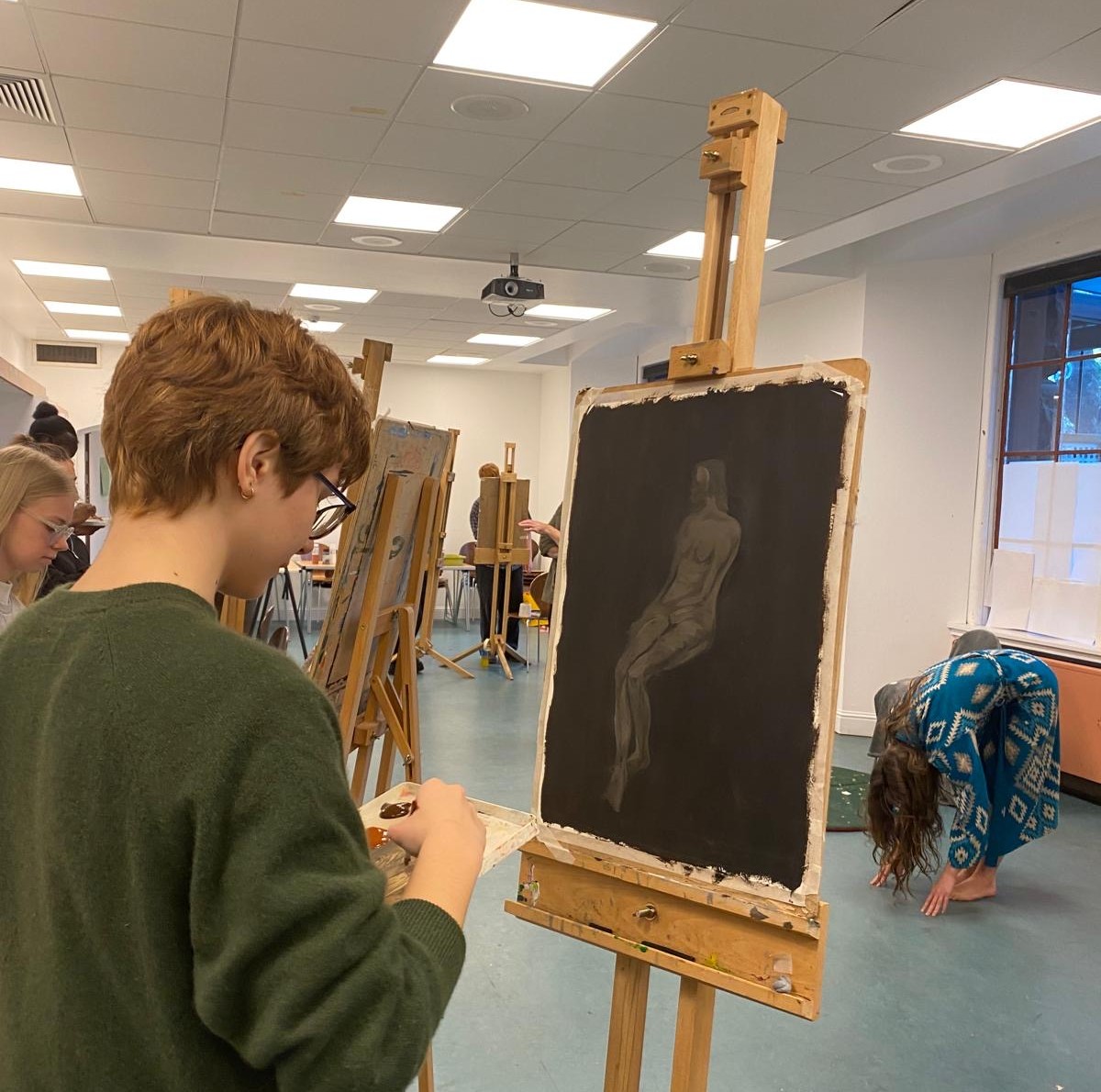
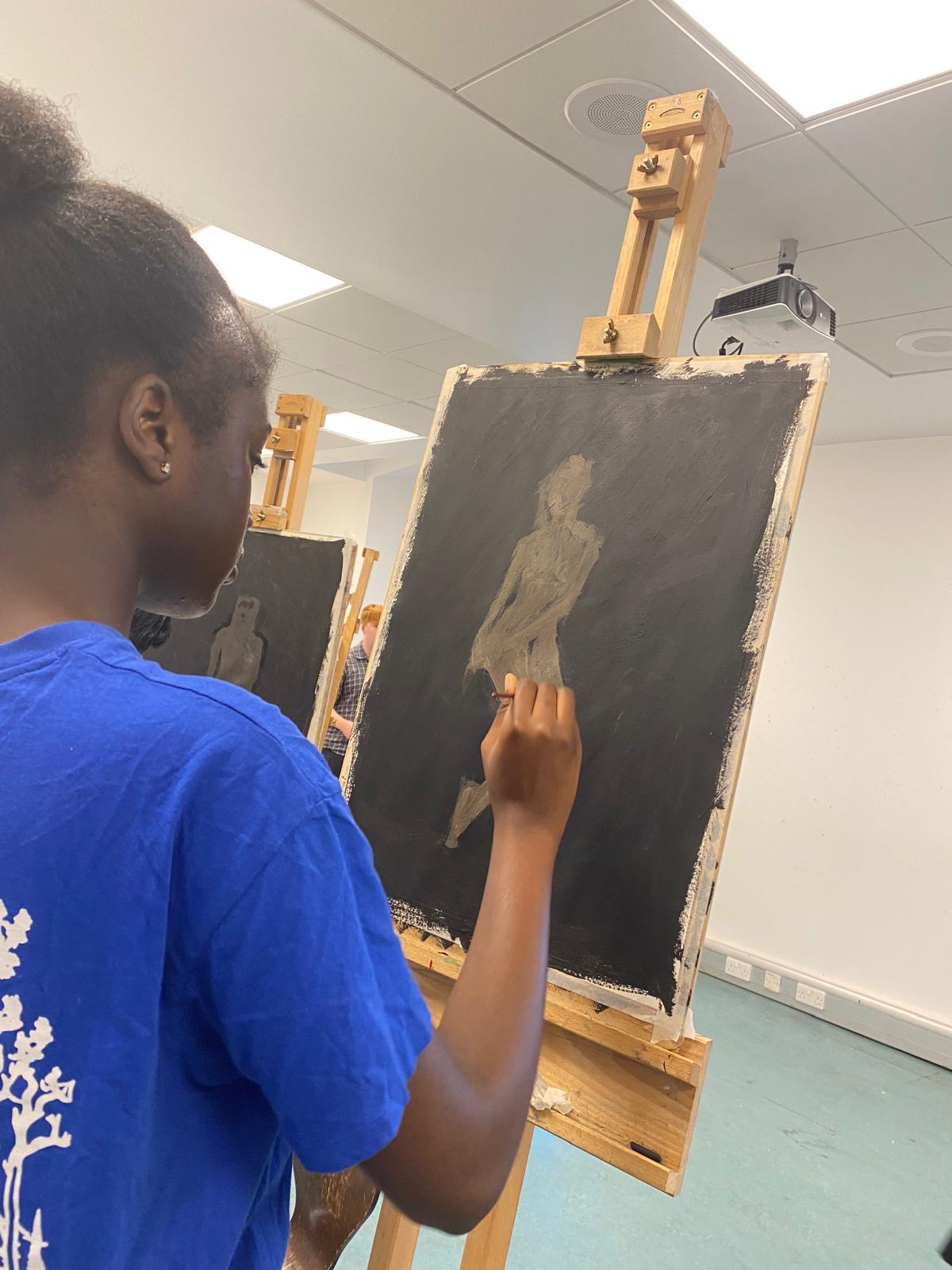
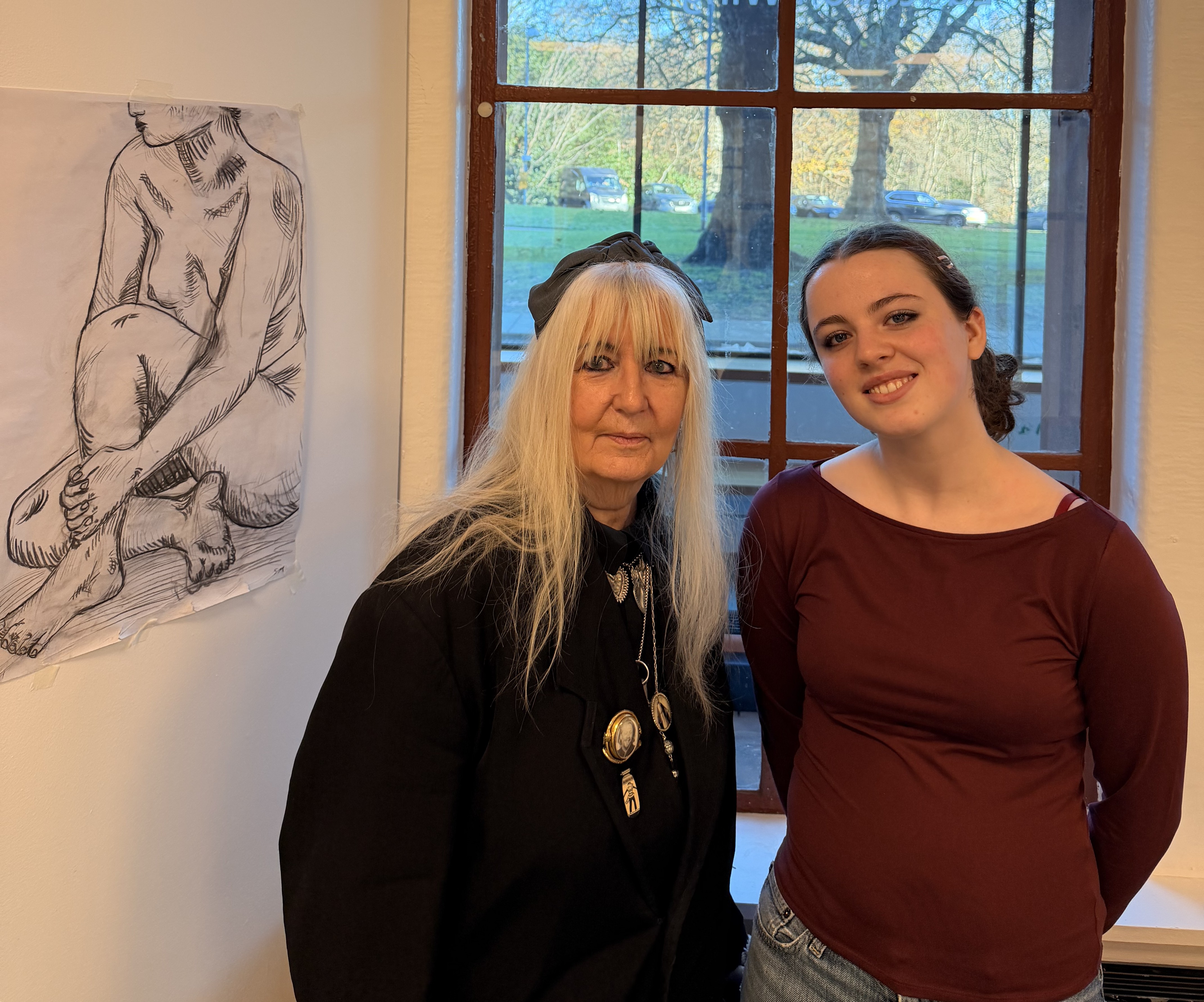
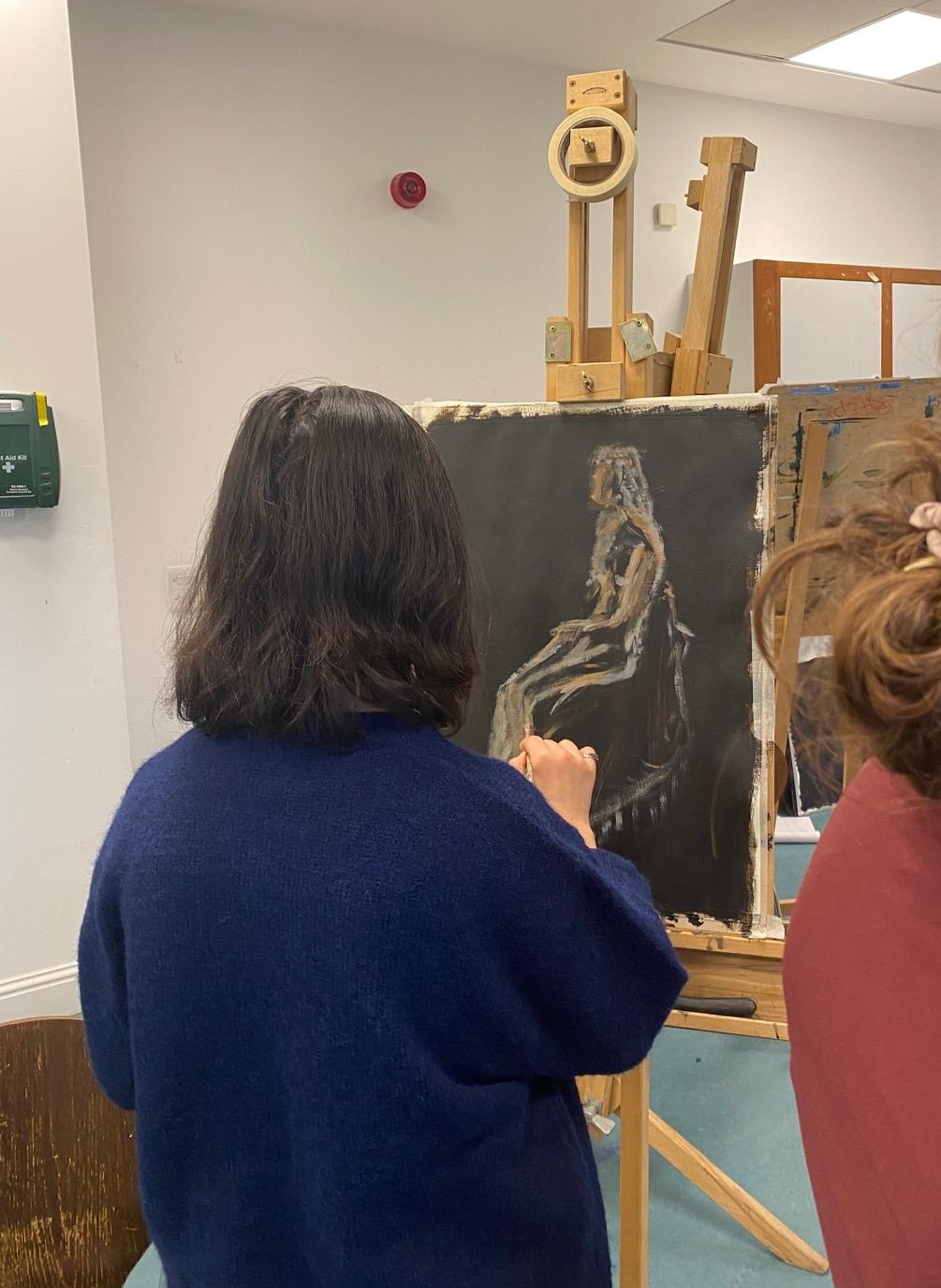
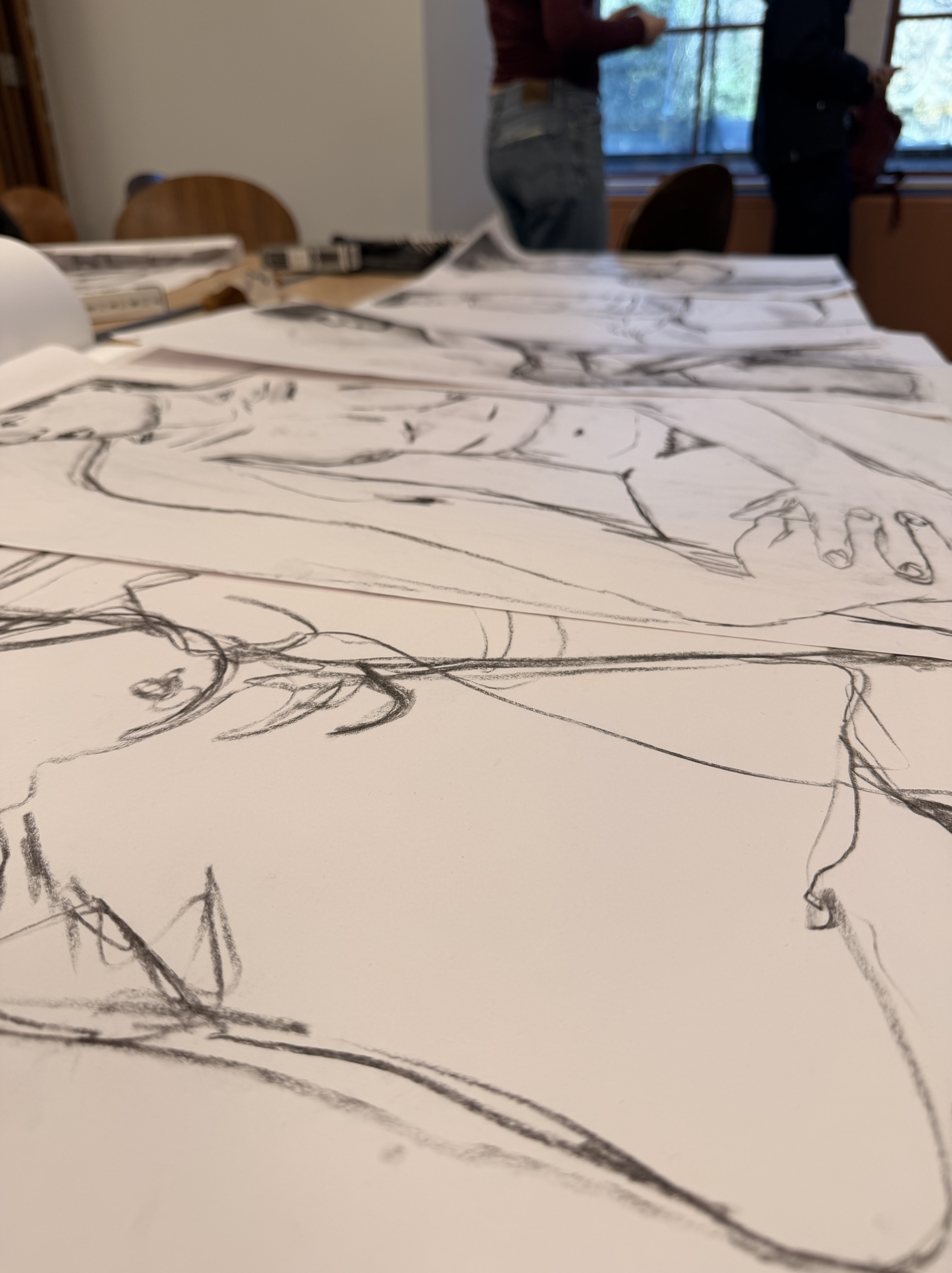
This year, artist Sandy Grant led an intensive two-day life-painting workshop at the Kelvingrove Art Gallery and Museum for pupils from 8 schools, including Hillhead High, Holyrood Secondary, St Paul’s High, Rosshall Academy, Springburn Academy, St Mungo’s Academy, St Thomas Aquinas Secondary, and Hyndland Academy.
The work was once again of a very high standard and the young people developed new skills through Sandy’s careful tutoring.
There was an enormous amount of dedication, energy and talent on display during this year’s workshop, and the attendees were all a credit to their schools.
We would like to give a massive thank you to Cass Art for generously supplying us with a wealth of art materials for use during the workshop. For charitable organisations like the Steven Campbell Trust, such support makes a huge difference, allowing educational events like this to run. We look forward to a long and fruitful partnership with Cass Art in the future.
Our thanks also to the staff at Kelvingrove Art Gallery and Museum for their support, and for providing us with a wonderful creative environment in which to hold the class.
Here are some of the impressive results from this year’s workshop:


One of the participants also kindly shared her thoughts on what she learnt about Steven Campbell, the techniques explored during the course of the class, and what it was like taking part in a workshop at Kelvingrove Art Gallery and Museum, surrounded by inspiring artworks:

‘I think I became less interested in art, conceptual versus figurative, that kind of thing, and I became more interested in thinking about why things are the way they are…’ [1] – Steven Campbell.
Steven Campbell’s work displays a persistent fascination with illusion and the levels of reality that exist within a painting. By their nature, figurative paintings are flat and static, showing fixed and illusory worlds, the subjects trapped in time, caught in the confines of the canvas. As the writer Duncan MacMillan observes, while Campbell’s characters ‘innocently explore the apparent freedom of the world they inhabit, they run up against its limits, and, unconsciously, burlesque the limitations of the painter’s art and so of life itself.’ [2]
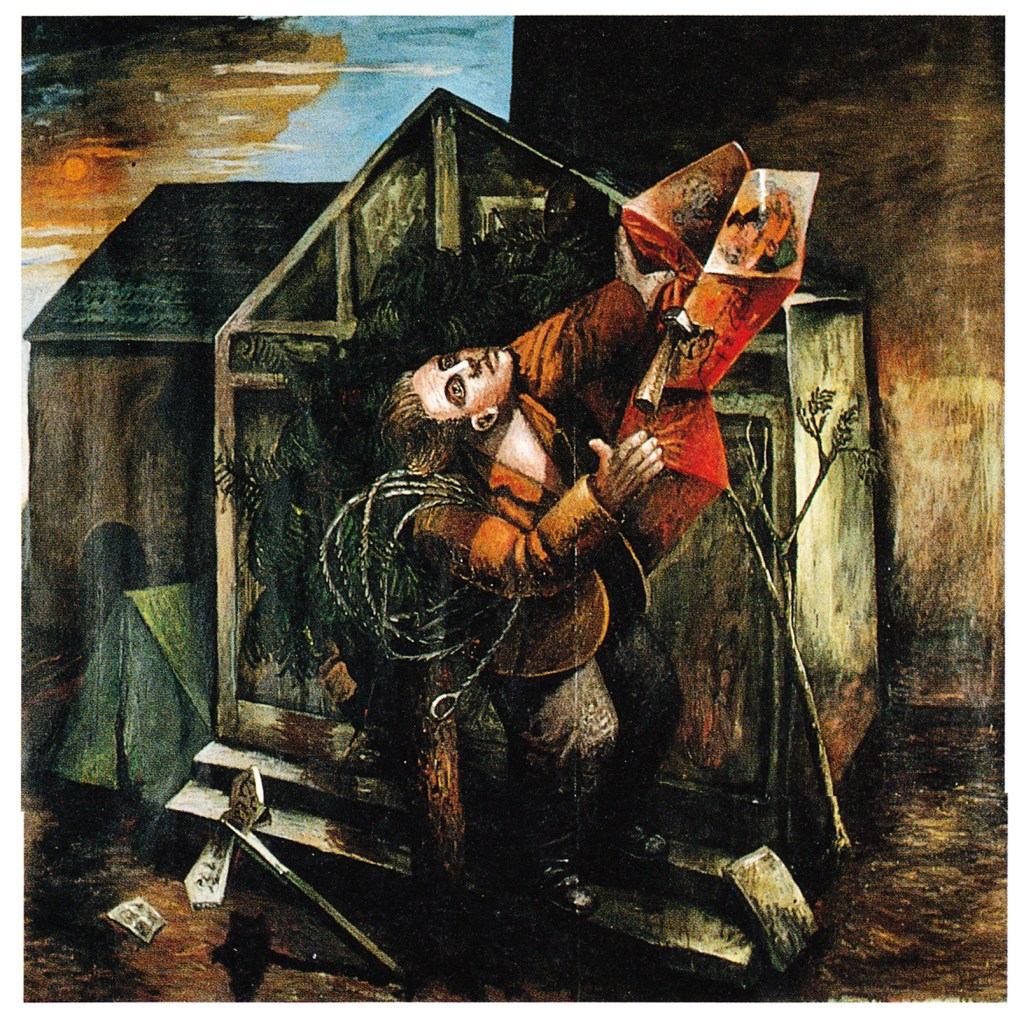
In the above painting, The Man who climbs Maps, we see the character of the Lost Hiker. Like so many of Campbell’s characters, the Hiker has strayed from his path, and in desperation, attempts to climb his map as if it were a cliff face.
Here, Campbell invites the viewer to consider the nature of painted space. In the world of painted narrative, everything is two-dimensional and on the same plane of existence: the flat illustrations on the map essentially no different from the surrounding landscape and the Hiker himself [3]. Confused, the character mistakes the map for the territory as he embarks on his expedition.
Another interesting detail in the above painting is the signpost on the bottom left. Such signposts appear often in Campbell’s work, indicating that the characters are suspended between different places, in a sort of limbo or no-man’s land. They never reach their goal or destination, and are trapped in an illusory world that frustrates them at every turn.

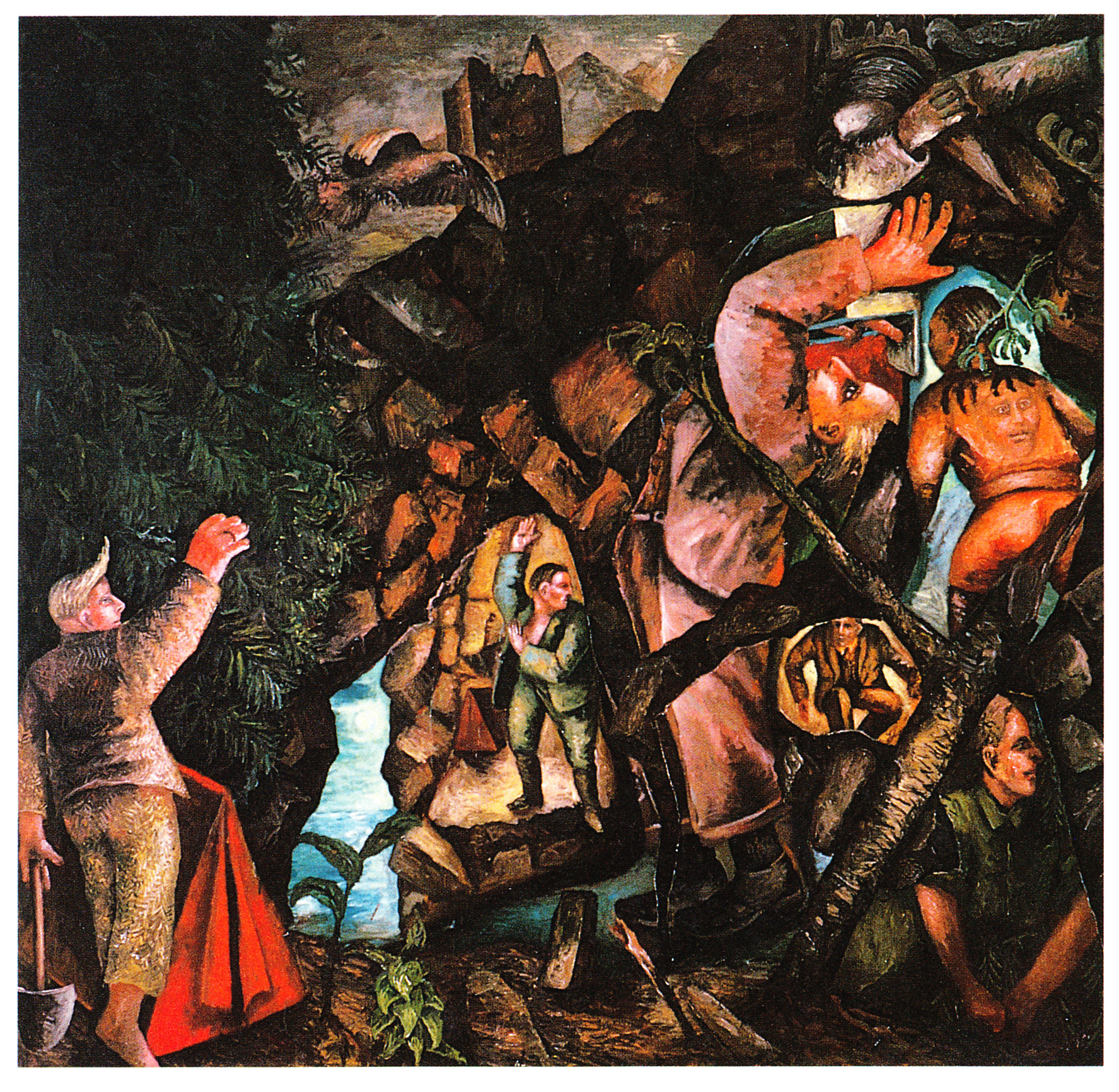
In Young Camper Discovering a Grotto in the ground, Campbell further explores the illusion of painted space. It has seven figures in different scales, and in this crowded painting, we’re not entirely sure who the camper is, and it may in fact be all of them.
The perspective here seems intentionally confusing: we don’t know whether characters are in the background or foreground, and are finally led to conclude that each figure inhabits his own ‘grotto’ of space in the picture-plane. [4] These grottos overlap in a sort of mosaic, confusing the viewer, and apparently confusing the characters themselves. Campbell has taken images that may have made pictorial sense, and then dismantled, restructured and overlapped them, to demonstrate that representational painters deal only in illusion.

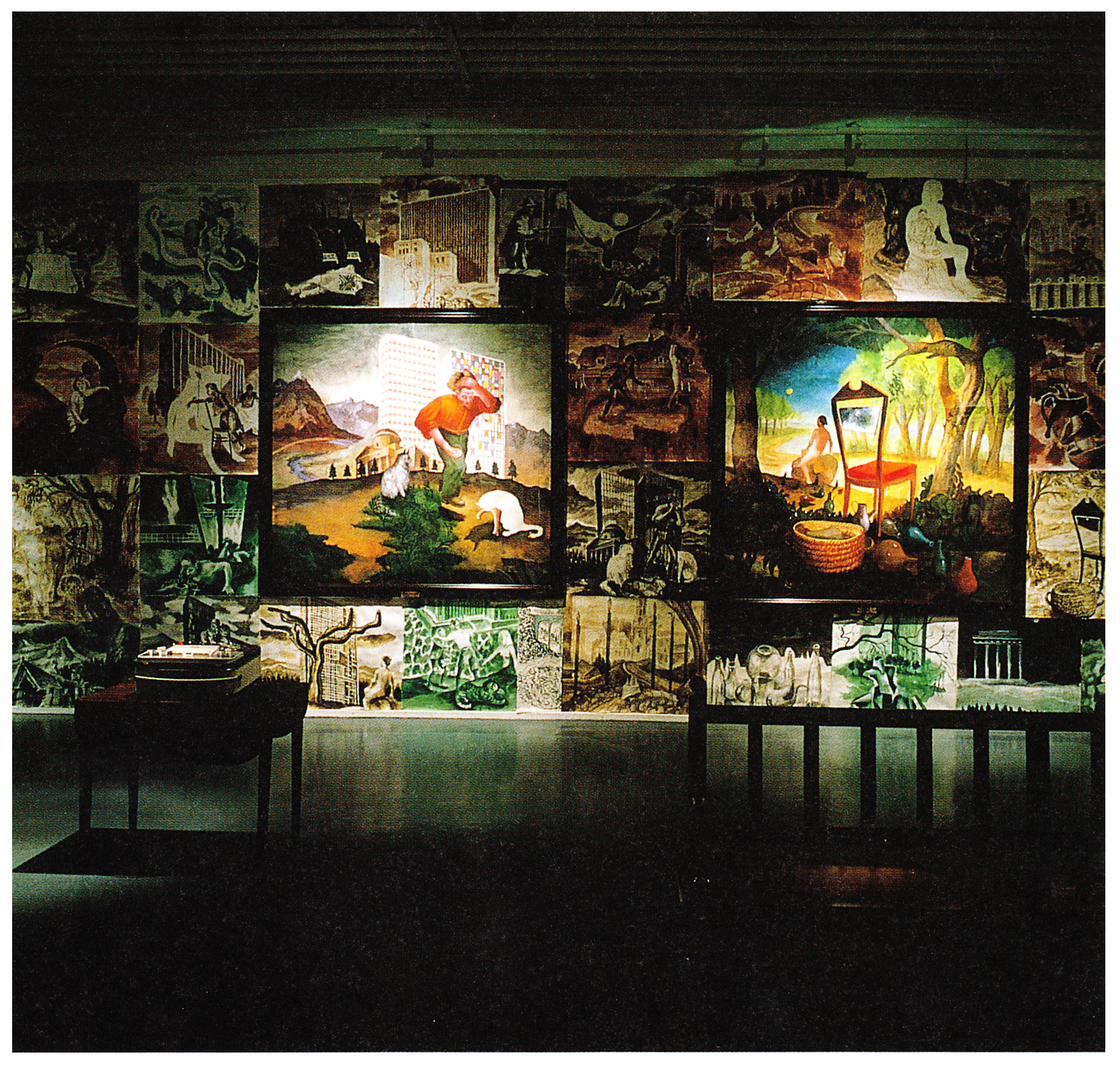
Campbell made this a major theme of his work in an exhibition at the Third Eye Centre in Glasgow (now the Centre for Contemporary Art) in 1990. The show questioned received notions about reality, often in a humorous way.
In many of the paintings, certain figures or objects were missing, showing only white canvas in the place that they had once been or were intended to be.
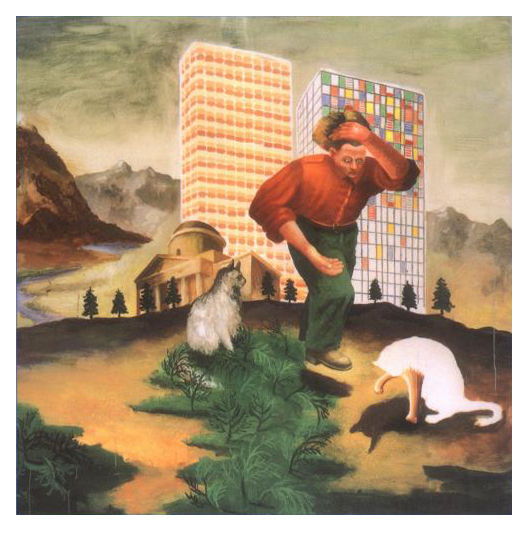
The above painting Not you as well, Snowy, shows a young man returning home to see that his cat has also undergone this horrible metamorphosis, snatched from reality to leave only a white silhouette in its place [5]. Something which, to us, is only a bit of blank canvas in the middle of the picture plane, becomes the shape of this poor character’s missing cat – snatched away into the ether, leaving only his shadow and his paws. In this disturbing yet humorous way, Campbell questions the reality of our own world.
Sources used in this blog post: The Paintings of Steven Campbell: The Story So Far/ by Duncan MacMillan/ Publisher: South London Gallery/ Date Published: 1993 (p.27, 36, 37, 65 & 108). If you’re wanting to find out more about the work of Steven Campbell, we would highly recommend getting this Duncan MacMillan book, which looks at Campbell’s work in a great deal of depth.
Footnotes:
[1] – p.108 / The Artist in Conversation/ Steven Campbell describes his recent paintings in conversation with Duncan Macmillan, Bollochleam, Wednesday 10 March 1993 / The Paintings of Steven Campbell: The Story So Far/ by Duncan MacMillan/ Publisher: South London Gallery/ Date Published: 1993
[2] – p.36 / The Paintings of Steven Campbell: The Story So Far/ by Duncan MacMillan/ Publisher: South London Gallery/ Date Published: 1993
[3] – p.27 / The Paintings of Steven Campbell: The Story So Far/ by Duncan MacMillan/ Publisher: South London Gallery/ Date Published: 1993
[4] – p.37 / The Paintings of Steven Campbell: The Story So Far/ by Duncan MacMillan/ Publisher: South London Gallery/ Date Published: 1993
[5] – p.65 / The Paintings of Steven Campbell: The Story So Far/ by Duncan MacMillan/ Publisher: South London Gallery/ Date Published: 1993
The Steven Campbell Trust are delighted to announce that Ellis Bairstow – our Hunt medal winner for 2025 – has set up an exciting new gallery, project space, and studio in Glasgow for emerging artists, located at B/5 12 Washington Street, Glasgow, United Kingdom G3 8PT.
“Introducing Shift, an art platform for early career creatives and artists to make, develop, and exhibit.
Shift provides exhibition opportunities and studio residencies for artists at the early stages of their careers, supporting them as they push their practice forward.
We’ve created a space that artists can fully transform to suit their vision — a venue that adapts to them, rather than limiting what they can create.
By offering accessible, flexible exhibition space and hands-on support from a team to help you achieve your goals.
Shift aims to remove the barriers that often hold emerging artists back: restrictive venues, inconsistent opportunities, and a lack of dedicated platforms.
Shift is our next step toward making a lasting impact on Glasgow’s contemporary art scene and the voices shaping its future, building a future where artists can develop their practice and careers here in Glasgow.
Shift Gallery opens its program this Friday 21st November at 7pm-9pm with an exhibition by Fin Blue.”

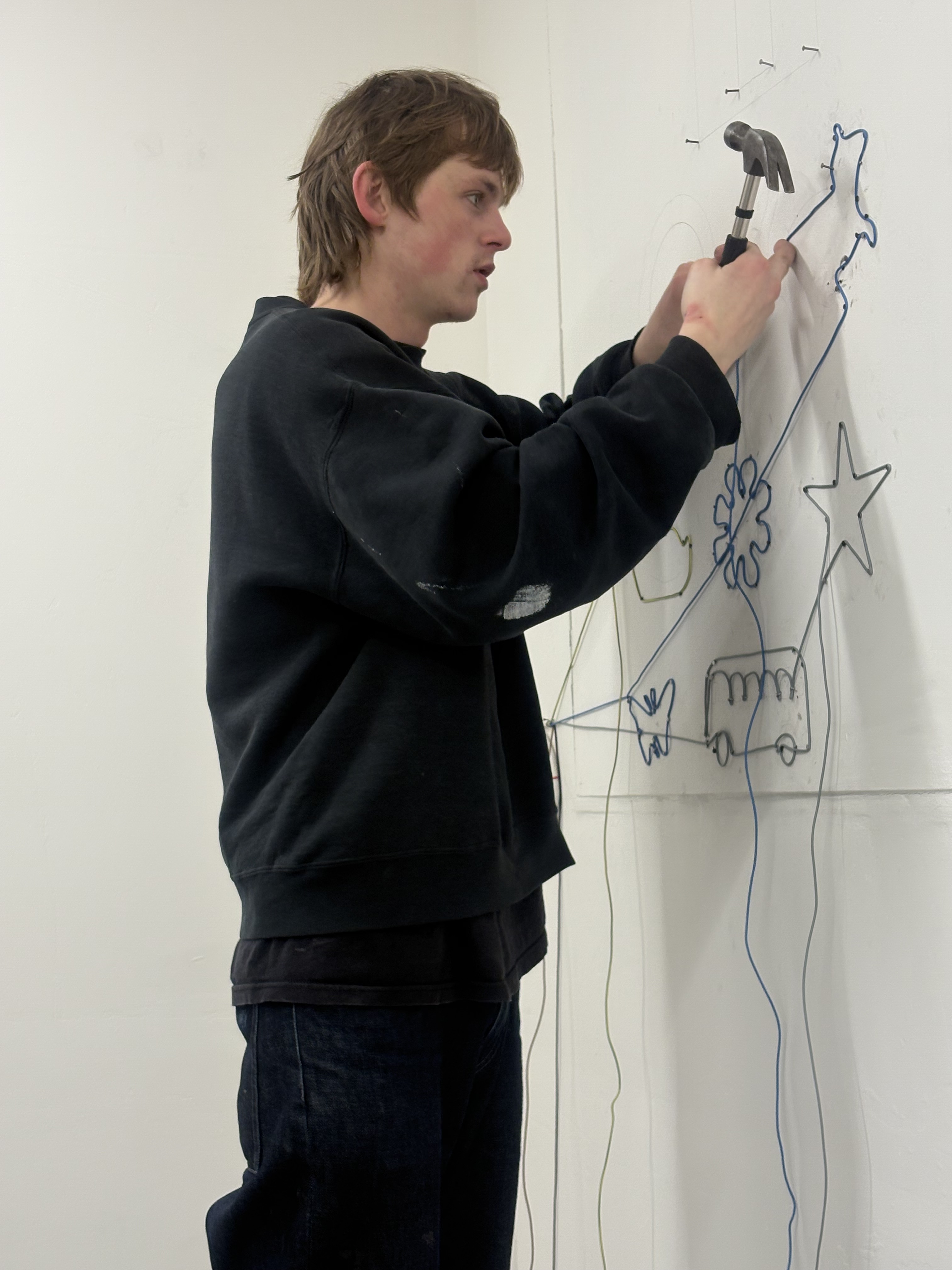
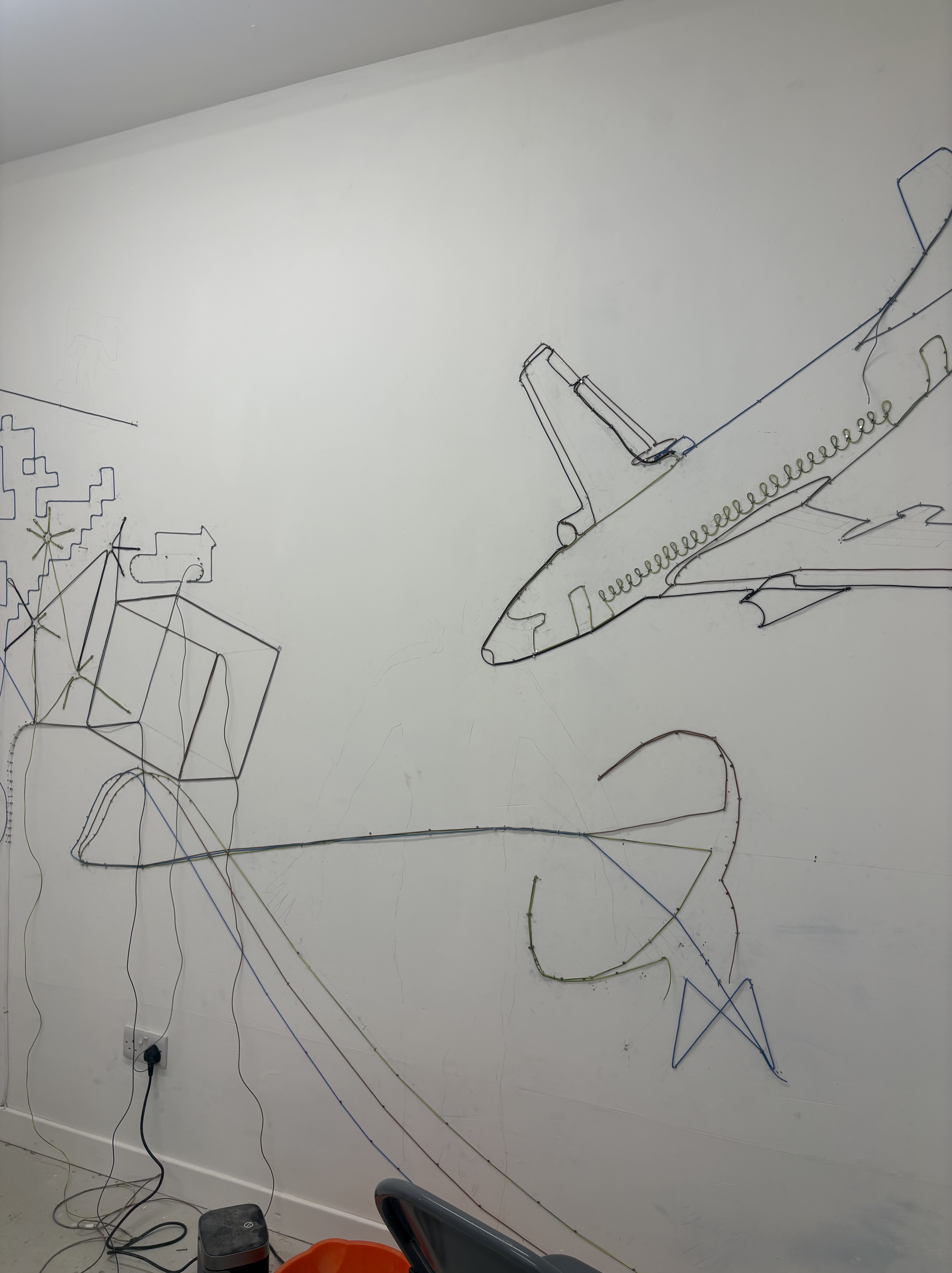
“Fin’s practice moves between digital sources, physical wandering, and the translation of experience into image. Beginning with ideas and locations gathered online, Fin shifts into a slower, more tactile process of walking and composing, considering how what he sees might be flattened, distilled, or reimagined.
In this body of work, he replaces the camera with what he calls “cable management,” drawing from the linear language of maps, diagrams, and graphs. These structures, designed to clarify information become visual material in their own right. By placing the recognisable tangle of cables in dialogue with the ordered logic of these diagrams, Fin invites viewers to consider how data becomes image, and how the systems surrounding us can be represented within the gallery space.
Follow along @shiftgalleryglasgow for more exciting updates!”

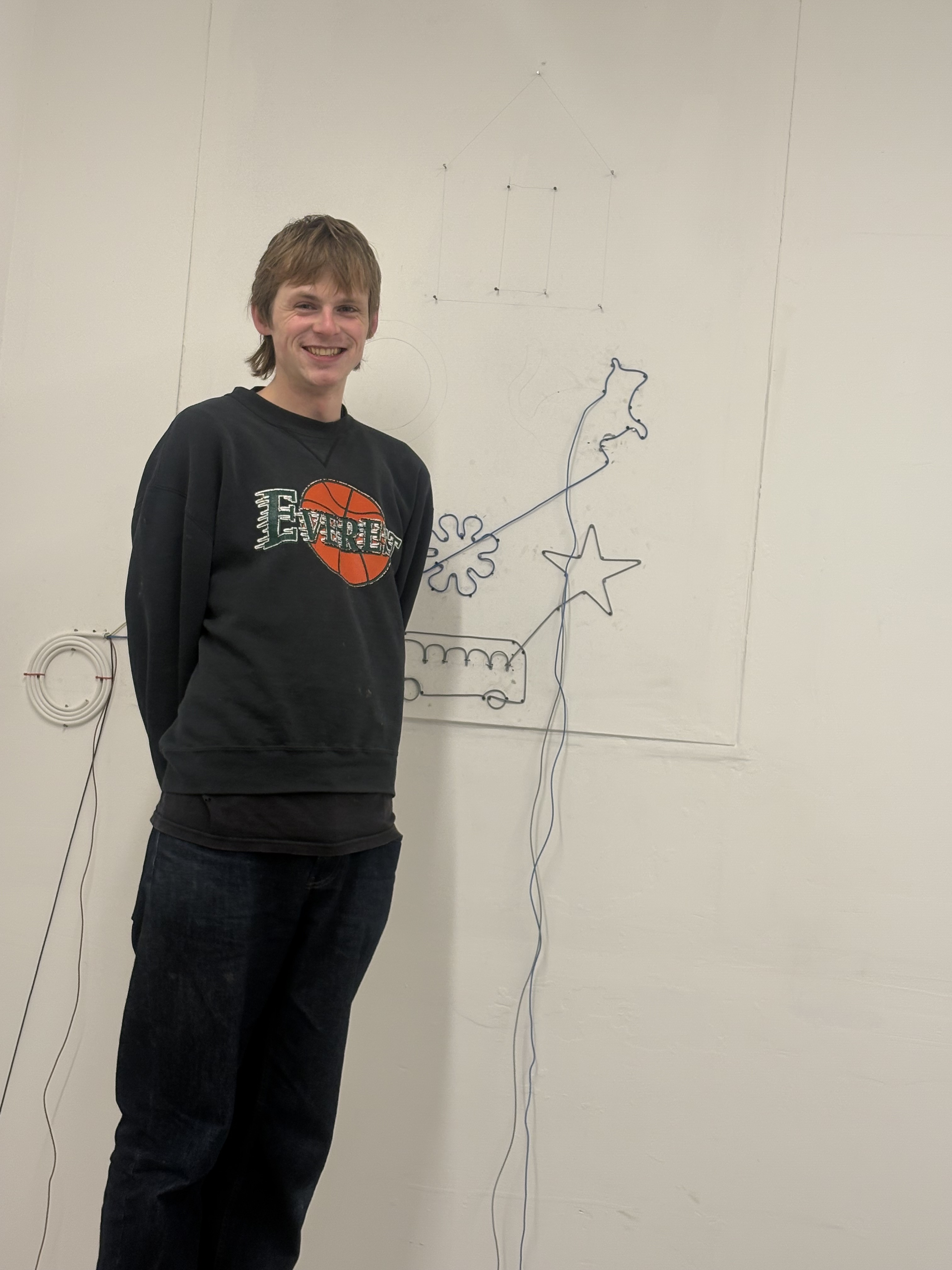
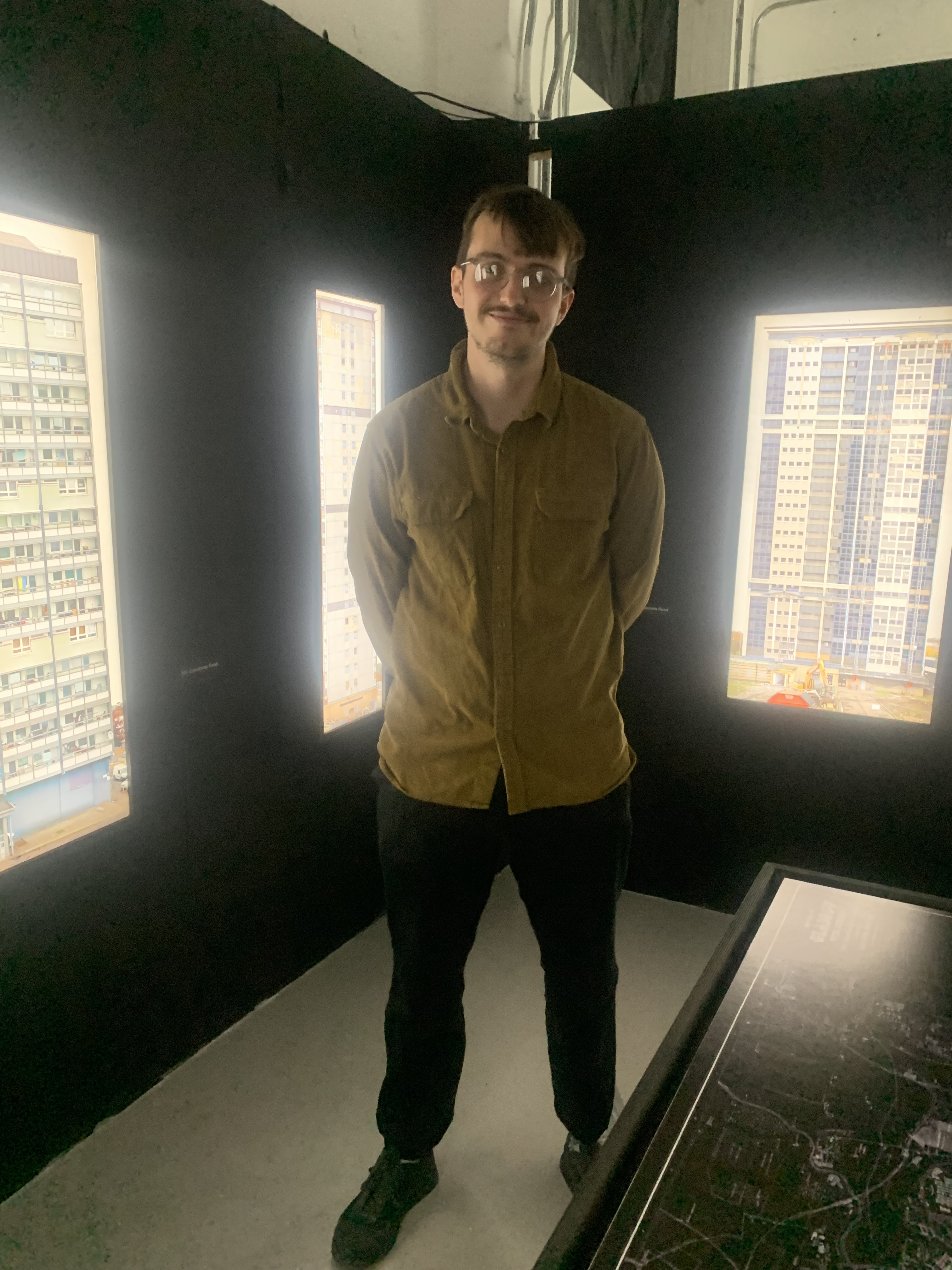
The Steven Campbell Trust were honoured to gain a sneak preview of Cable Management today – and we very much enjoyed meeting Fin as he installed his work in this brilliant new Glasgow exhibition venue.


We at the Steven Campbell Trust wish Fin, Ellis, and everyone else involved in Shift the best of luck with their exciting new venture.

Steven Campbell had a wide knowledge and understanding of the history of art and literature, and he combined this knowledge with a cutting-edge approach to making work. He was interested in the large scale, monumental figure painting of the past, and his work bridges the gulf between what is seen as a traditional way of producing art, to something more knowing and conceptual. Campbell’s use and referencing of traditional figure painting is in fact typical of what we would call a ‘postmodern’ approach, where elements from the past history of art are referenced in a contemporary art work, often in a very self-aware and ironic fashion.

Campbell’s work shows an affection for figurative painting, whilst also acknowledging its often absurd rigidity and pomposity. This can be seen in his piece Hunter Looking for his Glasses (above). In this painting, you can see the character of the hunter: a slightly sinister man with a game bag and a gun who’s stalking his way through the painted landscape. Like the detective in Poised Murder (discussed in a previous blog entry), the hunter character seems to be at a bit of a loss. As the title implies, he’s misplaced his glasses, and so stumbles around with double vision, on a quest to try and rediscover his sight. [1]
In the foreground of the painting is the cupid from Cezanne’s 1908 Still-Life with Cupid, which you can see in its original form below.

By including this cupid, Campbell’s poking fun at both himself and other artists who attempt to reference the history of ‘great art’ – hunting blindly, like the myopic hunter character here, for some sort of meaning, with the result that they often get lost.
Campbell’s work goes far beyond any debate about contemporary art and representation, however. In an interview, Steven said: ‘I think I became less interested in art, conceptual versus figurative, that kind of thing, and I became more interested in thinking about why things are the way they are.’ [2] In an upcoming post, we aim to discuss this quote, and Steven Campbell’s interest in levels of painted reality.
Footnotes:
[1] – p.16 & 59 / The Paintings of Steven Campbell: The Story So Far/ by Duncan MacMillan/ Publisher: South London Gallery/ Date Published: 1993
[2] p.108 – The Artist in Conversation/ Steven Campbell describes his recent paintings in conversation with Duncan Macmillan, Bollochleam, Wednesday 10 March 1993 / The Paintings of Steven Campbell: The Story So Far/ by Duncan MacMillan/ Publisher: South London Gallery/ Date Published: 1993
A major source used in this blog post was The Paintings of Steven Campbell: The Story So Far/ by Duncan MacMillan/ Publisher: South London Gallery/ Date Published: 1993 (p.12, 16, 59, & 108). If you’re wanting to find out more about the work of Steven Campbell, we would highly recommend getting this Duncan MacMillan book, which looks at Campbell’s work in a great deal of depth.