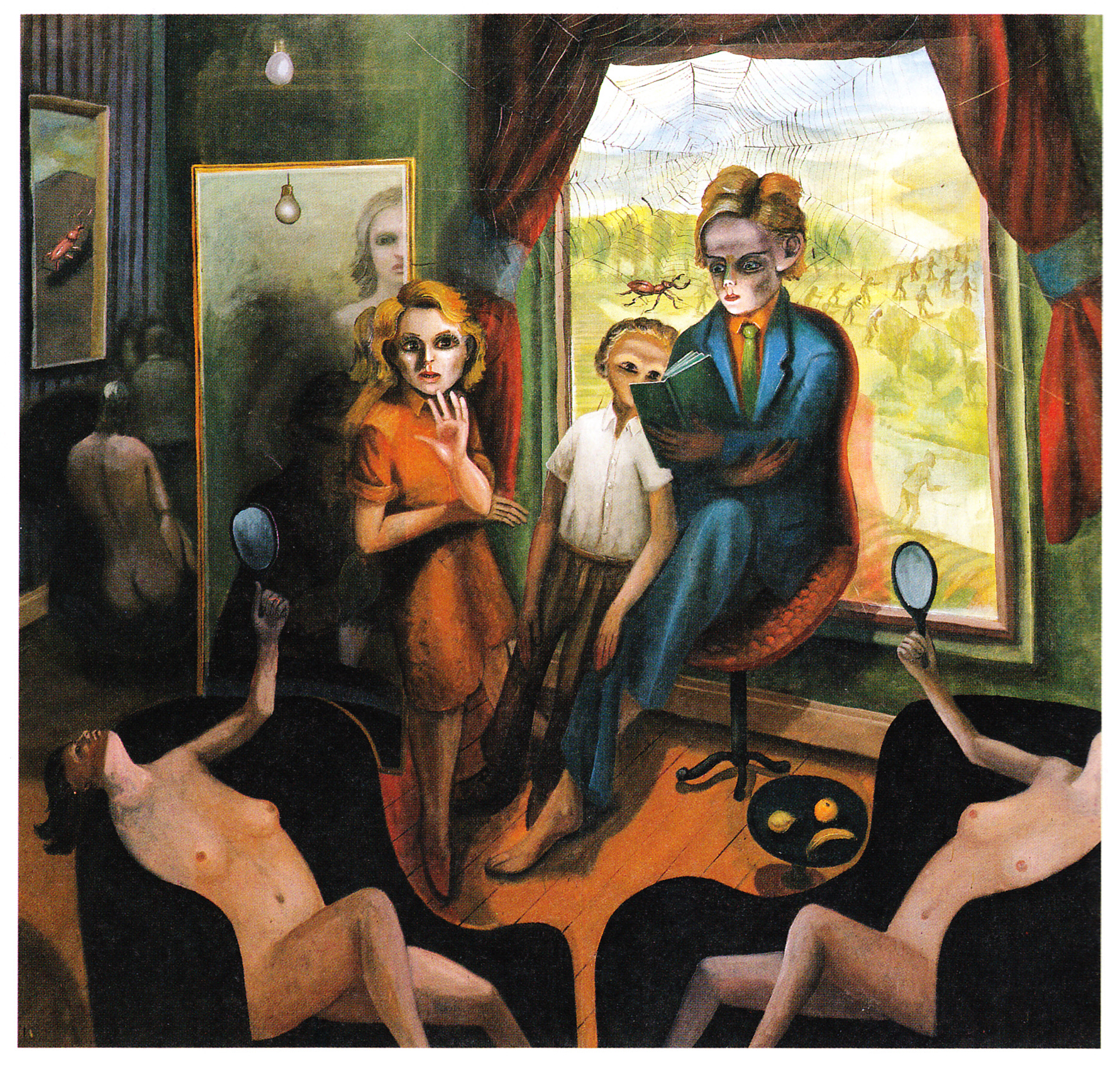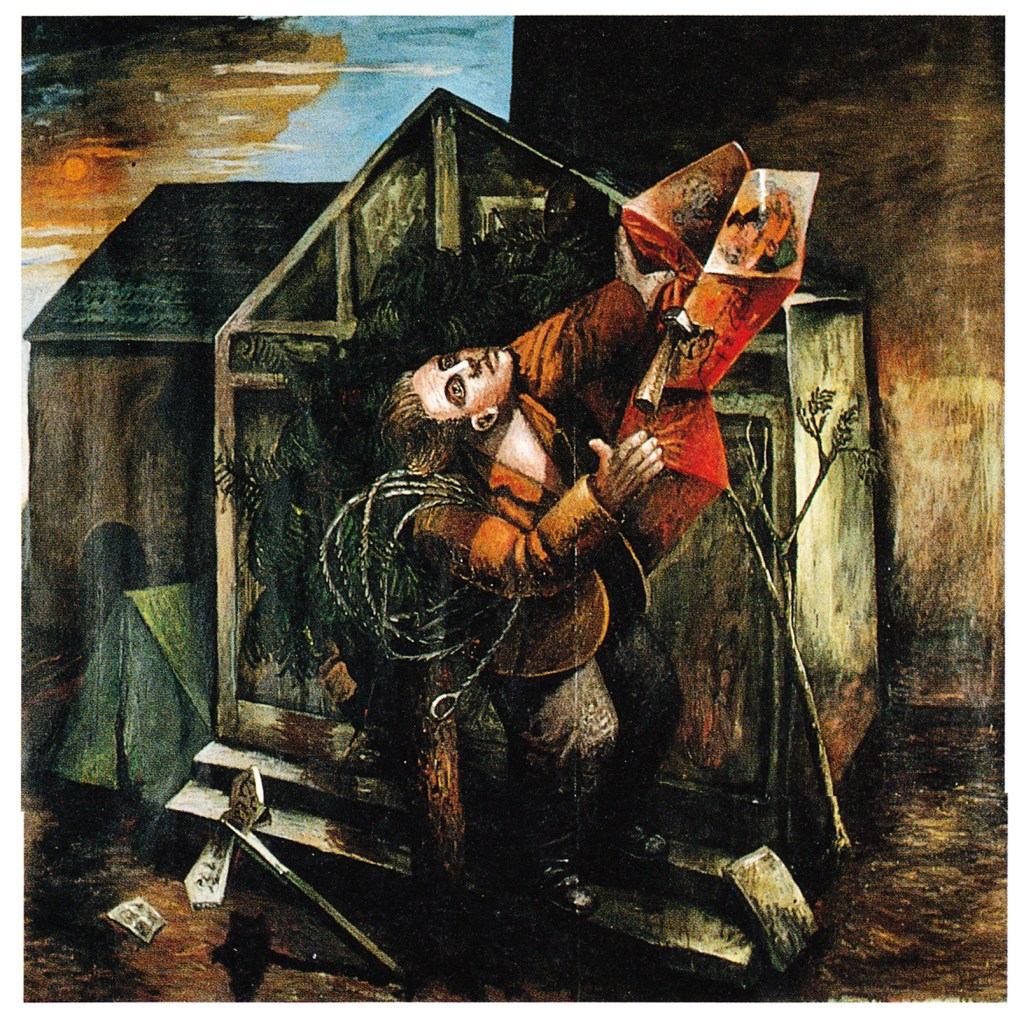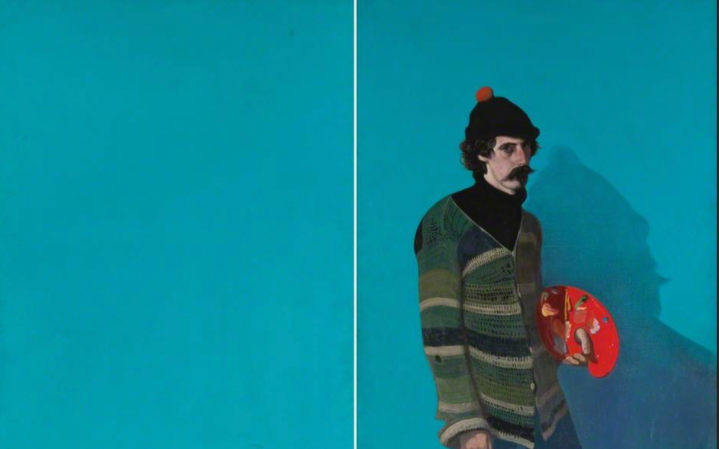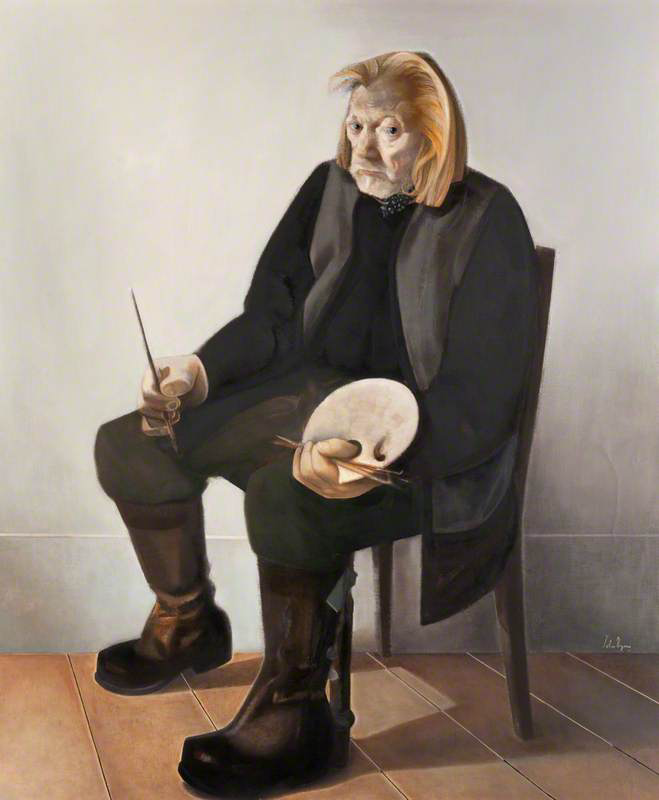
Steven Campbell used the famous literary character of Pinocchio to explore, in his own words, ‘what was the truth and what was lies in painting… a kind of play on what is honest art and what is untrue art.’ [1] Pinocchio’s nose grows every time he tells a lie, and Campbell drew on this symbolic motif as a means to question the truth of his own work – both in terms of the reality of painting itself, and the sometimes dubious nature of style and meaning in art. [2]
Pinocchio’s nose is often elongated in Campbell’s paintings, drawing attention to the falsehood and illusion within the work, as well as to the artist’s own self-doubt about what he was attempting to achieve. According to the writer Duncan MacMillan, Campbell would include paintings of Pinocchio in exhibitions alongside other works that he liked, but was insecure about – using the character as a means to question which paintings had succeeded and contained some sort of truth, and which had failed and were therefore false. [3]
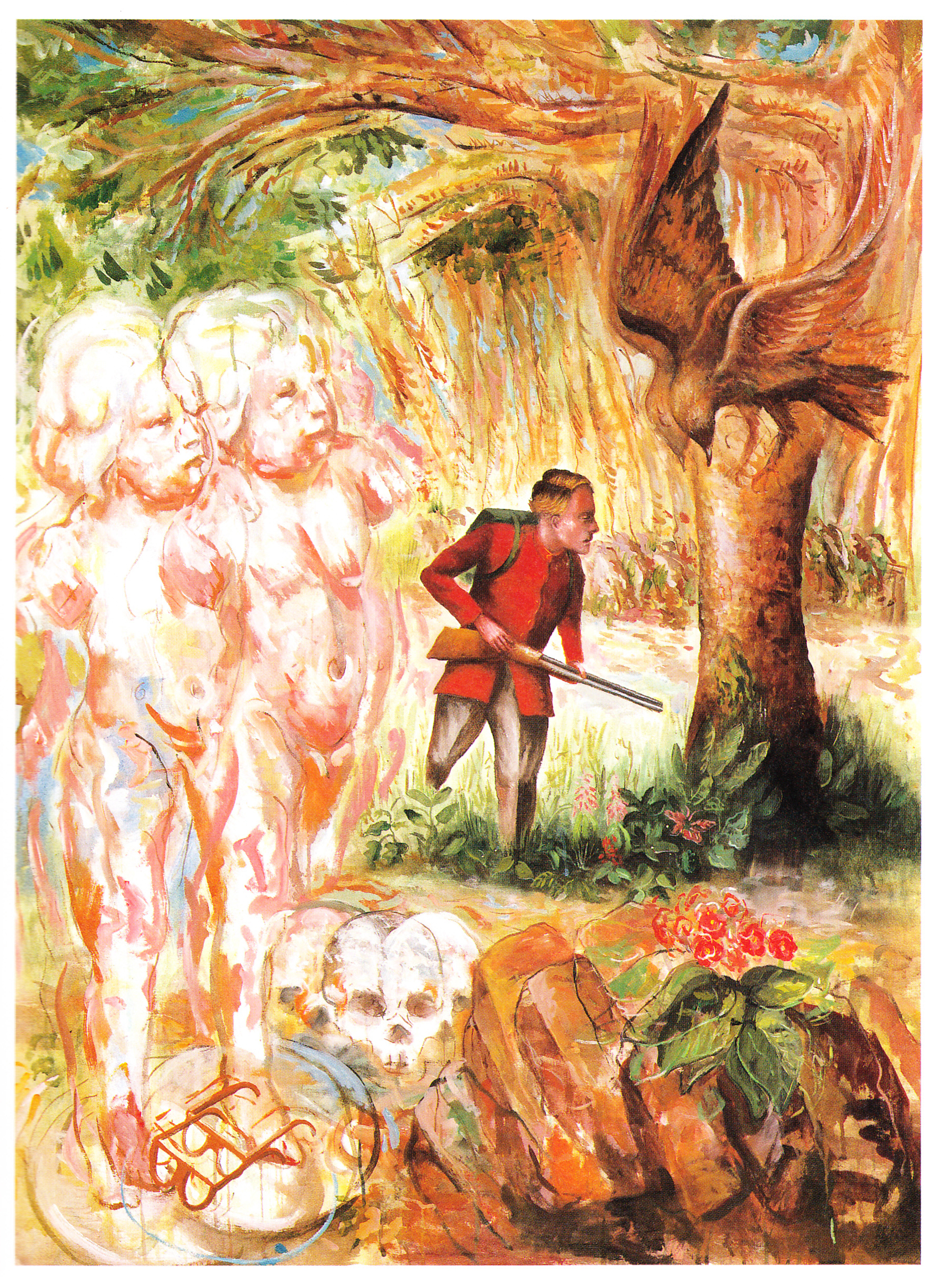
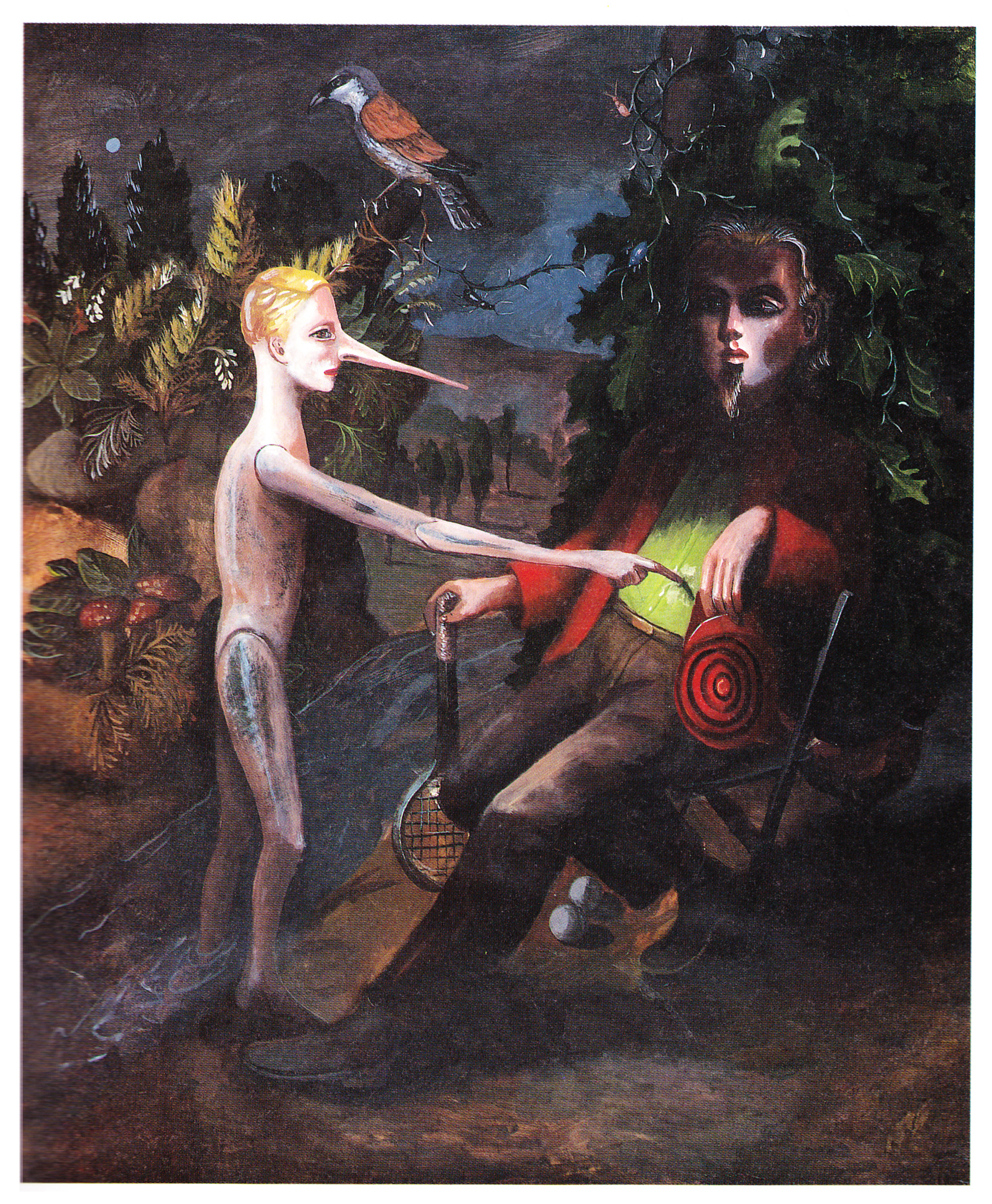
In the above painting, Pinocchio, the Habit of the Shrike, Pinocchio stands next to a figure who appears to resemble the artist himself, prodding him with his wooden finger. On the top left of the painting is a shrike – a bird known for its habit of impaling its victims on thorns as sharp as Pinocchio’s nose. [4] Pinocchio stands beside the artist, threatening to impale him with the very falsehood that Campbell believed might exist within painting itself.
Yet Pinocchio can also be understood as a positive symbolic figure for Campbell, in the sense that, without constant self-doubt and questioning, his work wouldn’t be as interesting, dynamic and thought-provoking as it is.
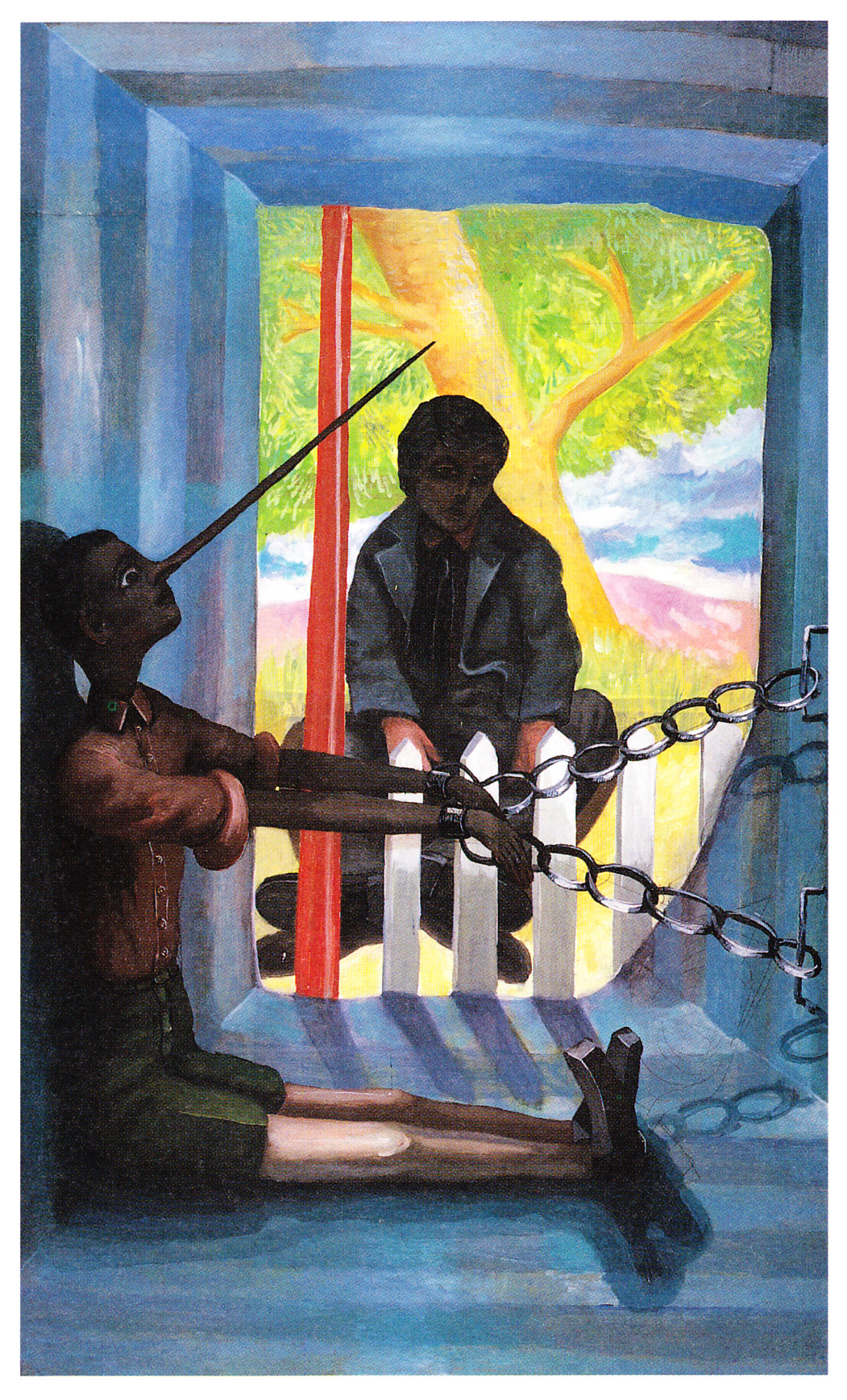
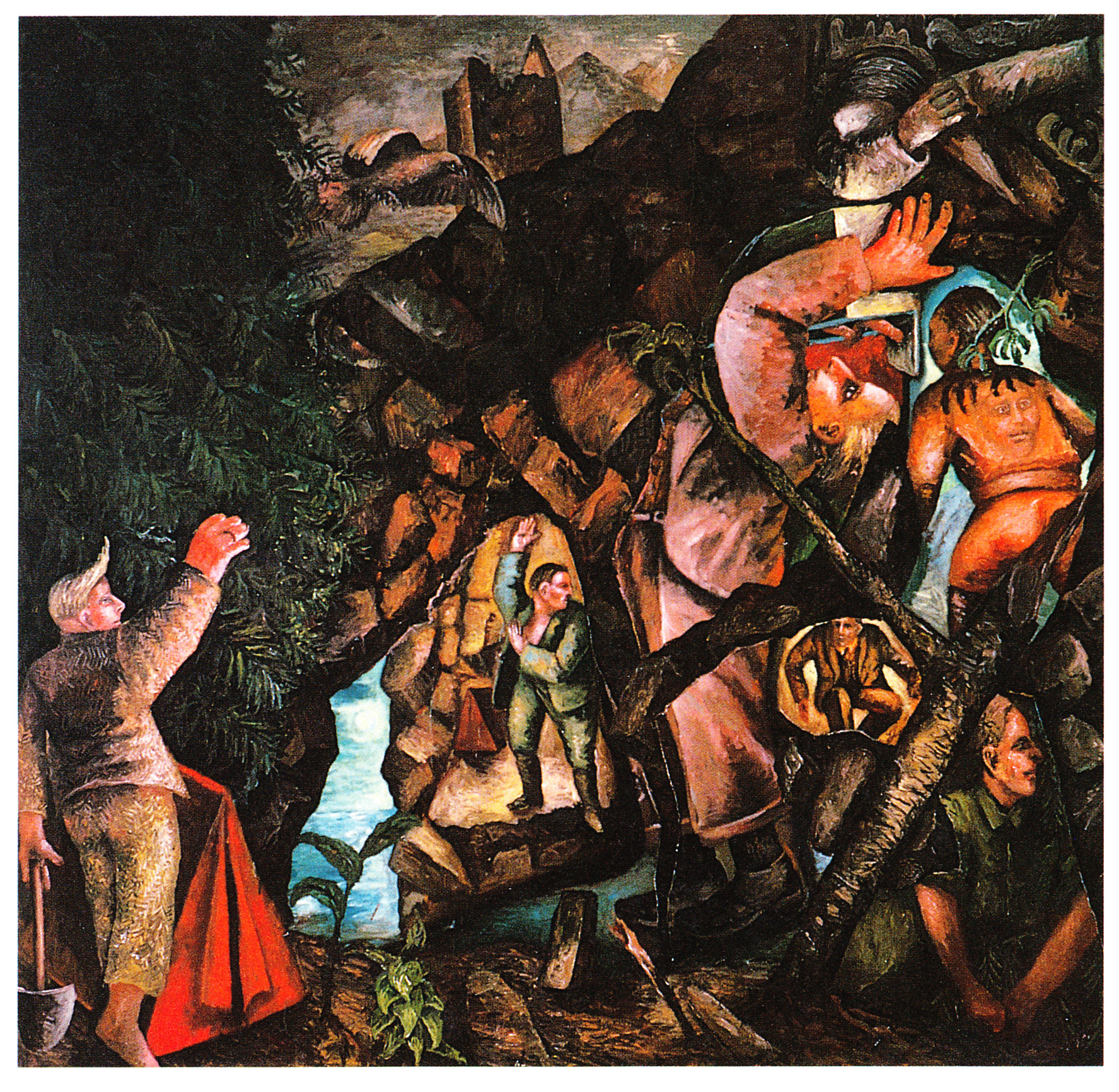
In Campbell’s piece Pinocchio in Chains, we see Pinocchio chained up and imprisoned, a picket-fence separating a dark interior from the bright landscape beyond. In a certain branch of Indonesian funerary art, artists create puppet-like effigies of the dead and place them within elevated cliffside balconies with wooden barricades in front of them, with these barriers serving both to guard the ancestral effigies and to symbolize the boundary between the living and the dead. [5] Here, Pinocchio is similarly separated from a spectator who looks in on him, and we’re unsure whether it’s Pinocchio that inhabits the land of the dead, or the spectator.
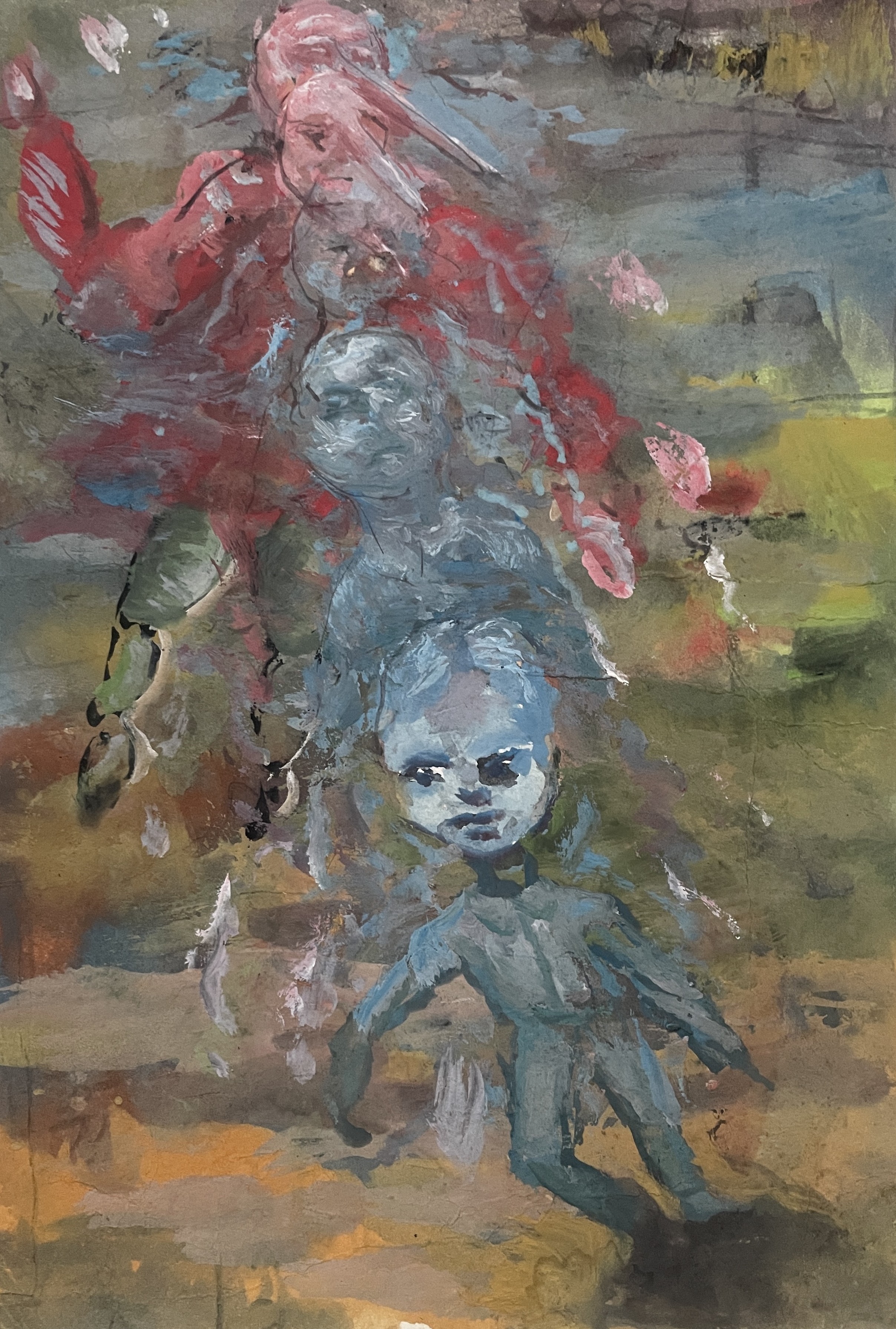
A painted sketch from one of Steven Campbell’s sketchbooks, showing Pinocchio transforming into a real boy.
Pinocchio, as a character, makes us question our own existence because we can never be entirely certain whether he is real or unreal, alive or dead. He is a wooden boy who possesses consciousness and is on a constant quest to become more ‘real’. Because he is made of wood, he belongs to the static world of art; yet, like art itself, he is animated by ideas, his shape referencing the human form and containing psychological aspects of the artist/maker. The character of Pinocchio here therefore makes us think still further about truth and lies, reality and unreality.
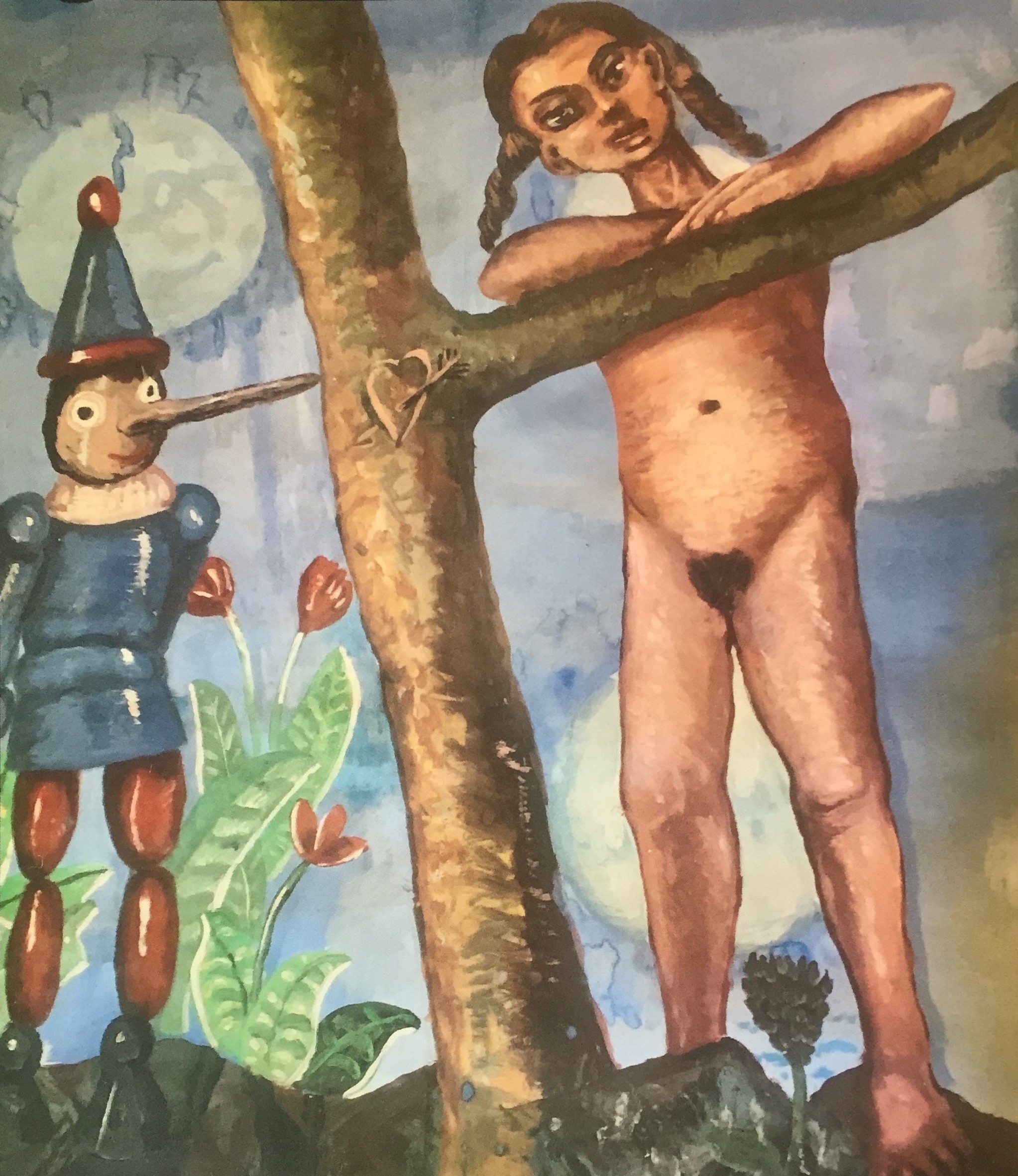
Below is a wonderful anecdote provided by Steven Campbell’s wife, Carol, which discusses the above painting, whilst also giving us a more personal insight into Steven’s fascination with Pinocchio:
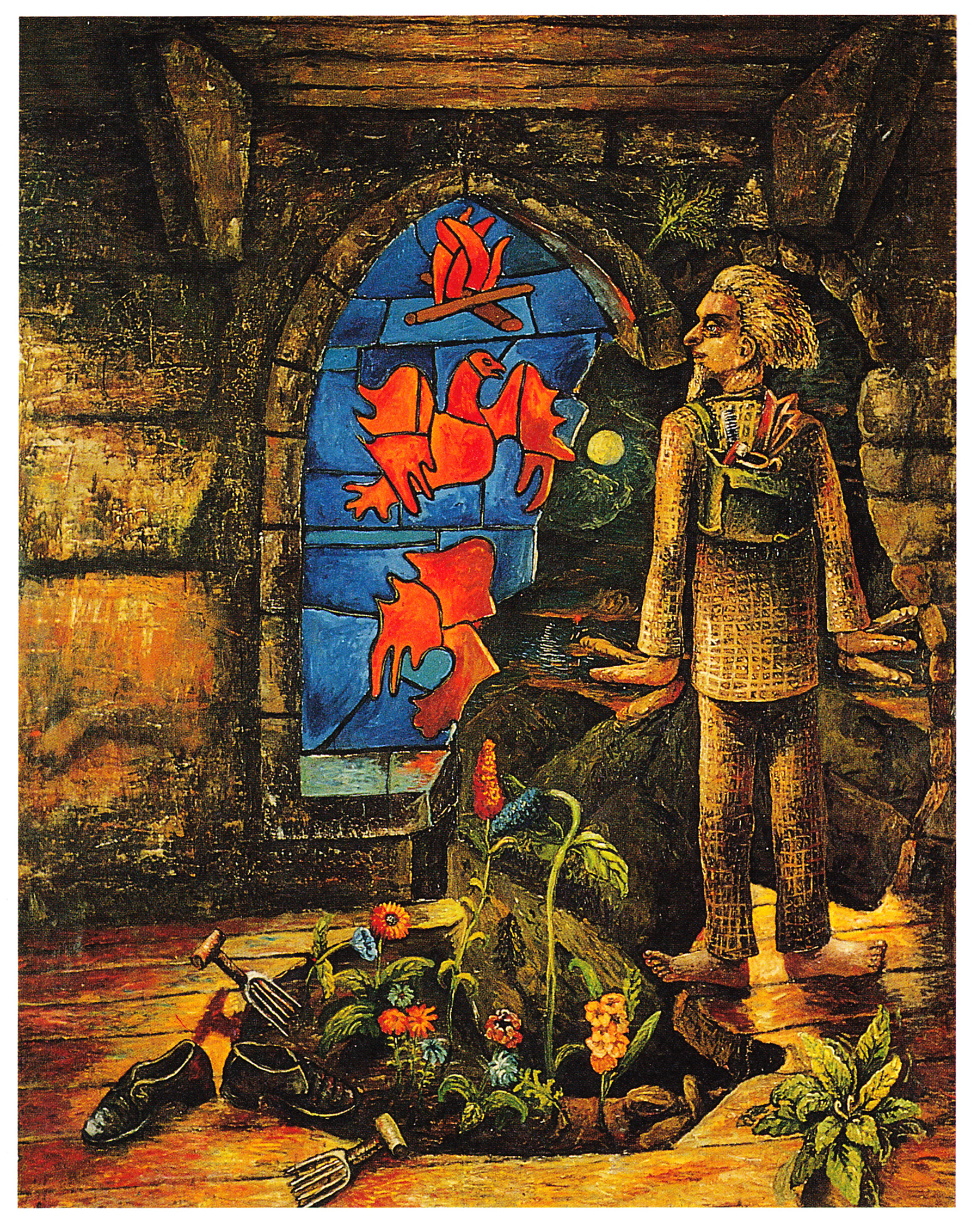
‘This painting draws on what was to become a leitmotif for Steven for over a decade: Pinocchio.
Our family has for many, many years spent our summers in Italy with the majority of our time spent between Tuscany and Umbria around Cortona and Lago Trasimeno.
We first started going when our 3 children were small and it was then that we discovered a theme park on the outskirts of Perugia called Citta Della Domenica or Sunday City. I use the term theme park very loosely, as the park was set up in the 60’s and has changed little since then. It is part nature reserve, part sculpture-park but it does indeed have a theme and that theme is Pinocchio, not the Disneyland cartoon character but the much darker original story by Carlo Collodi.
Dotted around the park are various scenes from the story, some funny but others quite frightening, especially for young kids.
One in particular which struck Steven, was of Pinocchio sitting very dismally in a dark cave-like prison shackled to the wall. He did in fact make a painting of it called Pinocchio in Chains.
The Pinocchio here however is modelled on the souvenirs that crowd all the shops in the surrounding area from Lucca to Siena. They come as jointed figures, as in the painting, ranging in size from key rings to actual puppets, some even come as comically collapsible figures when you press the bottom of their stand.
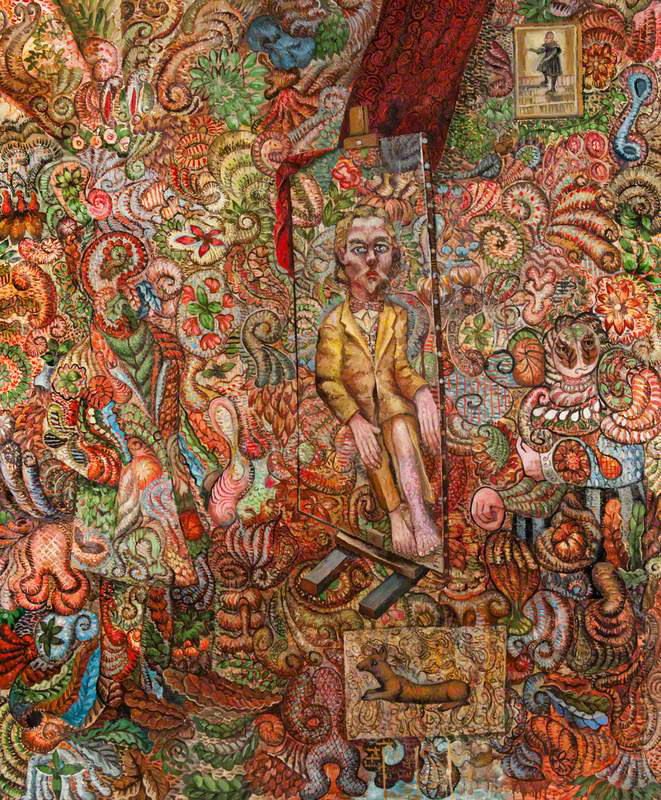
Steven has chosen, on this occasion, to combine him with a female protagonist, a loosely based Heidi type figure, a pubescent girl/woman straddling both those worlds while embracing the tree that we could conjecture had been the one used to make our hero.
Steven had since the 80’s, with his Painting Ding Dong in the National Gallery of Scotland, drawn upon this female figure complete with her childlike braids, juxtaposed with her womanly strength or self knowledge.
Further Pinocchio images and information can be found in articles relating to Steven’s 1993 exhibition at the Talbot Rice Centre in Edinburgh, called Pinocchio’s Present.’
~Carol Campbell.
Sources used in this blog post: The Paintings of Steven Campbell: The Story So Far/ by Duncan MacMillan/ Publisher: South London Gallery/ Date Published: 1993 (p. 15. 84, 85 & 109). If you’re wanting to find out more about the work of Steven Campbell, we would highly recommend getting this Duncan MacMillan book, which looks at Campbell’s work in a great deal of depth.
Footnotes:
[1] – p.109 / The Artist in Conversation/ Steven Campbell describes his recent paintings in conversation with Duncan Macmillan, Bollochleam, Wednesday 10 March 1993 / The Paintings of Steven Campbell: The Story So Far/ by Duncan MacMillan/ Publisher: South London Gallery/ Date Published: 1993
[2] – p.15 / The Paintings of Steven Campbell: The Story So Far/ by Duncan MacMillan/ Publisher: South London Gallery/ Date Published: 1993
[3] – p.109 / The Artist in Conversation/ Steven Campbell describes his recent paintings in conversation with Duncan Macmillan, Bollochleam, Wednesday 10 March 1993 / The Paintings of Steven Campbell: The Story So Far/ by Duncan MacMillan/ Publisher: South London Gallery/ Date Published: 1993
[4] – p.85 / The Paintings of Steven Campbell: The Story So Far/ by Duncan MacMillan/ Publisher: South London Gallery/ Date Published: 1993
[5) – p.85 / The Paintings of Steven Campbell: The Story So Far/ by Duncan MacMillan/ Publisher: South London Gallery/ Date Published: 1993