Steven Campbell had a wide knowledge and understanding of the history of art and literature, and he combined this knowledge with a cutting-edge approach to making work. He was interested in the large scale, monumental figure painting of the past, and his work bridges the gulf between what is seen as a traditional way of producing art, to something more knowing and conceptual. Campbell’s use and referencing of traditional figure painting is in fact typical of what we would call a ‘postmodern’ approach, where elements from the past history of art are referenced in a contemporary art work, often in a very self-aware and ironic fashion.
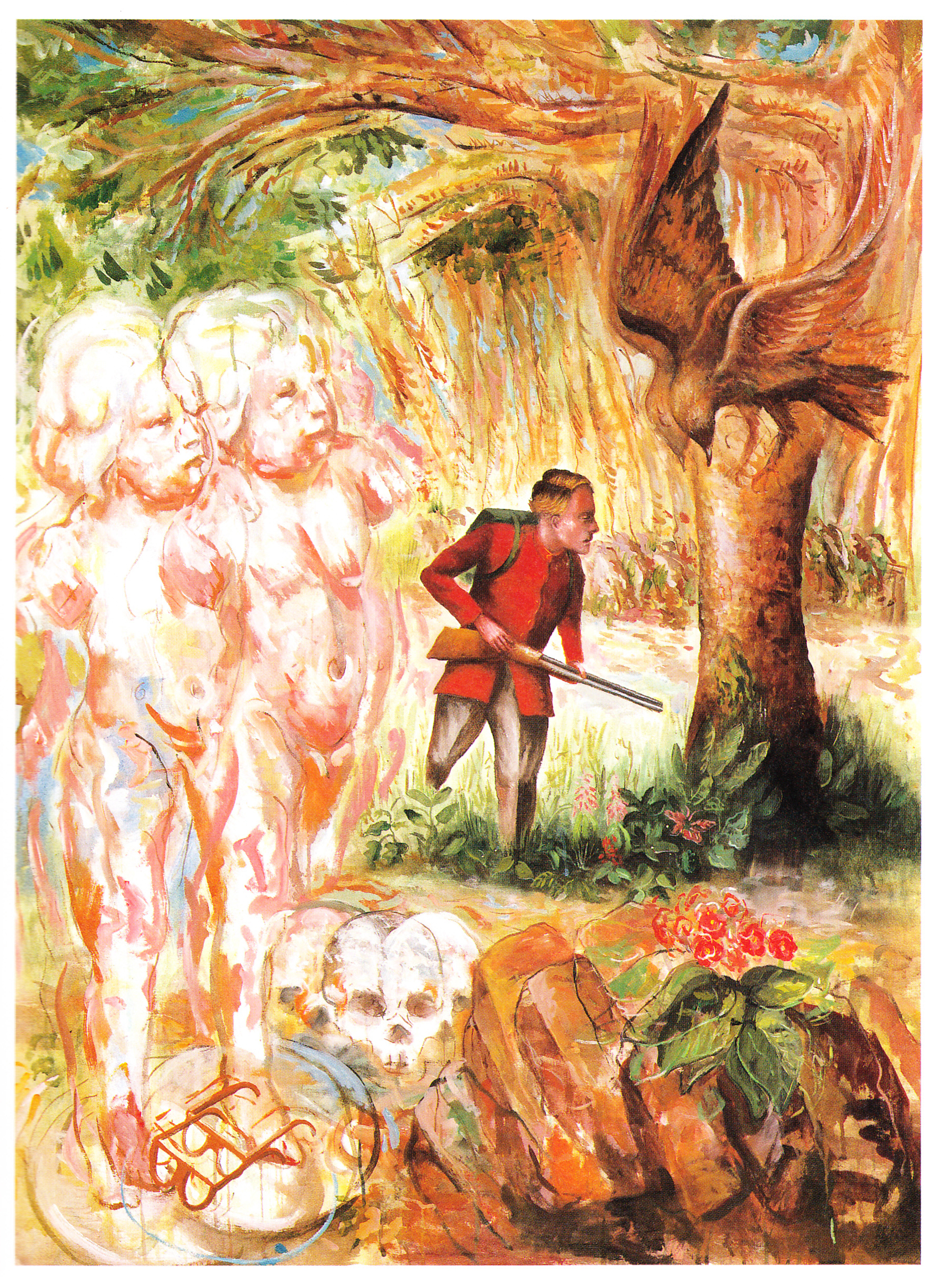
Campbell’s work shows an affection for figurative painting, whilst also acknowledging its often absurd rigidity and pomposity. This can be seen in his piece Hunter Looking for his Glasses (above). In this painting, you can see the character of the hunter: a slightly sinister man with a game bag and a gun who’s stalking his way through the painted landscape. Like the detective in Poised Murder (discussed in a previous blog entry), the hunter character seems to be at a bit of a loss. As the title implies, he’s misplaced his glasses, and so stumbles around with double vision, on a quest to try and rediscover his sight. [1]
In the foreground of the painting is the cupid from Cezanne’s 1908 Still-Life with Cupid, which you can see in its original form below.
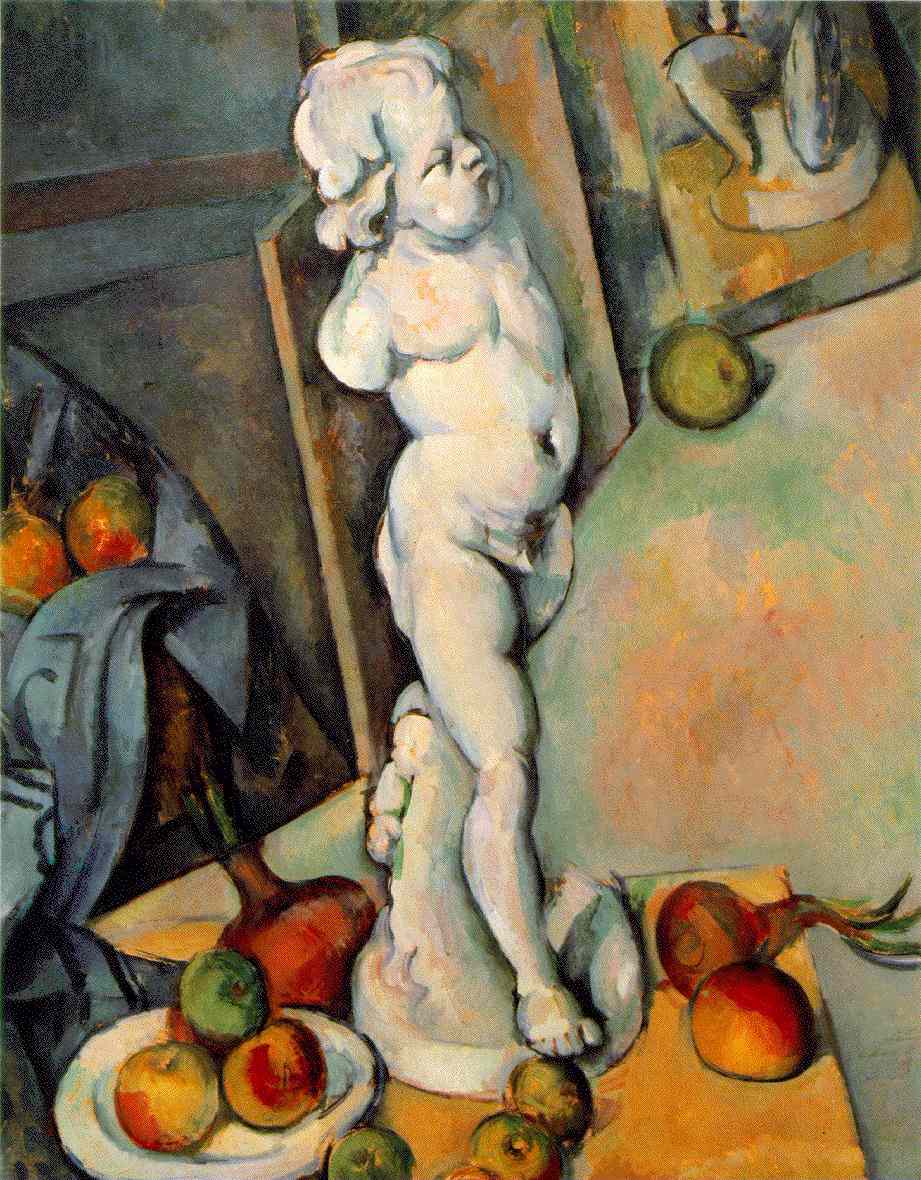
By including this cupid, Campbell’s poking fun at both himself and other artists who attempt to reference the history of ‘great art’ – hunting blindly, like the myopic hunter character here, for some sort of meaning, with the result that they often get lost.
Campbell’s work goes far beyond any debate about contemporary art and representation, however. In an interview, Steven said: ‘I think I became less interested in art, conceptual versus figurative, that kind of thing, and I became more interested in thinking about why things are the way they are.’ [2] In an upcoming post, we aim to discuss this quote, and Steven Campbell’s interest in levels of painted reality.
Footnotes:
[1] – p.16 & 59 / The Paintings of Steven Campbell: The Story So Far/ by Duncan MacMillan/ Publisher: South London Gallery/ Date Published: 1993
[2] p.108 – The Artist in Conversation/ Steven Campbell describes his recent paintings in conversation with Duncan Macmillan, Bollochleam, Wednesday 10 March 1993 / The Paintings of Steven Campbell: The Story So Far/ by Duncan MacMillan/ Publisher: South London Gallery/ Date Published: 1993
A major source used in this blog post was The Paintings of Steven Campbell: The Story So Far/ by Duncan MacMillan/ Publisher: South London Gallery/ Date Published: 1993 (p.12, 16, 59, & 108). If you’re wanting to find out more about the work of Steven Campbell, we would highly recommend getting this Duncan MacMillan book, which looks at Campbell’s work in a great deal of depth.
 The Steven Campbell Trust