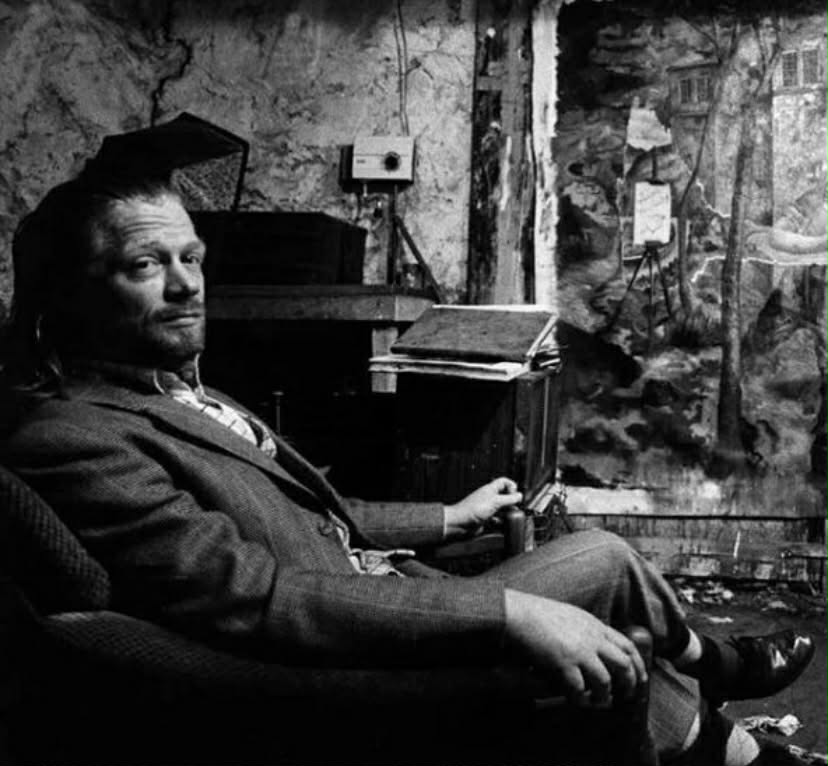
Steven in studio, 1980s.
Photo credit: Greer Campbell
Steven in studio, 1980s.
Photo credit: Greer Campbell
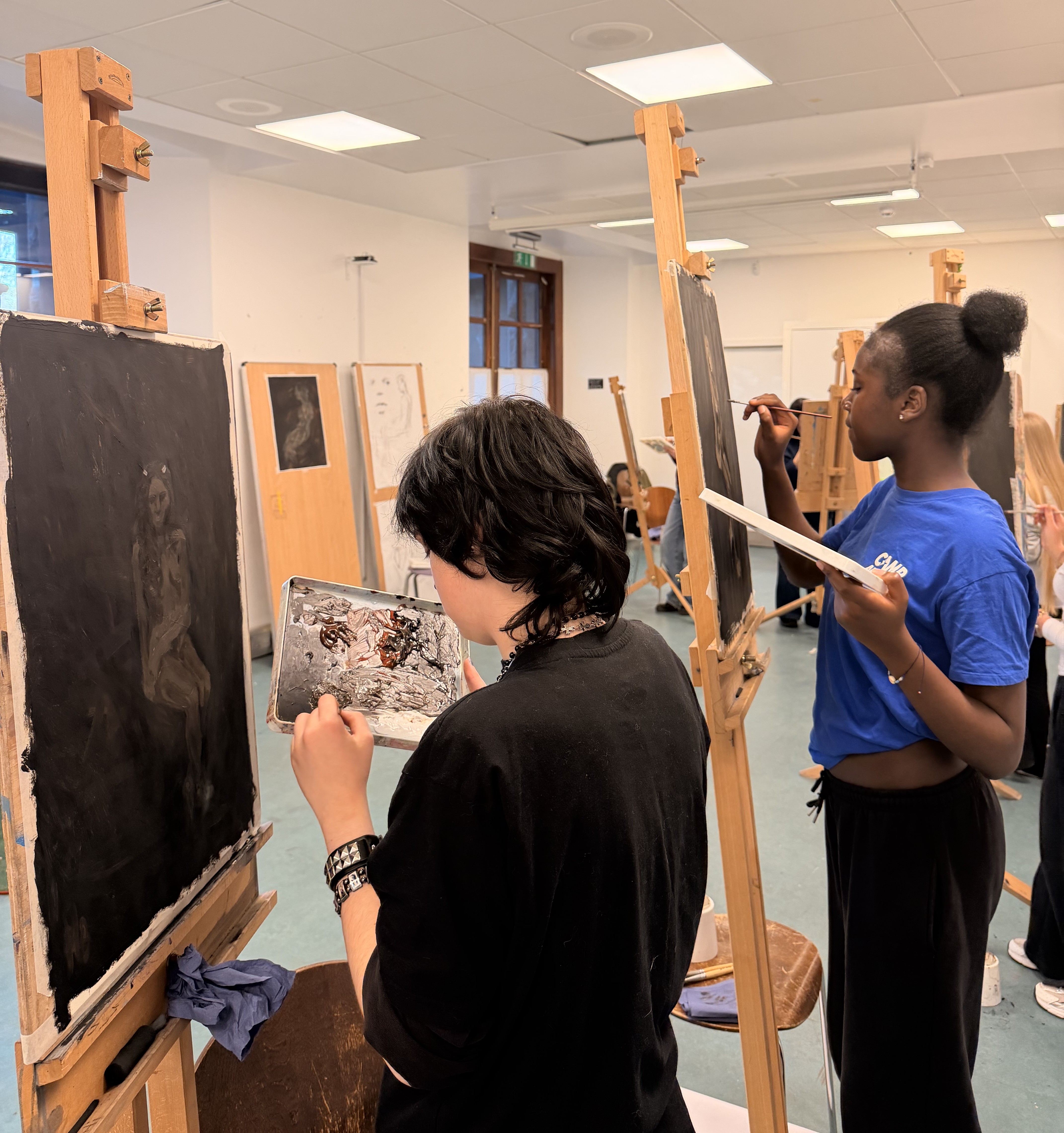
One of the ways that the Trust continues to honour Steven’s life and work is through activities and workshops for schools.
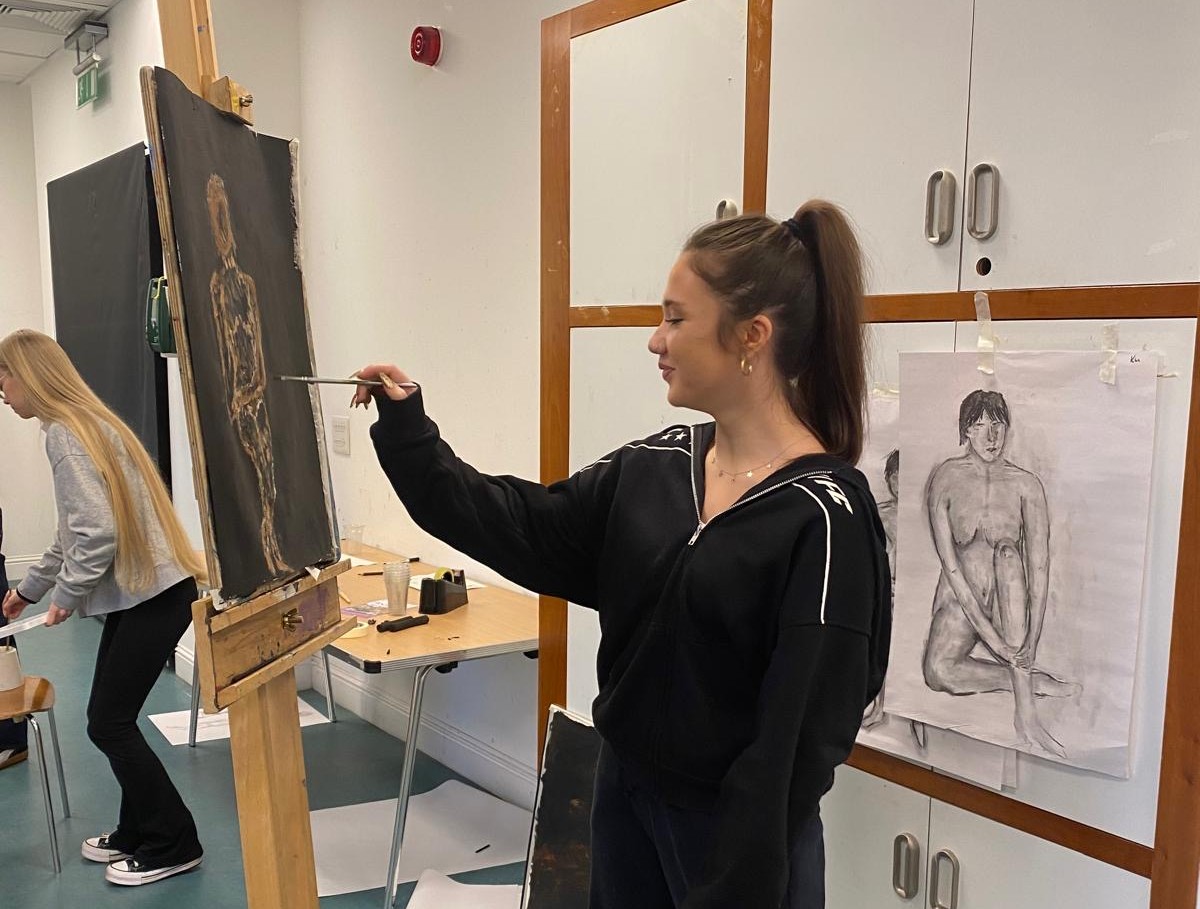
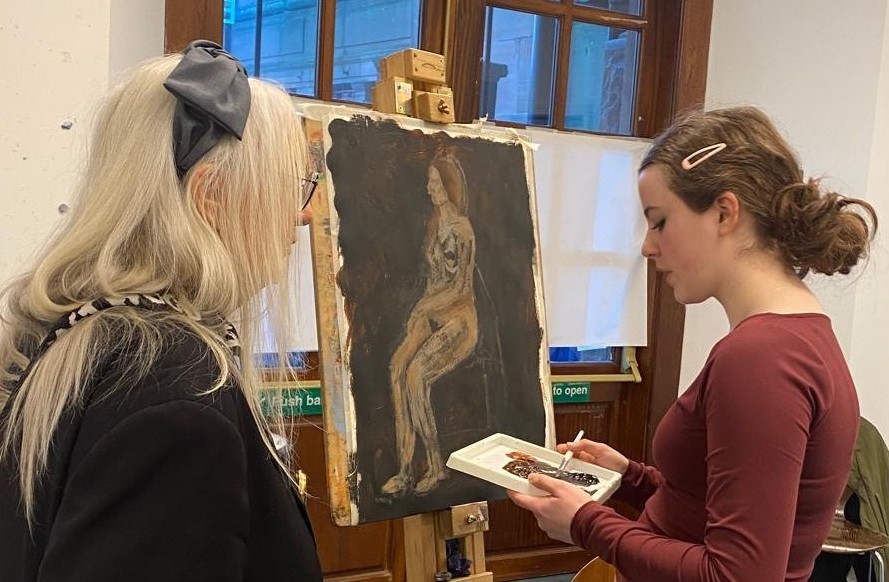
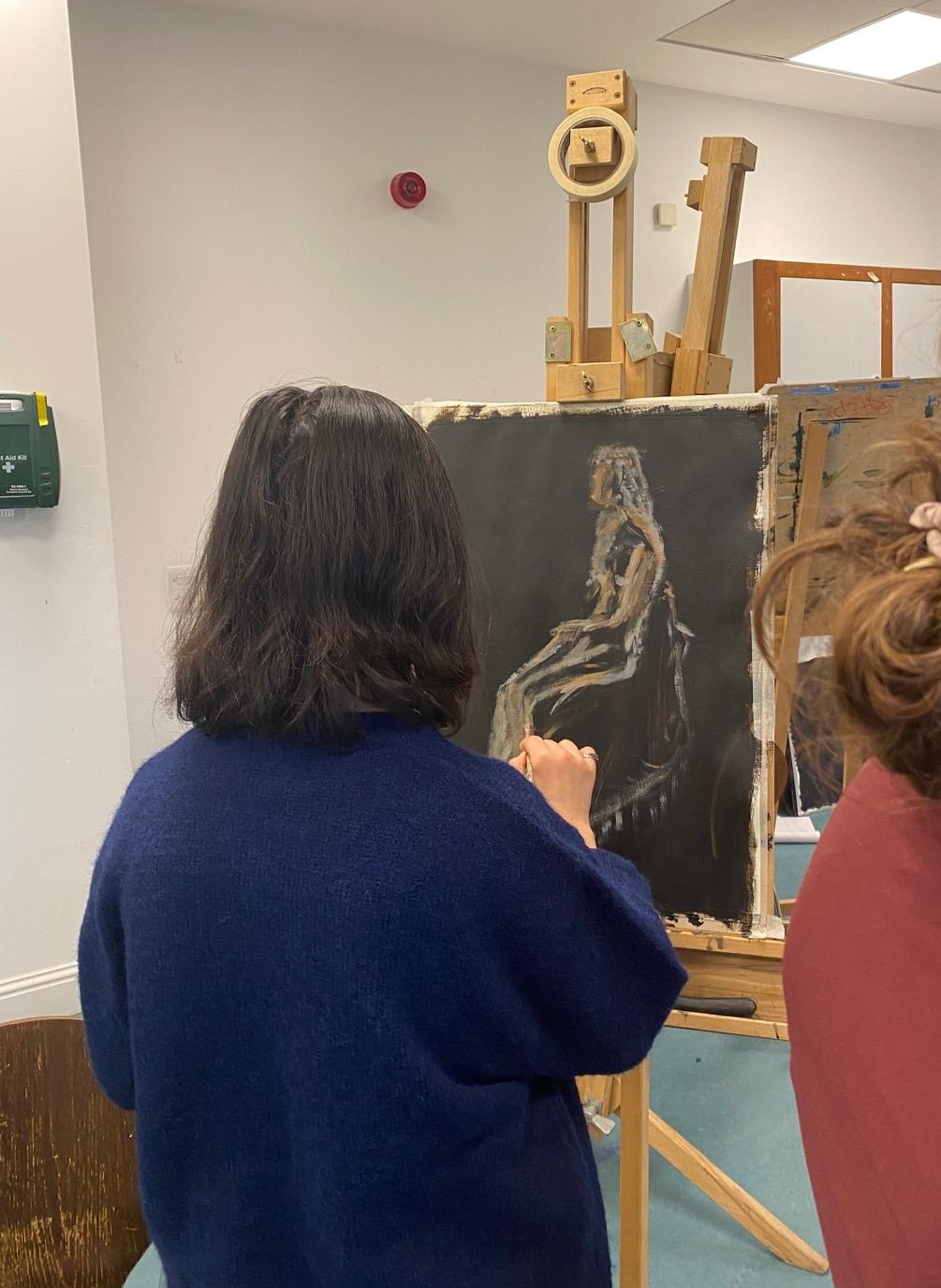
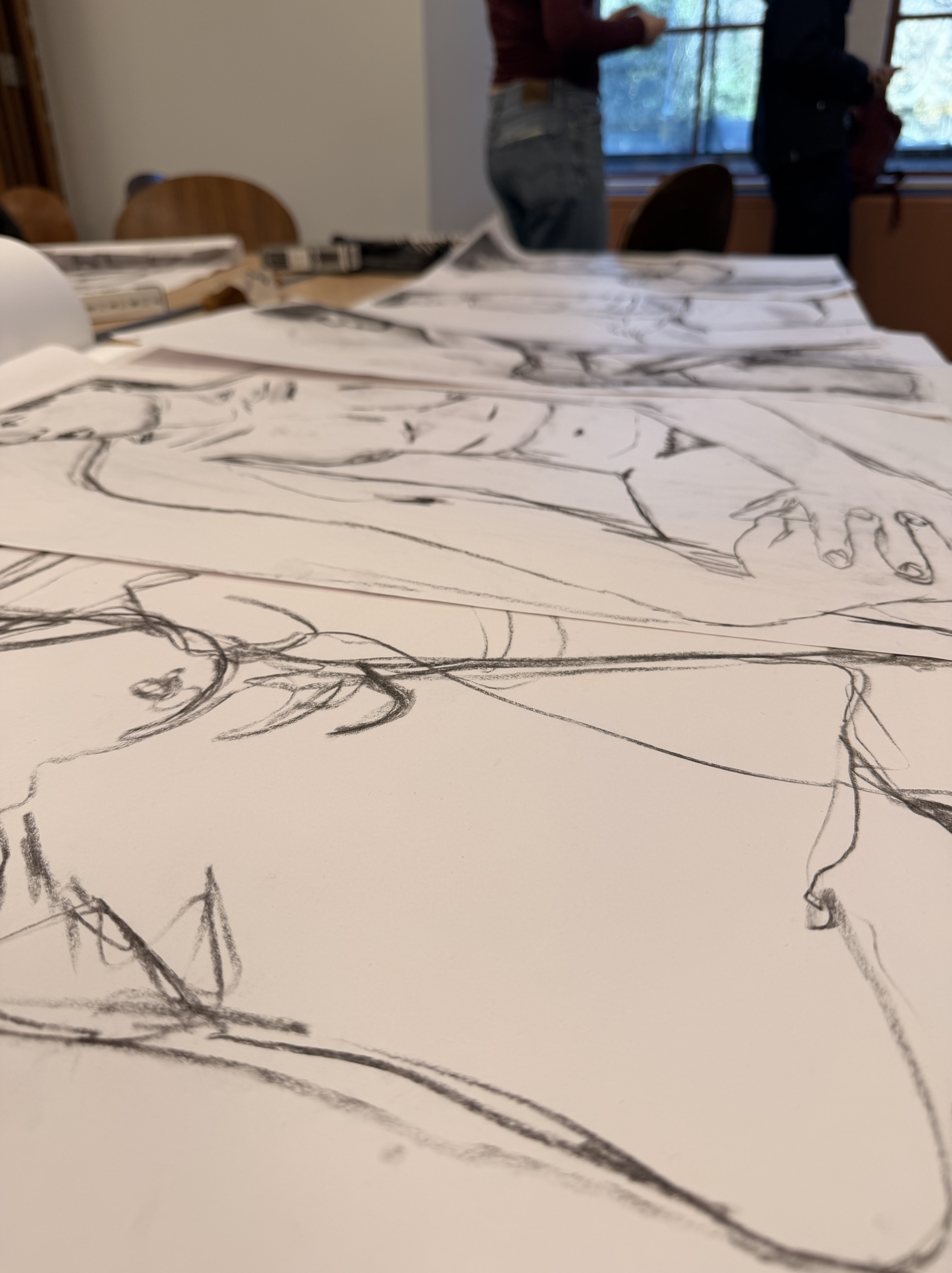
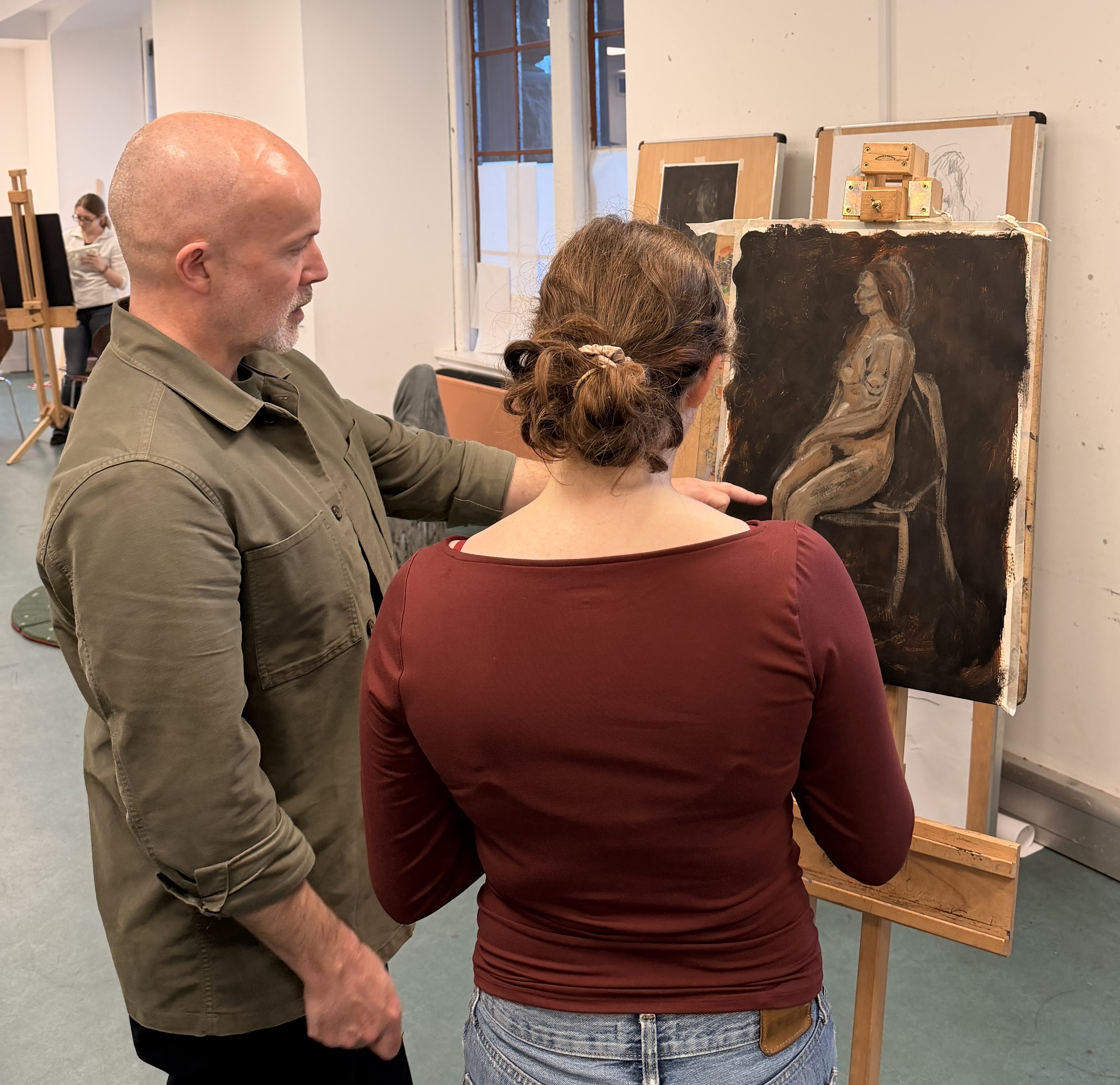
This year, artist Sandy Grant led an intensive two-day life-painting workshop at the Kelvingrove Art Gallery and Museum for pupils from 8 schools, including Hillhead High, Holyrood Secondary, St Paul’s High, Rosshall Academy, Springburn Academy, St Mungo’s Academy, St Thomas Aquinas Secondary, and Hyndland Academy.
The work was once again of a very high standard and the young people developed new skills through Sandy’s careful tutoring.
There was an enormous amount of dedication, energy and talent on display during this year’s workshop, and the attendees were all a credit to their schools.
We would like to give a massive thank you to Cass Art for generously supplying us with a wealth of art materials for use during the workshop. For charitable organisations like the Steven Campbell Trust, such support makes a huge difference, allowing educational events like this to run. We look forward to a long and fruitful partnership with Cass Art in the future.
Our thanks also to the staff at Kelvingrove Art Gallery and Museum for their support, and for providing us with a wonderful creative environment in which to hold the class.
Here are some of the impressive results from this year’s workshop:
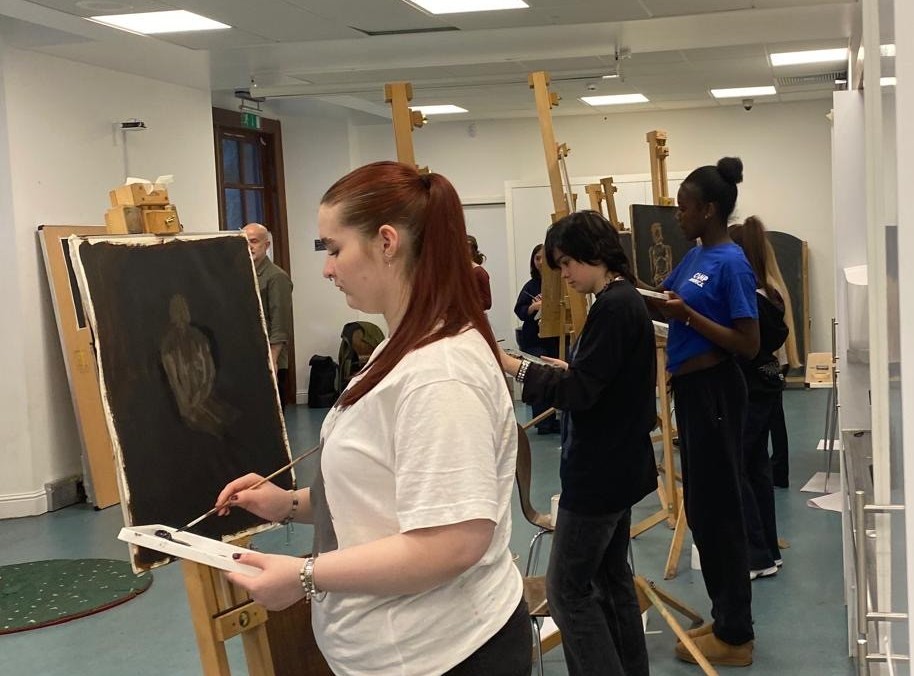
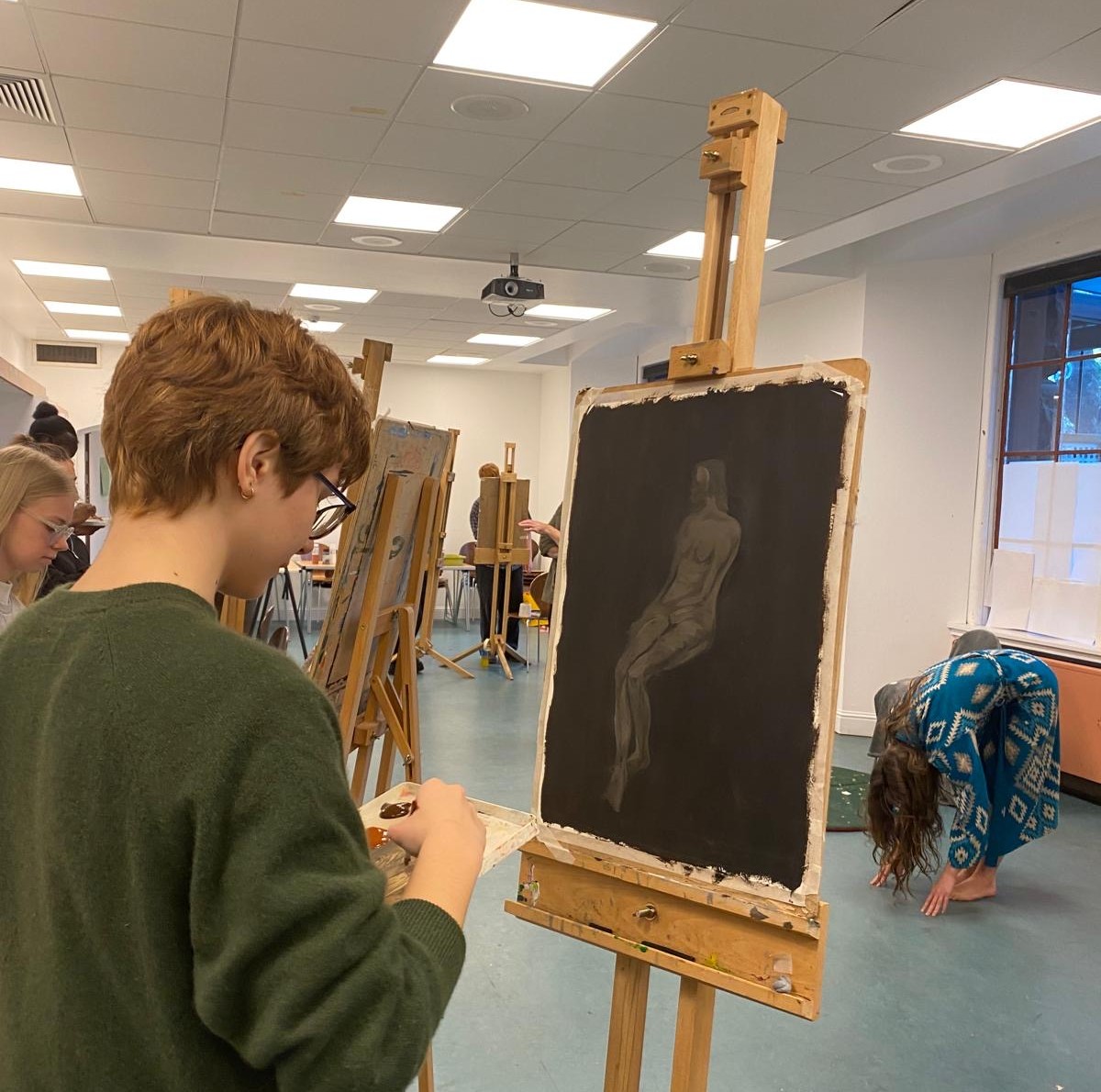
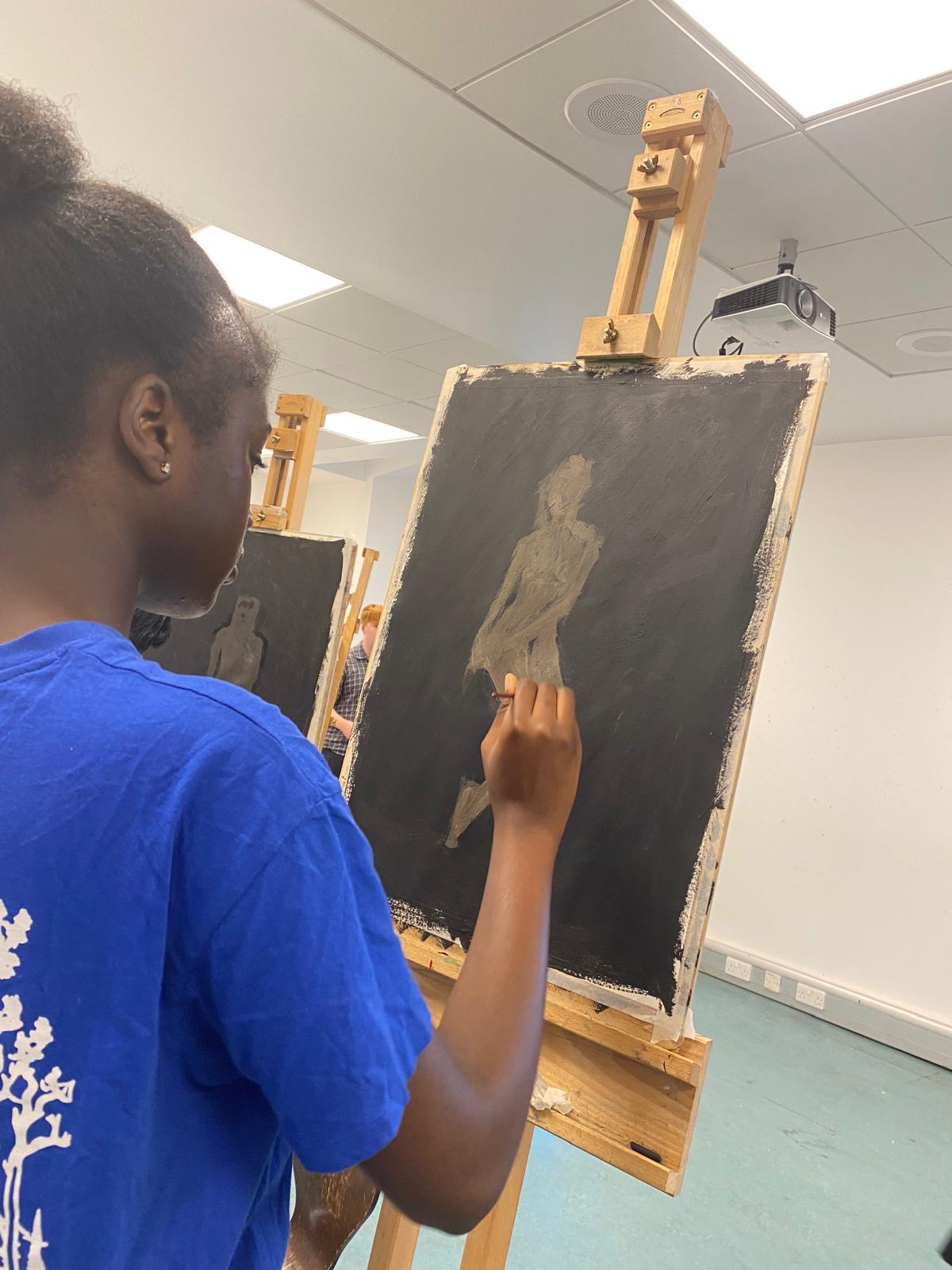
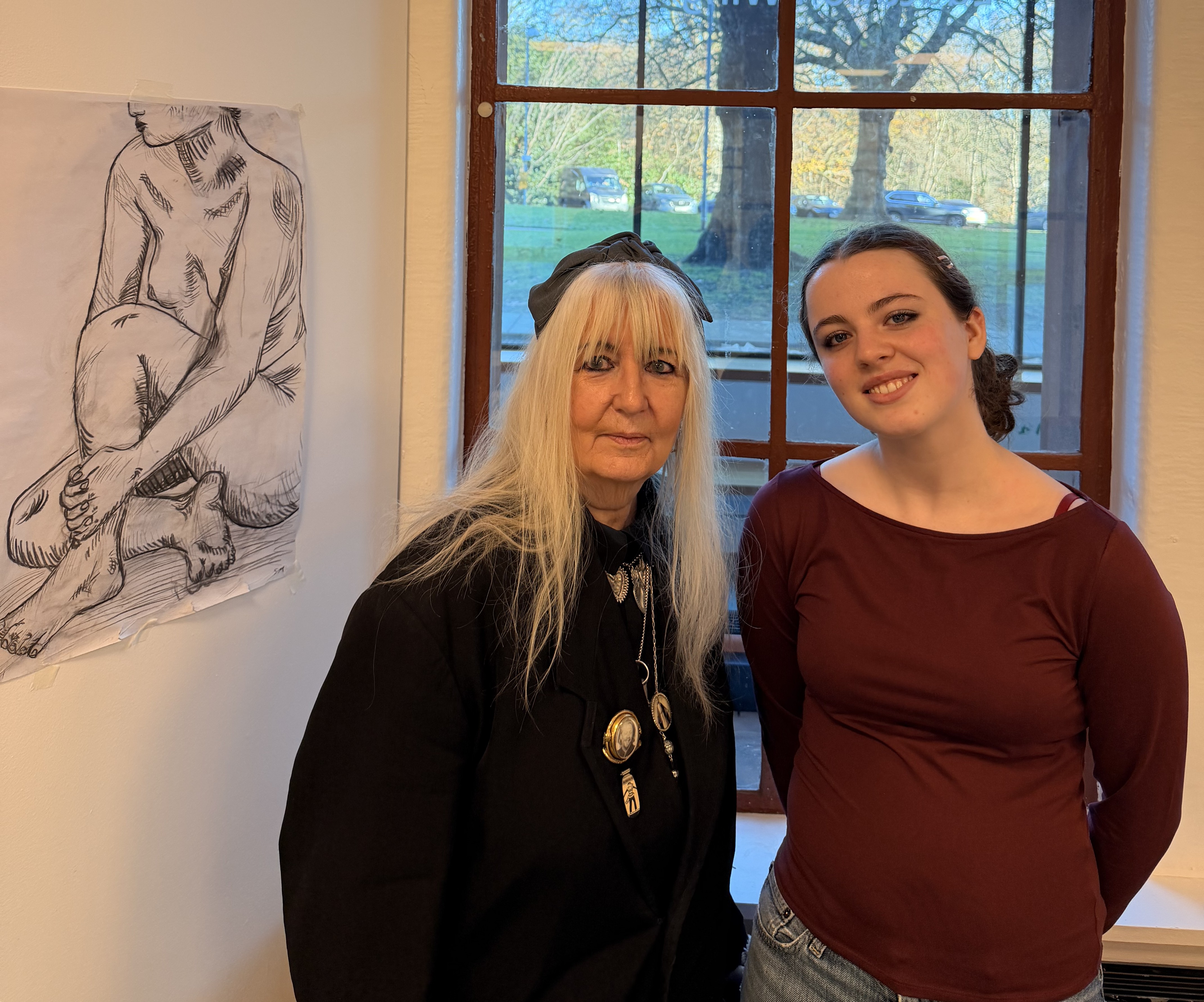
One of the participants also kindly shared her thoughts on what she learnt about Steven Campbell, the techniques explored during the course of the class, and what it was like taking part in a workshop at Kelvingrove Art Gallery and Museum, surrounded by inspiring artworks:
‘I think I became less interested in art, conceptual versus figurative, that kind of thing, and I became more interested in thinking about why things are the way they are…’ [1] – Steven Campbell.
Steven Campbell’s work displays a persistent fascination with illusion and the levels of reality that exist within a painting. By their nature, figurative paintings are flat and static, showing fixed and illusory worlds, the subjects trapped in time, caught in the confines of the canvas. As the writer Duncan MacMillan observes, while Campbell’s characters ‘innocently explore the apparent freedom of the world they inhabit, they run up against its limits, and, unconsciously, burlesque the limitations of the painter’s art and so of life itself.’ [2]
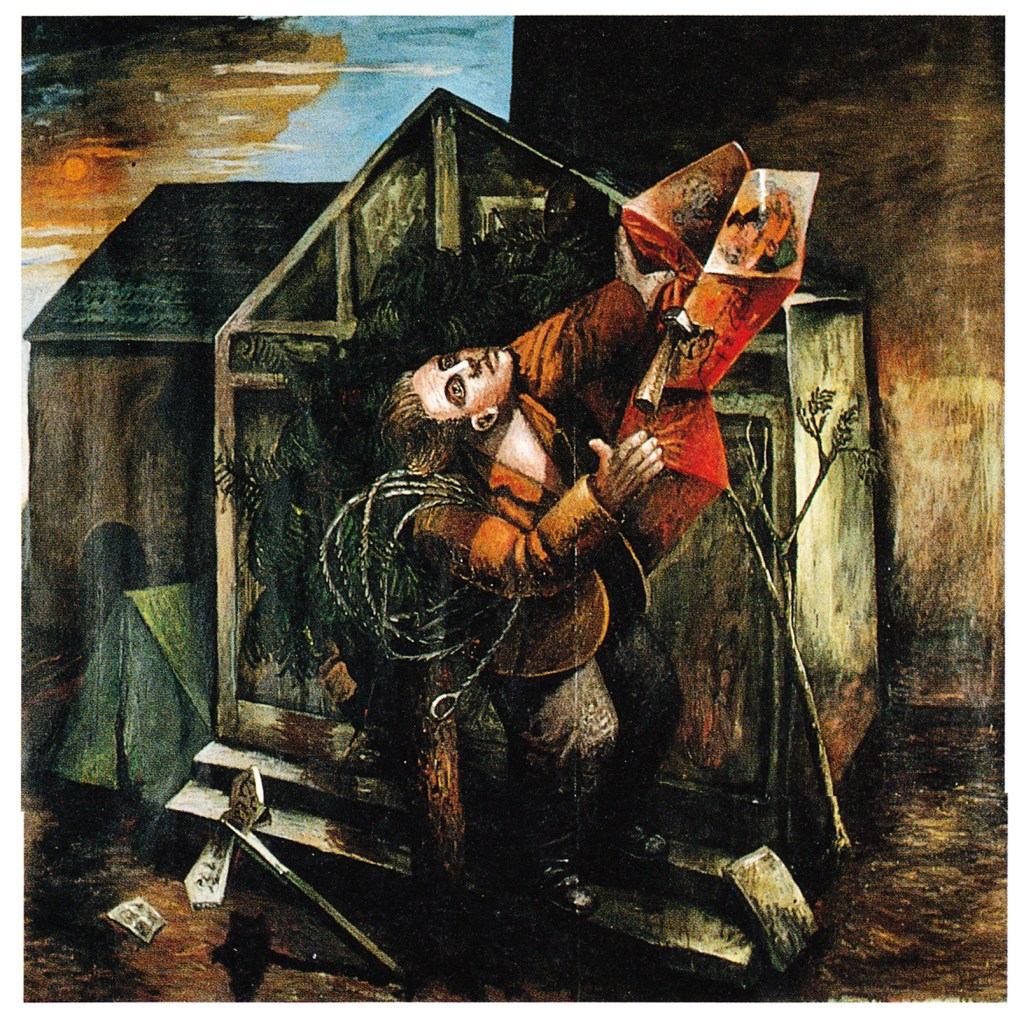
In the above painting, The Man who climbs Maps, we see the character of the Lost Hiker. Like so many of Campbell’s characters, the Hiker has strayed from his path, and in desperation, attempts to climb his map as if it were a cliff face.
Here, Campbell invites the viewer to consider the nature of painted space. In the world of painted narrative, everything is two-dimensional and on the same plane of existence: the flat illustrations on the map essentially no different from the surrounding landscape and the Hiker himself [3]. Confused, the character mistakes the map for the territory as he embarks on his expedition.
Another interesting detail in the above painting is the signpost on the bottom left. Such signposts appear often in Campbell’s work, indicating that the characters are suspended between different places, in a sort of limbo or no-man’s land. They never reach their goal or destination, and are trapped in an illusory world that frustrates them at every turn.
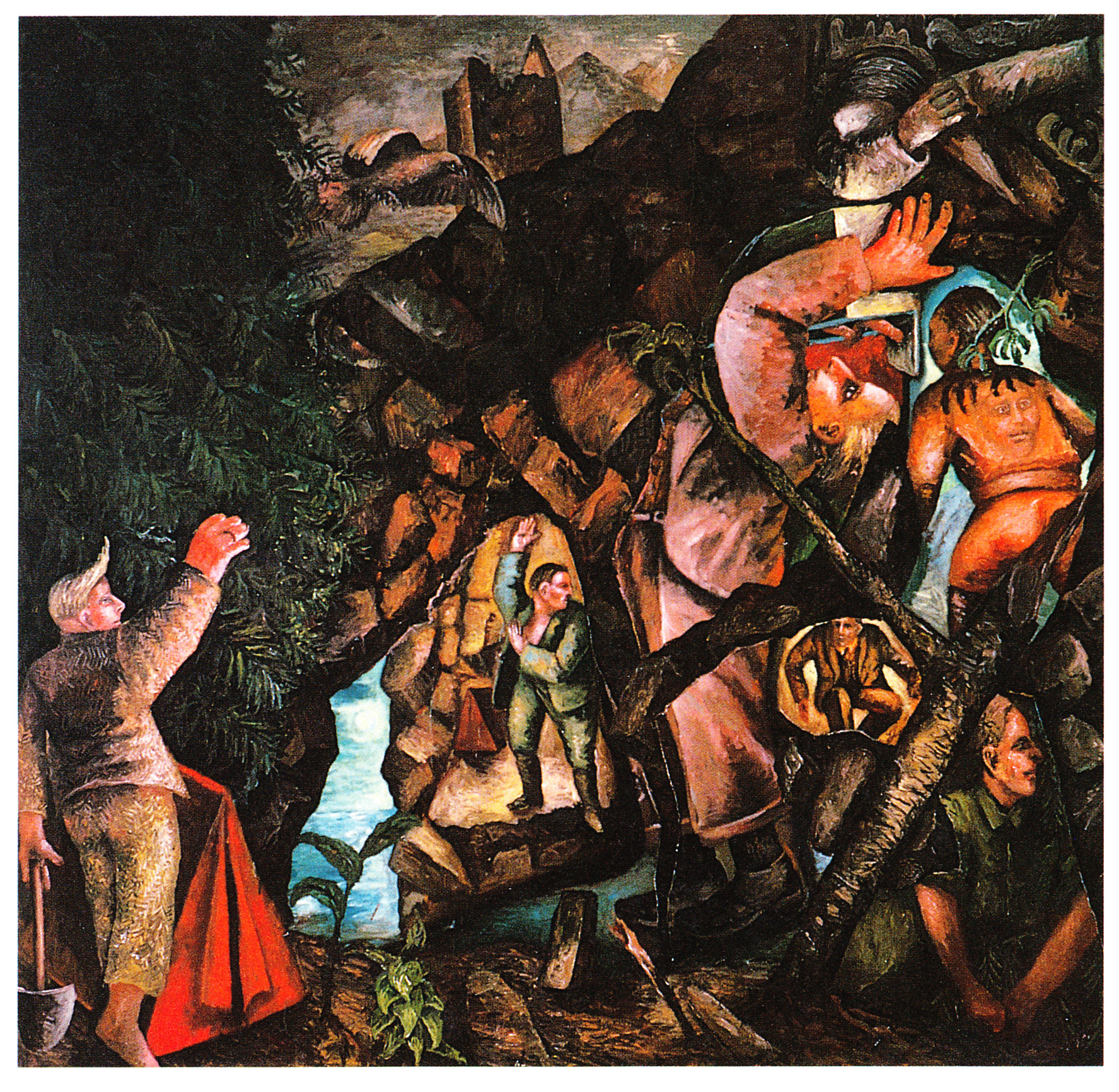
In Young Camper Discovering a Grotto in the ground, Campbell further explores the illusion of painted space. It has seven figures in different scales, and in this crowded painting, we’re not entirely sure who the camper is, and it may in fact be all of them.
The perspective here seems intentionally confusing: we don’t know whether characters are in the background or foreground, and are finally led to conclude that each figure inhabits his own ‘grotto’ of space in the picture-plane. [4] These grottos overlap in a sort of mosaic, confusing the viewer, and apparently confusing the characters themselves. Campbell has taken images that may have made pictorial sense, and then dismantled, restructured and overlapped them, to demonstrate that representational painters deal only in illusion.
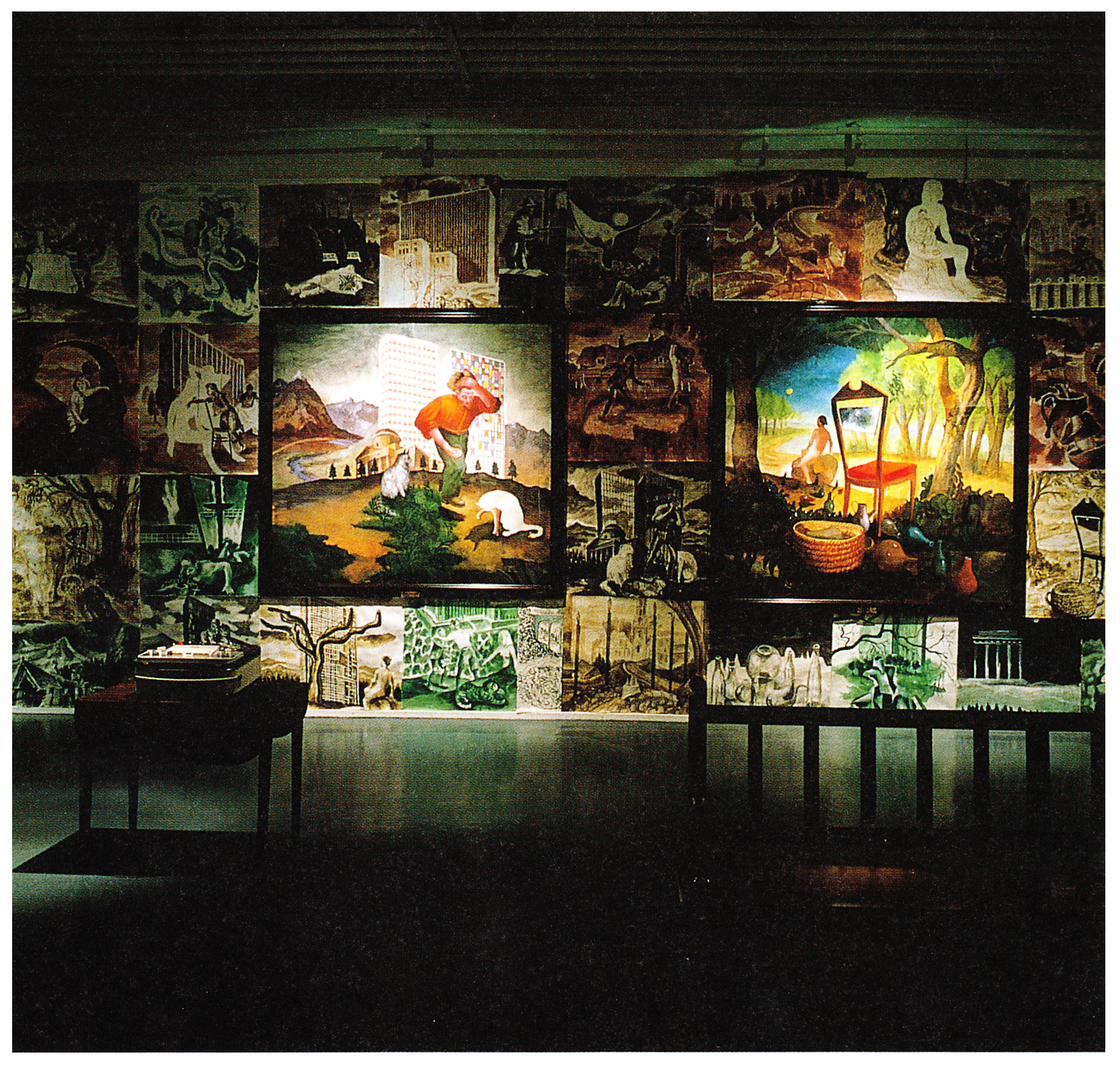
Campbell made this a major theme of his work in an exhibition at the Third Eye Centre in Glasgow (now the Centre for Contemporary Art) in 1990. The show questioned received notions about reality, often in a humorous way.
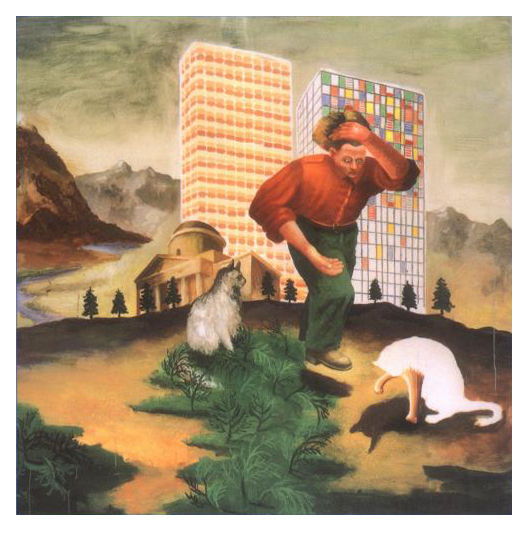
In many of the paintings, certain figures or objects were missing, showing only white canvas in the place that they had once been or were intended to be.
The above painting Not you as well, Snowy, shows a young man returning home to see that his cat has also undergone this horrible metamorphosis, snatched from reality to leave only a white silhouette in its place [5]. Something which, to us, is only a bit of blank canvas in the middle of the picture plane, becomes the shape of this poor character’s missing cat – snatched away into the ether, leaving only his shadow and his paws. In this disturbing yet humorous way, Campbell questions the reality of our own world.
Sources used in this blog post: The Paintings of Steven Campbell: The Story So Far/ by Duncan MacMillan/ Publisher: South London Gallery/ Date Published: 1993 (p.27, 36, 37, 65 & 108). If you’re wanting to find out more about the work of Steven Campbell, we would highly recommend getting this Duncan MacMillan book, which looks at Campbell’s work in a great deal of depth.
Footnotes:
[1] – p.108 / The Artist in Conversation/ Steven Campbell describes his recent paintings in conversation with Duncan Macmillan, Bollochleam, Wednesday 10 March 1993 / The Paintings of Steven Campbell: The Story So Far/ by Duncan MacMillan/ Publisher: South London Gallery/ Date Published: 1993
[2] – p.36 / The Paintings of Steven Campbell: The Story So Far/ by Duncan MacMillan/ Publisher: South London Gallery/ Date Published: 1993
[3] – p.27 / The Paintings of Steven Campbell: The Story So Far/ by Duncan MacMillan/ Publisher: South London Gallery/ Date Published: 1993
[4] – p.37 / The Paintings of Steven Campbell: The Story So Far/ by Duncan MacMillan/ Publisher: South London Gallery/ Date Published: 1993
[5] – p.65 / The Paintings of Steven Campbell: The Story So Far/ by Duncan MacMillan/ Publisher: South London Gallery/ Date Published: 1993

The Steven Campbell Trust are delighted to announce that Ellis Bairstow – our Hunt medal winner for 2025 – has set up an exciting new gallery, project space, and studio in Glasgow for emerging artists, located at B/5 12 Washington Street, Glasgow, United Kingdom G3 8PT.
“Introducing Shift, an art platform for early career creatives and artists to make, develop, and exhibit.
Shift provides exhibition opportunities and studio residencies for artists at the early stages of their careers, supporting them as they push their practice forward.
We’ve created a space that artists can fully transform to suit their vision — a venue that adapts to them, rather than limiting what they can create.
By offering accessible, flexible exhibition space and hands-on support from a team to help you achieve your goals.
Shift aims to remove the barriers that often hold emerging artists back: restrictive venues, inconsistent opportunities, and a lack of dedicated platforms.
Shift is our next step toward making a lasting impact on Glasgow’s contemporary art scene and the voices shaping its future, building a future where artists can develop their practice and careers here in Glasgow.
Shift Gallery opens its program this Friday 21st November at 7pm-9pm with an exhibition by Fin Blue.”

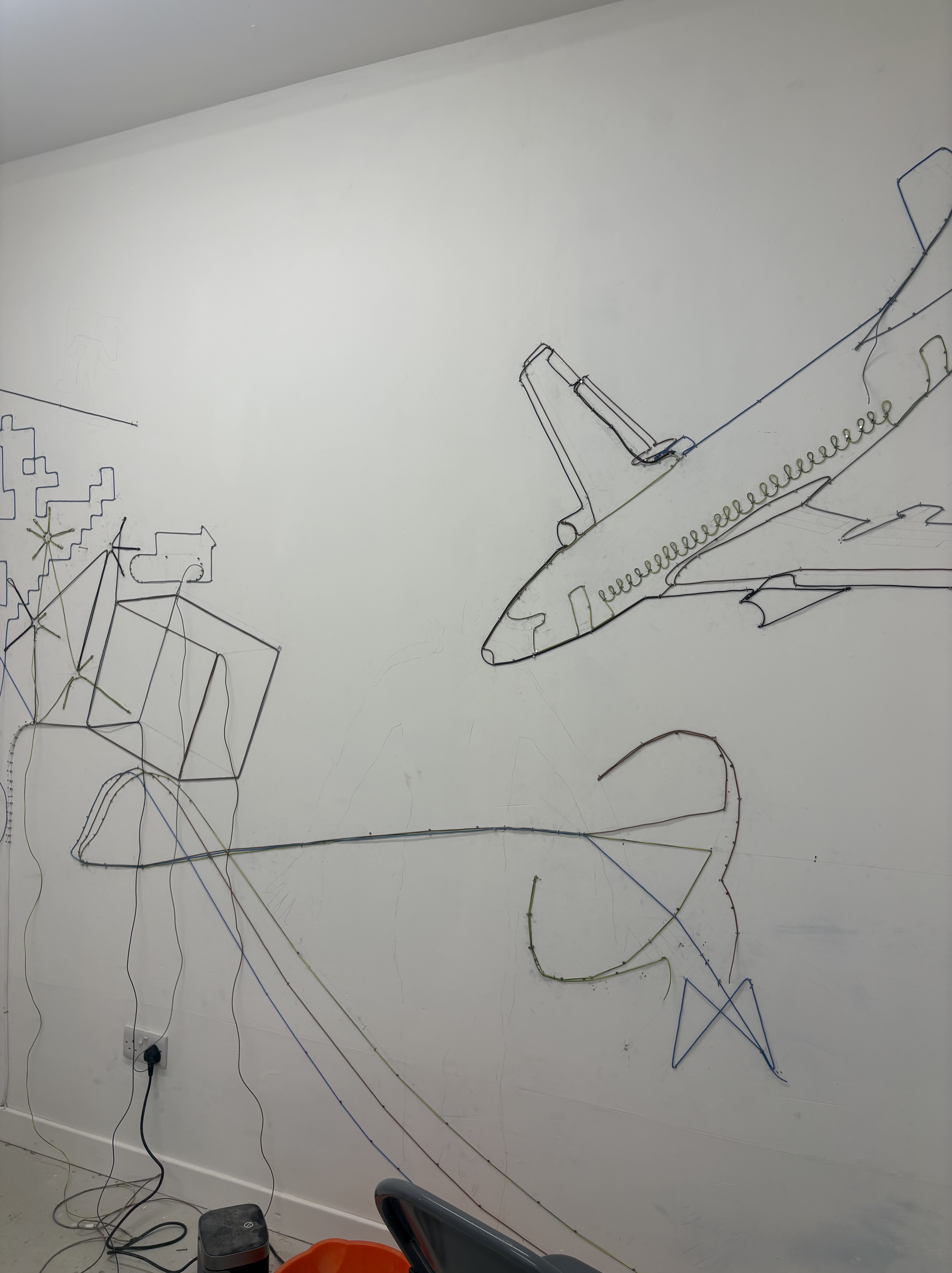
“Fin’s practice moves between digital sources, physical wandering, and the translation of experience into image. Beginning with ideas and locations gathered online, Fin shifts into a slower, more tactile process of walking and composing, considering how what he sees might be flattened, distilled, or reimagined.
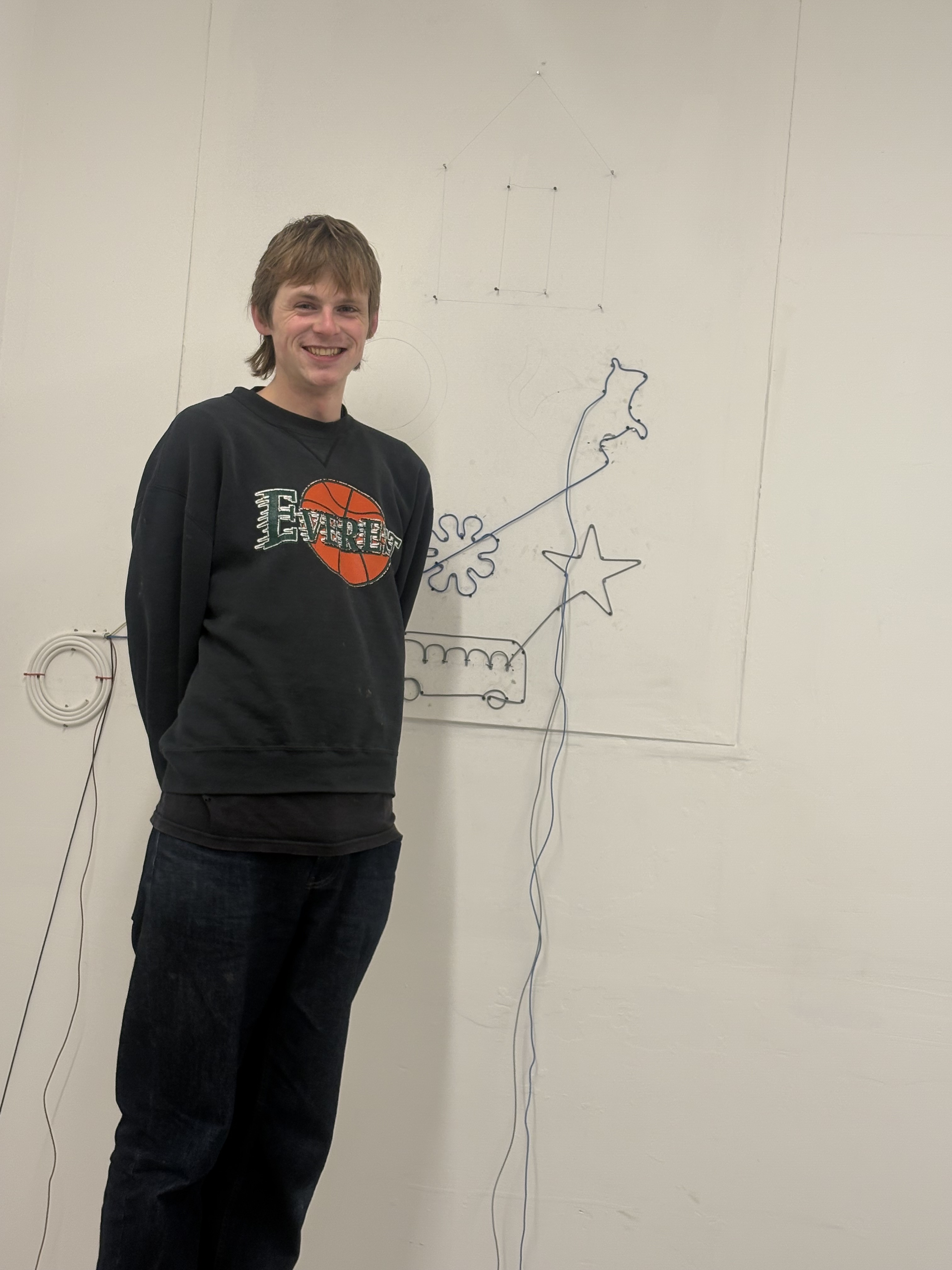
In this body of work, he replaces the camera with what he calls “cable management,” drawing from the linear language of maps, diagrams, and graphs. These structures, designed to clarify information become visual material in their own right. By placing the recognisable tangle of cables in dialogue with the ordered logic of these diagrams, Fin invites viewers to consider how data becomes image, and how the systems surrounding us can be represented within the gallery space.
Follow along @shiftgalleryglasgow for more exciting updates!”
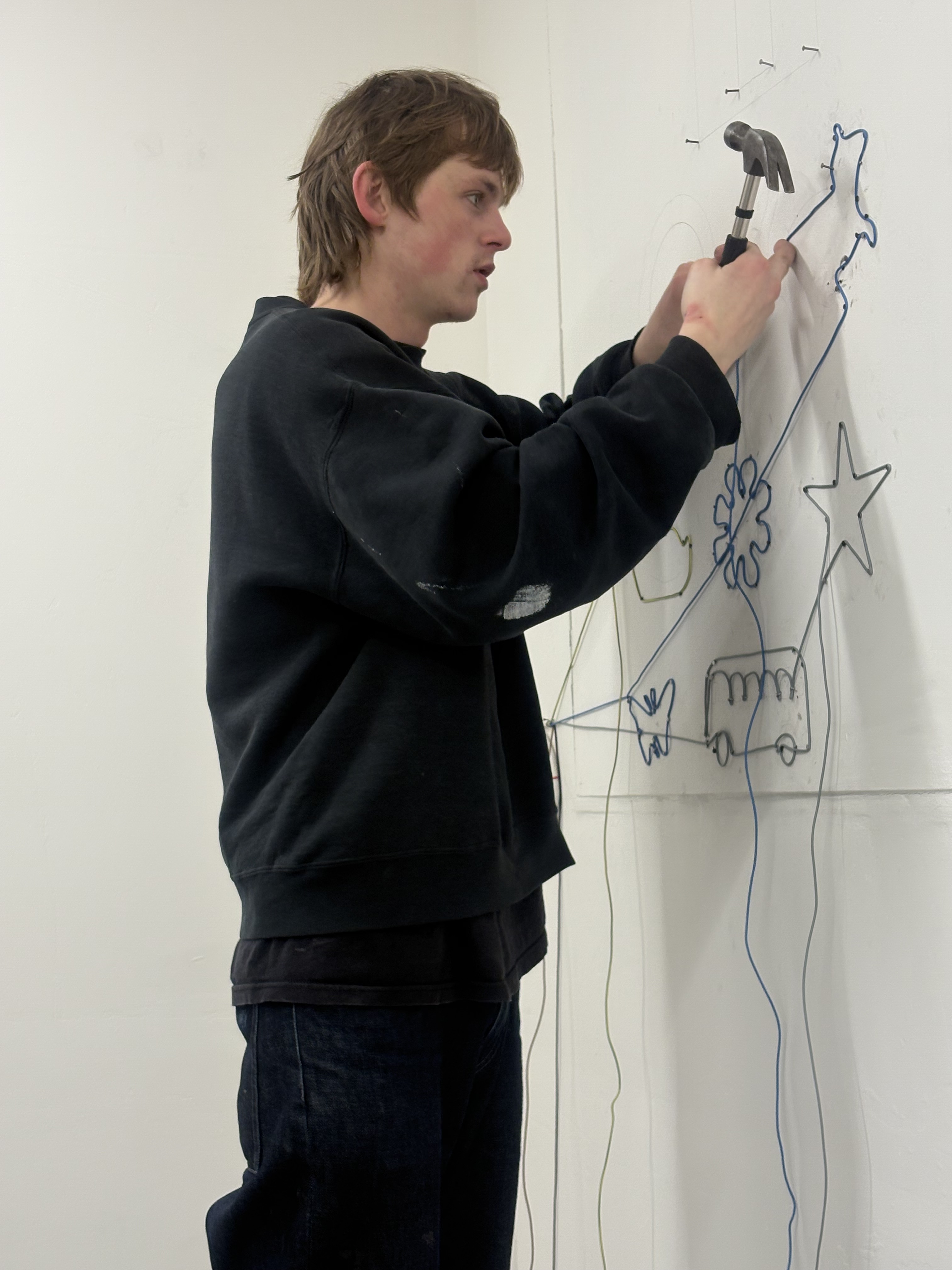
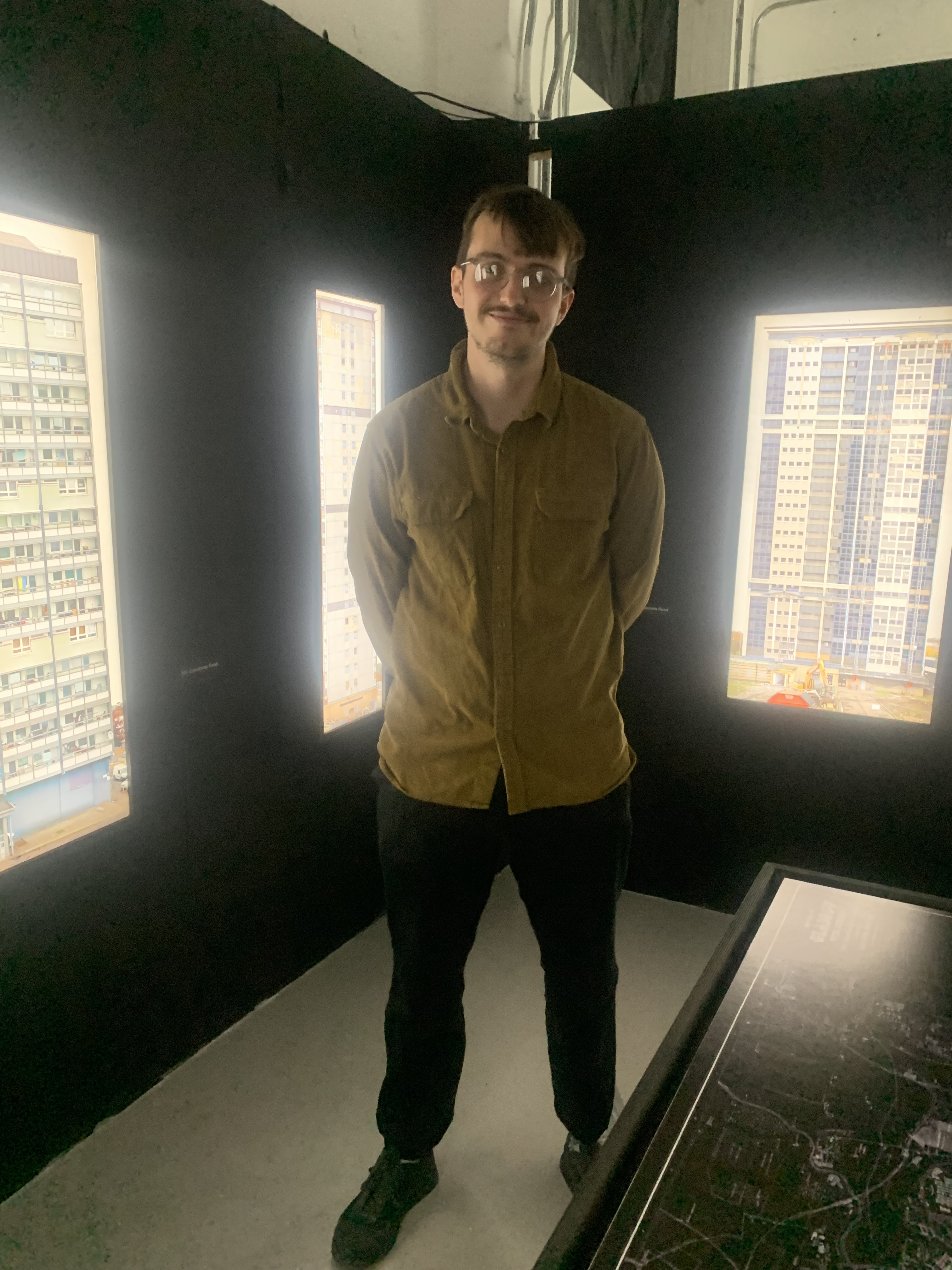
The Steven Campbell Trust were honoured to gain a sneak preview of Cable Management today – and we very much enjoyed meeting Fin as he installed his work in this brilliant new Glasgow exhibition venue.
We at the Steven Campbell Trust wish Fin, Ellis, and everyone else involved in Shift the best of luck with their exciting new venture.
Steven Campbell had a wide knowledge and understanding of the history of art and literature, and he combined this knowledge with a cutting-edge approach to making work. He was interested in the large scale, monumental figure painting of the past, and his work bridges the gulf between what is seen as a traditional way of producing art, to something more knowing and conceptual. Campbell’s use and referencing of traditional figure painting is in fact typical of what we would call a ‘postmodern’ approach, where elements from the past history of art are referenced in a contemporary art work, often in a very self-aware and ironic fashion.
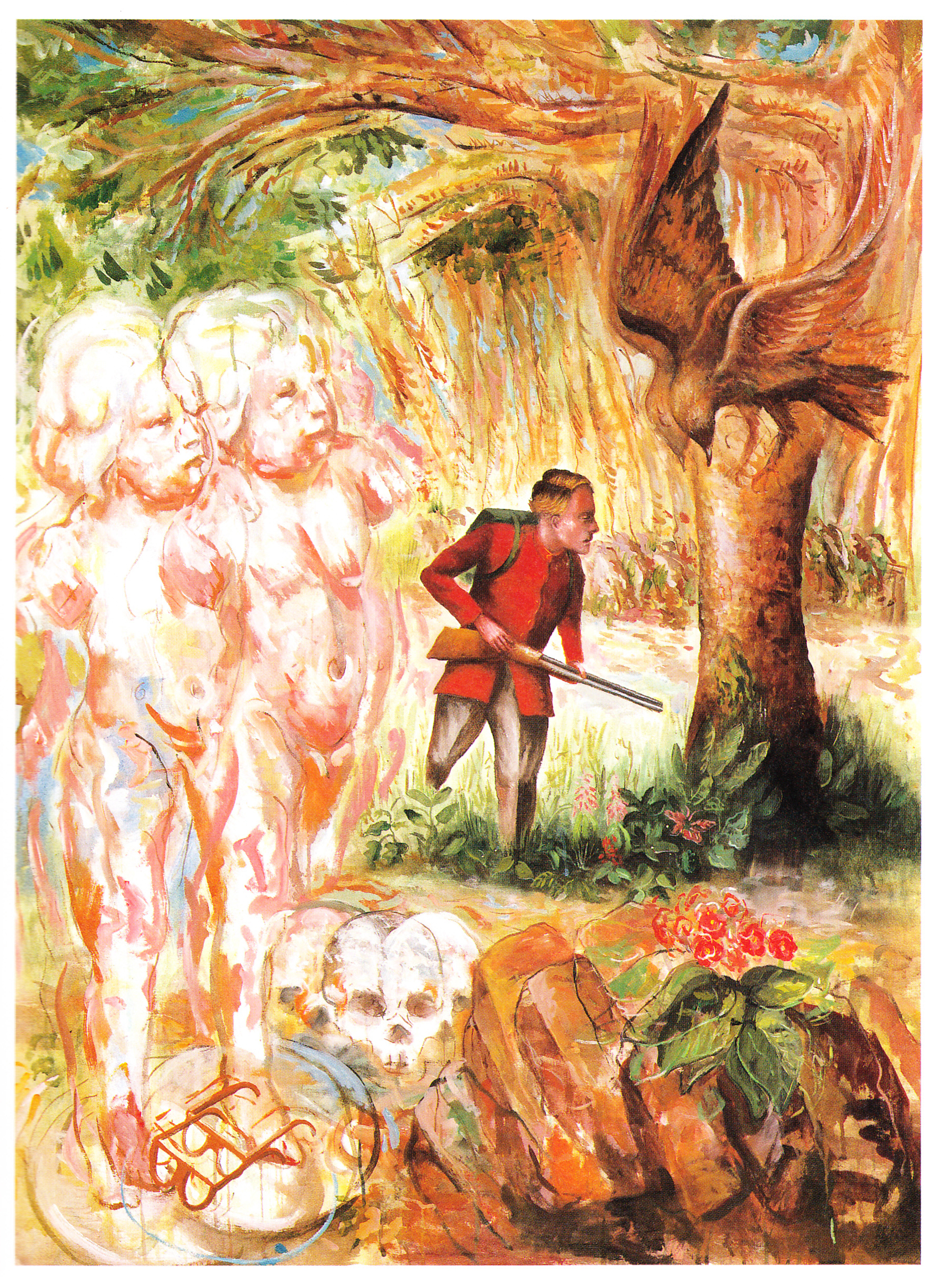
Campbell’s work shows an affection for figurative painting, whilst also acknowledging its often absurd rigidity and pomposity. This can be seen in his piece Hunter Looking for his Glasses (above). In this painting, you can see the character of the hunter: a slightly sinister man with a game bag and a gun who’s stalking his way through the painted landscape. Like the detective in Poised Murder (discussed in a previous blog entry), the hunter character seems to be at a bit of a loss. As the title implies, he’s misplaced his glasses, and so stumbles around with double vision, on a quest to try and rediscover his sight. [1]
In the foreground of the painting is the cupid from Cezanne’s 1908 Still-Life with Cupid, which you can see in its original form below.
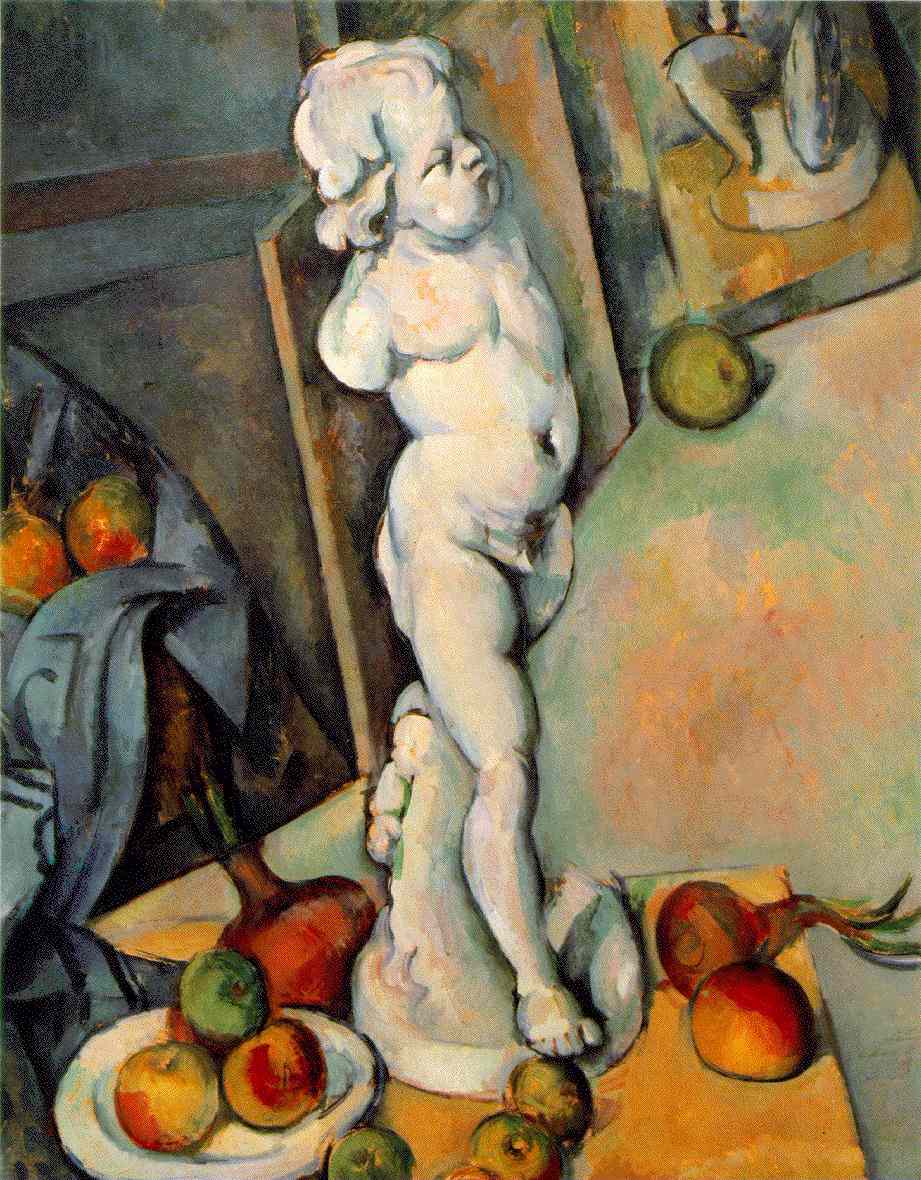
By including this cupid, Campbell’s poking fun at both himself and other artists who attempt to reference the history of ‘great art’ – hunting blindly, like the myopic hunter character here, for some sort of meaning, with the result that they often get lost.
Campbell’s work goes far beyond any debate about contemporary art and representation, however. In an interview, Steven said: ‘I think I became less interested in art, conceptual versus figurative, that kind of thing, and I became more interested in thinking about why things are the way they are.’ [2] In an upcoming post, we aim to discuss this quote, and Steven Campbell’s interest in levels of painted reality.
Footnotes:
[1] – p.16 & 59 / The Paintings of Steven Campbell: The Story So Far/ by Duncan MacMillan/ Publisher: South London Gallery/ Date Published: 1993
[2] p.108 – The Artist in Conversation/ Steven Campbell describes his recent paintings in conversation with Duncan Macmillan, Bollochleam, Wednesday 10 March 1993 / The Paintings of Steven Campbell: The Story So Far/ by Duncan MacMillan/ Publisher: South London Gallery/ Date Published: 1993
A major source used in this blog post was The Paintings of Steven Campbell: The Story So Far/ by Duncan MacMillan/ Publisher: South London Gallery/ Date Published: 1993 (p.12, 16, 59, & 108). If you’re wanting to find out more about the work of Steven Campbell, we would highly recommend getting this Duncan MacMillan book, which looks at Campbell’s work in a great deal of depth.

Campbell (1953-2007) was a prolific painter ‘who placed performance and symbolism at the heart of everything he created’ [1], and whose imaginative work enhanced the reputation of Scottish art and culture on the international stage. He was interested in the ‘fictional structures of art’ [2], and was inspired by a wide range of things: from historical events and eras, to performance, literature, film and poetry – and he used the painted figure as a means to express his curiosity about all of this.
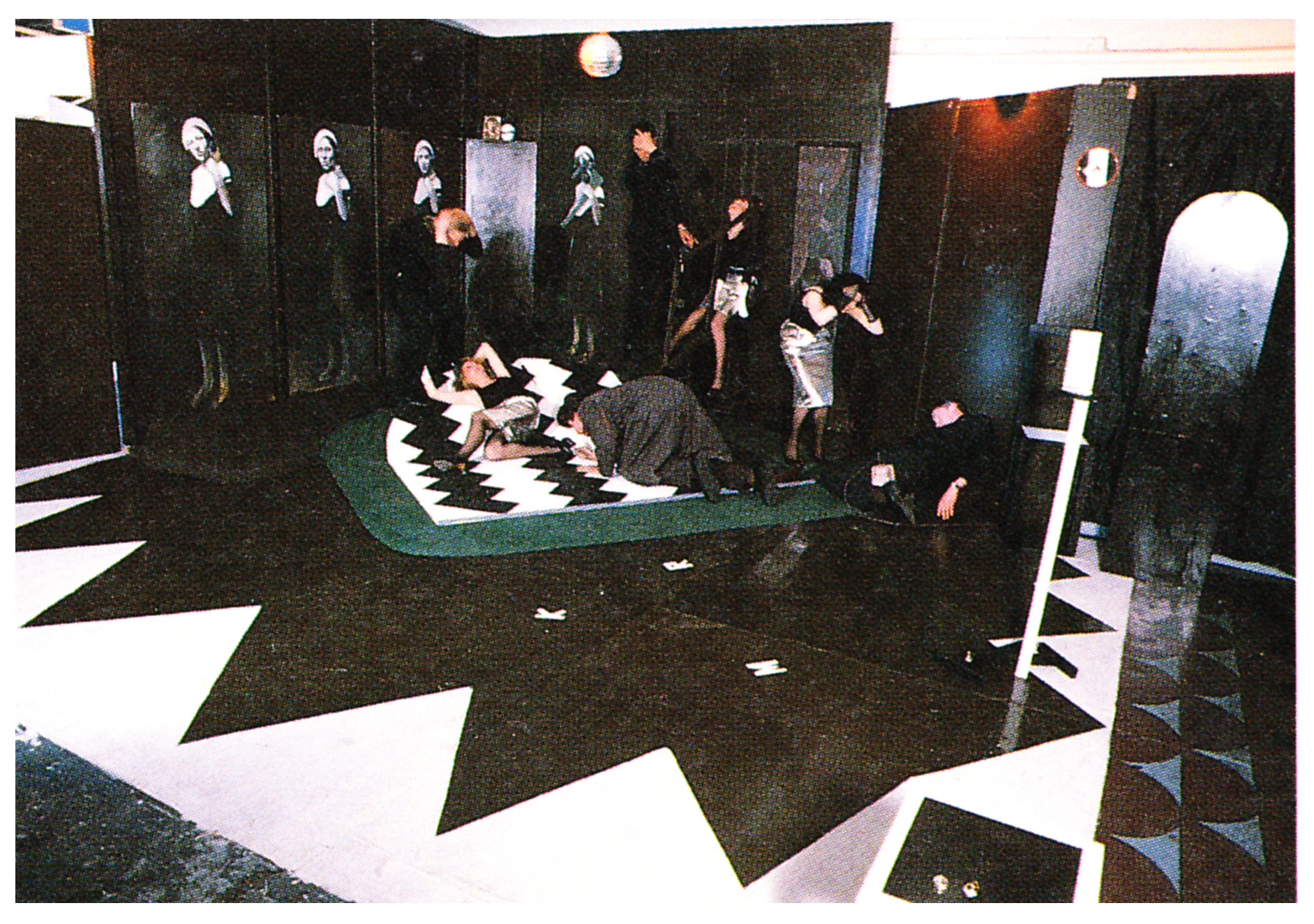
Since his time at the Glasgow School of Art, Campbell was deeply fascinated by the figure. One of the first ways he approached this, was through performance. Above is a photograph taken in 1981 of a performance called Poised Murder, in which Campbell created an artificial and stylized environment, based on the glamorous aesthetic of black and white Hollywood movies in the nineteen thirties and forties [3]. The actors in the performance dressed in clothes of this era: the men wearing black polo necks, medallions and Brylcreem in their hair; the women in silver skirts, fishnet tights and high heels.
The performance lasted 15 minutes, and the actors adopted murderous poses in time with music. In the middle of the scene, a detective crawled around on all fours, trying to solve the murders as they were taking place. You can see here that Campbell was interested in fiction, in theatrical actions and gestures – in danger and murder – and in creating characters that attempted to solve, often completely unsolvable, mysteries.
This interest in performance and theatricality continued on into Campbell’s paintings: his work becoming a stage where characters could inhabit an unreal world of painted scenery. As in his ‘Poised Murder’ performance, the figures that populate Campbell’s paintings adopt exaggerate poses, fixed in the centre of compositions that have their own mysterious, bizarre and self-contained narratives.
The detective crawling around on all fours in Poised Murder, transformed into other characters that he would use in his paintings: characters that are detectives, hikers, hunters and travellers, and are comparable to artists in the sense that they’re always searching or hunting for something, attempting to discover and unravel some sort of truth. Campbell liked to explore the role of the artist as detective, but like the detective in Poised Murder – crawling pointlessly around searching for clues and uncovering nothing while murders take place all around him – Campbell was very much aware of the often ridiculous, comedic and futile nature of such a grand search for truth. The predicaments his characters find themselves in in his work, reflects this.

During his final year at the Glasgow School of Art, Campbell created a character called ‘Hunt’, inspired by a 1940s-style murder magazine [4]. Hunt is a very shady, ambiguous character, whose personality seems to be in a constant state of flux. The painting Third Fire Today shows Hunt standing on the edge of looting and violence, and we’re unsure whether he’s been participating or not. He’s dressed in a brown shirt – the uniform of a Nazi foot soldier. He’s also got a Hitler-style haircut, and we’re unsure what terrible crimes he may or may not have committed.
Hunt, as a character, seems to represent the temptation of evil. The writer Duncan Macmillan describes him as a sort of Doppelganger, ‘a personification of the hidden dark side that exists in all of us’ [5]. Hunt isn’t entirely evil, however, and he’s not a straightforward villain: he’s just a very impressionable character who gets drawn into bad things. In this sense, this makes him far easier to relate to. Hunt makes us consider what we’d be capable of in certain circumstances, and the potential for wrongdoing that exists in all of us.
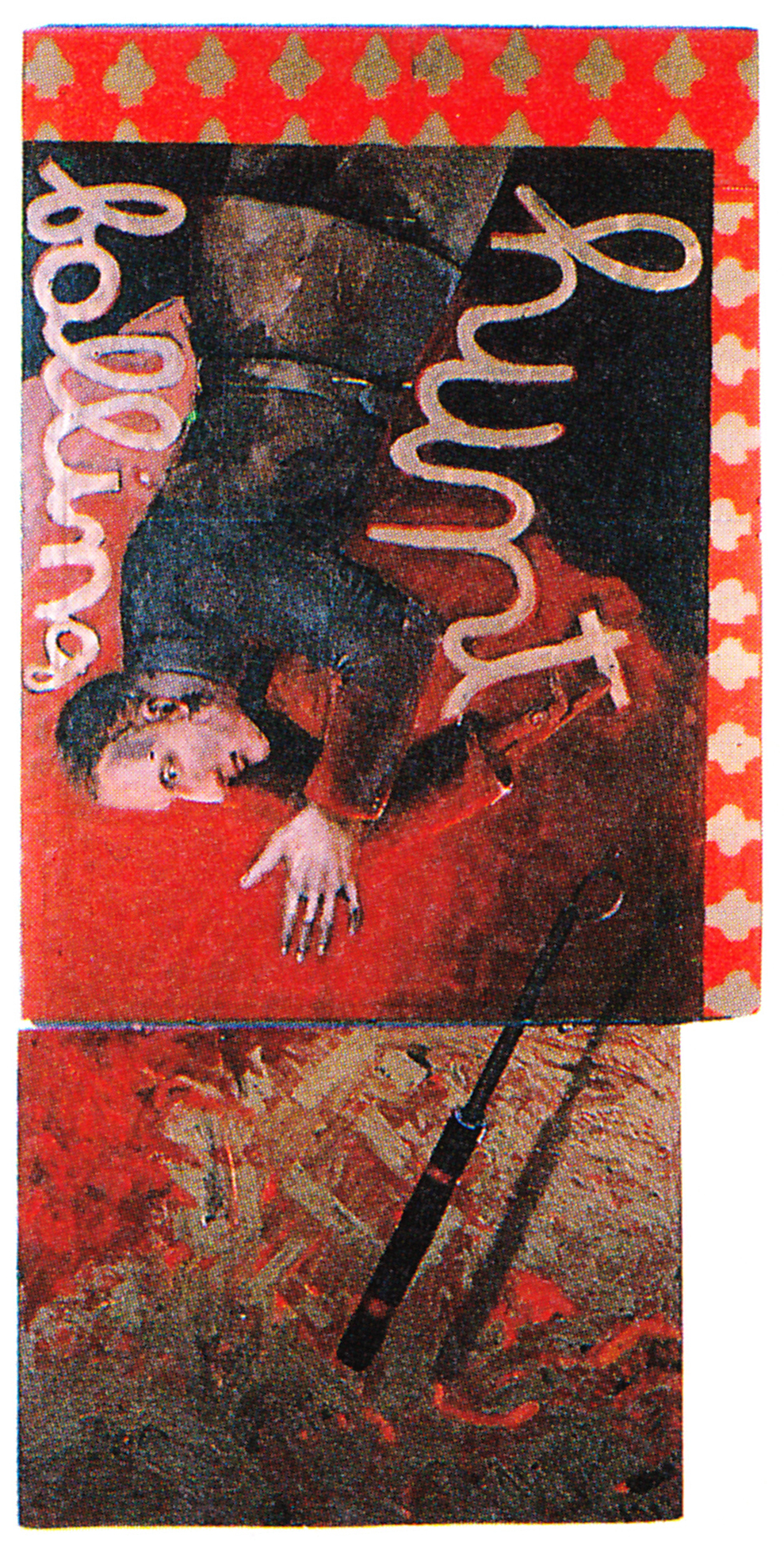
The above painting is called Hunt Falling. Falling is an in between state: you’re neither up nor down – and in a sense Hunt is always suspended like this, between good and evil. According to Campbell, Hunt got drawn into Nazi-ism because he was misguided, and his ‘Fall’ is his moral despair when he realizes, too late, his mistake.
Campbell was interested in this ‘in-between’ state in all of us, in our constant crisis of identity, and liked to explore the idea that art itself is a sort of in-between state: a state of flux between ourselves and our own interpretation of the world around us; and falling is like inspiration, stumbling forward into the unknown.
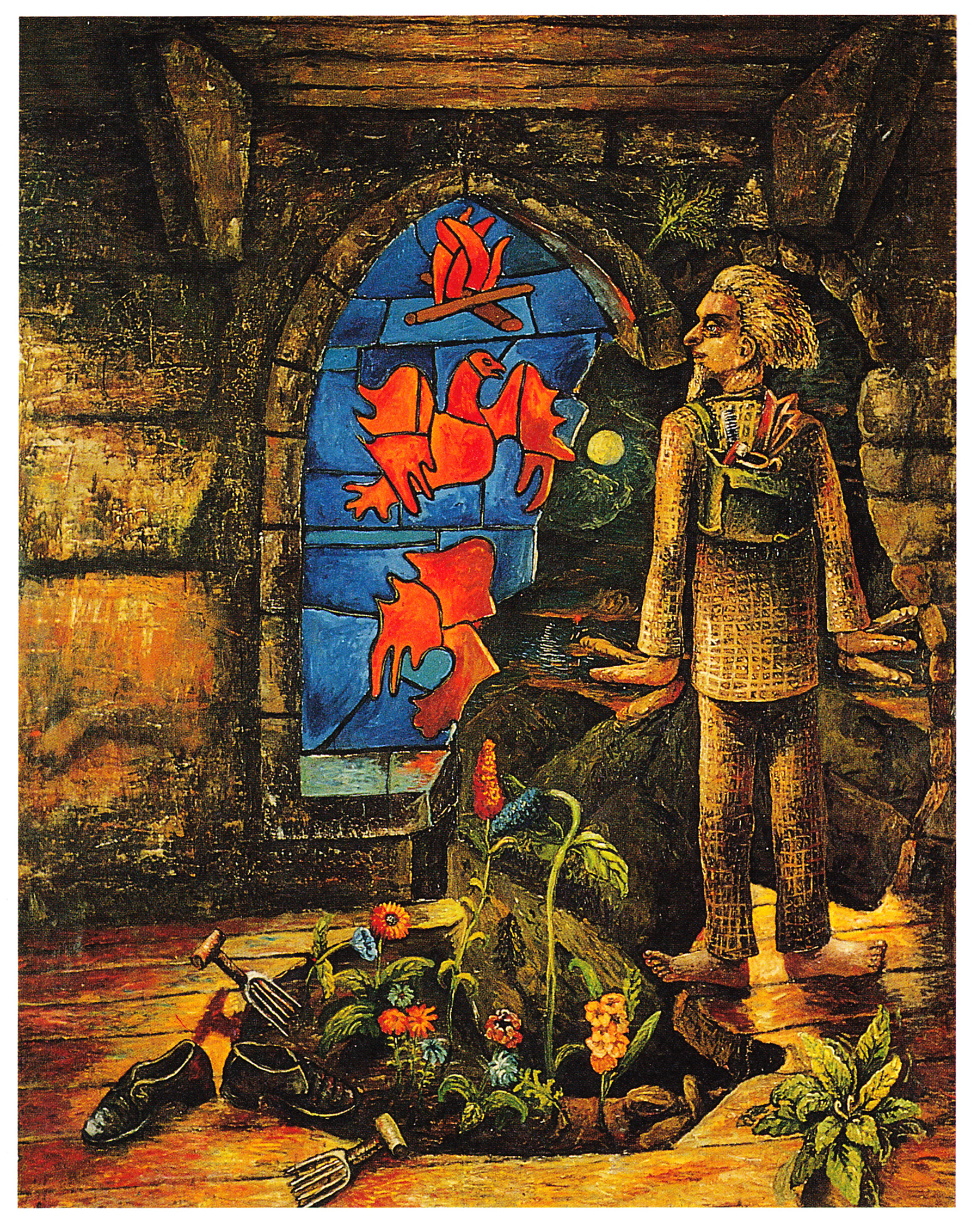
Hunt then transformed into various other characters in Campbell’s later work. When he left art school, Campbell’s paintings began to feature Abraham Van Helsing, from Bram Stoker’s Dracula.
The above painting shows Van Helsing inhabiting a dark, gothic crypt with a stained-glass window behind him, and like Hunt, we’re not entirely sure what Van Helsing’s intentions are. He’s suspended somewhere between the darkness of the crypt, and the light of the window, and though there are flowers sprouting from the ground, we know a corpse might be buried beneath them. As the writer Duncan MacMillan says in his book on Campbell, Van Helsing’s engaged in the pursuit of the strange and bizarre, attempting to pin it down with a stake through its heart [6], just like an artist trying to discover the illusive goals of painting. Van Helsing haunts dark places, and like many artists, is obsessed with the ‘Undead’ – or, to put it another way – the history of ‘great’ painting.
The Trust hopes you’ve enjoyed finding out a little more about the intriguing cast of characters that inhabit Steven Campbell’s paintings, which we’ll be exploring further in future posts.
Footnotes:
[1] -The Herald/ Published Date: 16th November 2019
Jan Patience, ‘Artist aims to stretch our understanding of the human body’
[2] – p.13/ The Paintings of Steven Campbell: The Story So Far/ by Duncan MacMillan/ Publisher: South London Gallery/ Date Published: 1993
[3] – p.12/ The Paintings of Steven Campbell: The Story So Far/ by Duncan MacMillan/ Publisher: South London Gallery/ Date Published: 1993
[4] – p.13/ The Paintings of Steven Campbell: The Story So Far/ by Duncan MacMillan/ Publisher: South London Gallery/ Date Published: 1993
[5] – p.14 / The Paintings of Steven Campbell: The Story So Far/ by Duncan MacMillan/ Publisher: South London Gallery/ Date Published: 1993
[6] – p.16 / The Paintings of Steven Campbell: The Story So Far/ by Duncan MacMillan/ Publisher: South London Gallery/ Date Published: 1993
A major source used in this blog post was The Paintings of Steven Campbell: The Story So Far/ by Duncan MacMillan/ Publisher: South London Gallery/ Date Published: 1993 (p.12-16). If you’re wanting to find out more about the work of Steven Campbell, we would highly recommend getting this Duncan MacMillan book, which looks at Campbell’s work in a great deal of depth.
Steven in studio, 1980’s.
Photo credit: Greer Campbell

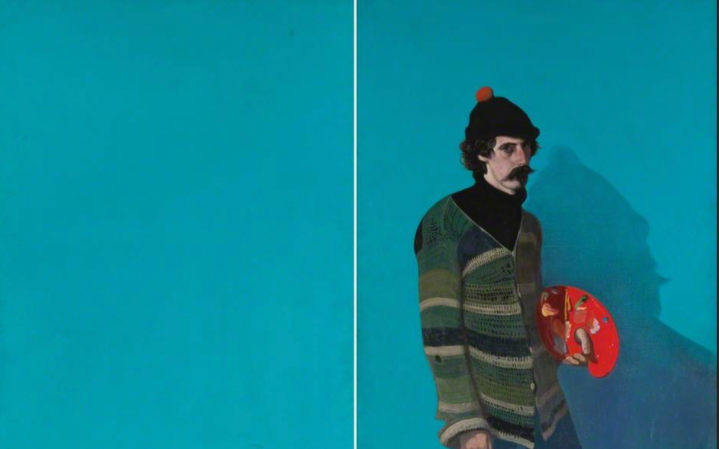
The Steven Campbell Trust has been deeply saddened to learn of the passing of John Byrne. John was a hugely talented and celebrated artist and friend, who we were privileged to have as a Patron of the Trust.
A remarkable man of many talents, we’ve been privileged to know and work with him for over 20 years.
Steven greatly admired John’s work and was delighted to collaborate with him. In 2005 Steven met and became friends with John and they worked on portraits of each other.
John’s life-sized painting depicts Steven as a looming solitary figure in black, seated and holding a palette and brushes. Steven’s portrait of John, Paisleycus Byrnicus Virus Invading Mr Gray, sees John at the centre of a rich Paisley pattern work, which makes reference to John’s birthplace. Both paintings are in the collection of Paisley Museum.
Our thoughts and love are with Jeanine & all who loved this wonderful man. His loss will be deeply felt by all.
The Steven Campbell Trust.
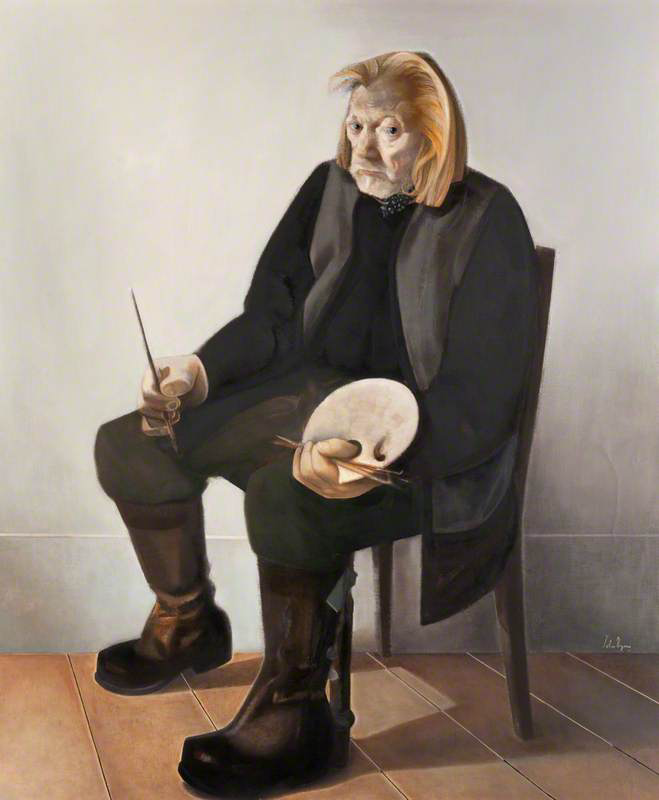
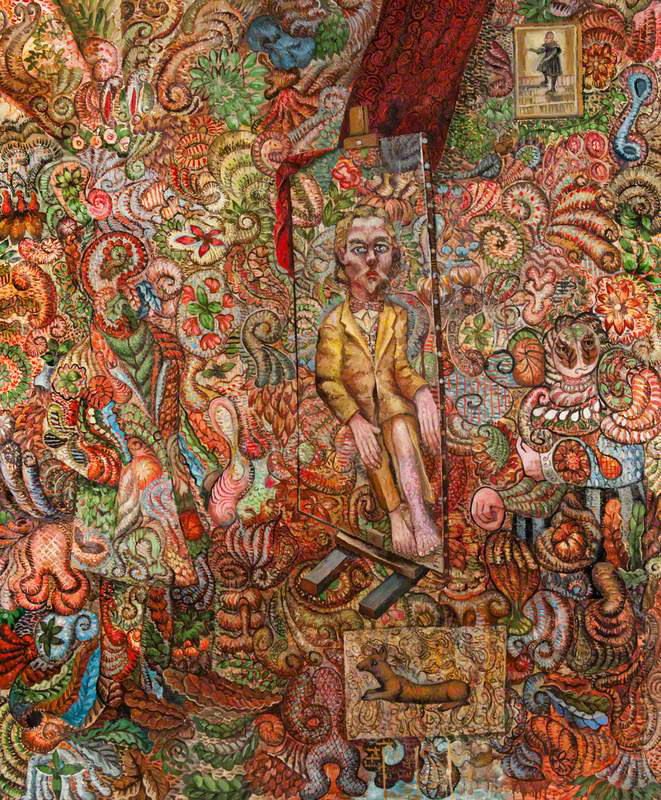
https://artuk.org/discover/artworks/waiting-paisleycus-byrnicus-virus-invading-mr-gray-189935
Photo credit: Paisley Museum and Art Galleries, Renfrewshire Council Collections
Featured image, Self Portrait with Red Palette. © John Byrne. All Rights Reserved, DACS 2023. Photo credit: Glasgow Life Museums
Dressing Above Your Station
31 March – 26 June 2022
Dressing Above Your Station is a virtual exhibition conceived and curated by Beca Lipscombe and Mairi MacKenzie. It is produced by Panel and developed in partnership with ISODESIGN and Rob Kennedy.
Dressing Above Your Station is generously funded by Creative Scotland and Glasgow Life, the charity that delivers culture and sport in the city. It is supported by ISODESIGN and The Glasgow School of Art and presented by Tramway, part of Glasgow Life.
https://www.wearepanel.co.uk/projects/dressing-above-your-station
November: 1992 Acrylic on Paper 178×149.2 cm
Pinocchio, The Habit of the Shrike
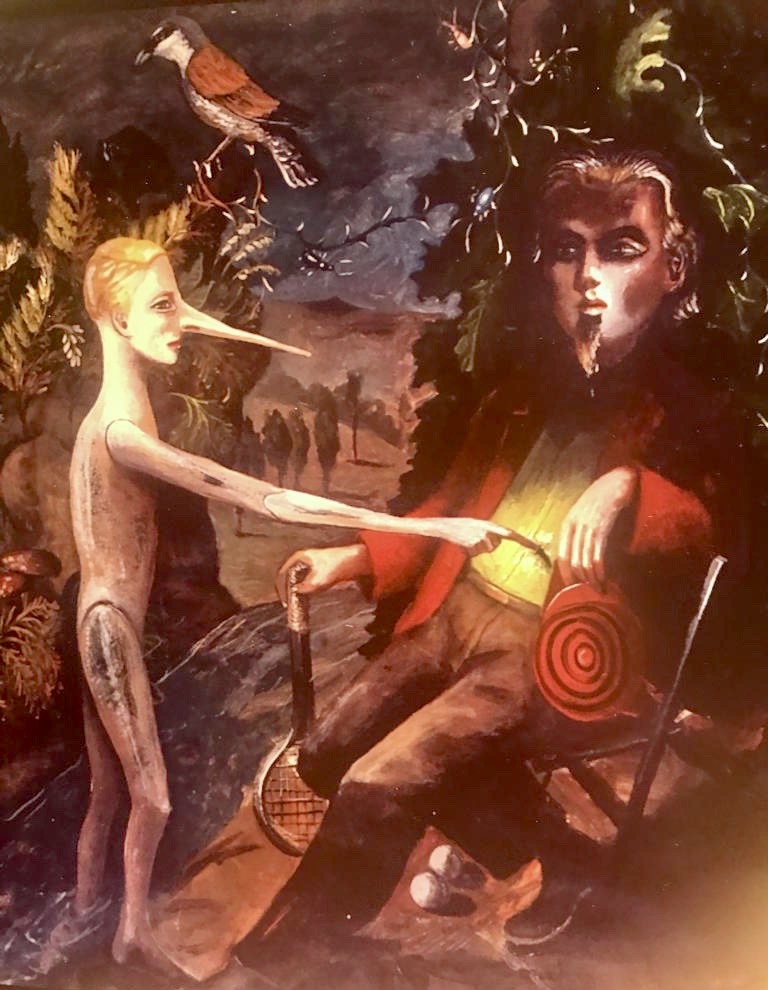
The following extract is from the Catalogue essay by Michael Bracewell that accompanied Steven’s 2017 exhibition at Marlborough London.
‘For so often the young men in Campbell’s paintings, absorbed, swept along or subjugated by weird scenes, reminiscent of fairy tale or myth, but then skewed into absurdity, seem despite themselves to be (and are sometimes confirmed to be, in the titles of the pictures) seekers-after-truth, of one sort or another. They might be poets, amateur philosophers, witness participants in a dysfunctional’Pilgrims Progress’ – or perhaps just observers of these pursuits: chance bystanders, local boys, who had somehow become amnesiac victims, or protagonists in some cosmic game of ‘Cluedo’.
Murder mystery becomes art mystery, becomes “the myth of themselves” that Hynes identifies in his definition of the ‘charade’. Pinocchio, the Habit of the Shrike (1990) depicts a dark landscape with fir trees, a stream, toadstools at the foot of some rocks; and a figure that resembles Campbell himself, his face and upper body in semi shadow, casually yet ritualistically seated on a folded chair, his right hand resting on the handle of an upended tennis racket. A handsomely feathered shrike ( a bird that impales insects and small vertebrates on thorns or spikes, in order to tear them into more manageable pieces) perched on a briar. Meanwhile a gold haired Pinocchio figure, painted limbs scuffed and worn, his ‘liar’s’ nose obscenely and viciously extended to a sharp point, reaches out his long right arm, and impales the seated figure’s stomach with his thin, pointed finger.’ – Michael Bracewell
Steven has revisited his depiction of Lytton Strachey complete with cricket cap only this time he puts himself, as artist, into the central role.
He has created the Pinocchio wooden boy who is resentful at the artists lack of ability to transform him completely into a physical reality.
December: A4 size drawing
Ink on paper from a series of drawings and prints Steven did based on a merging of the life of St Francis of Assisi with the legend of the Apprentice pillar at Rosslyn Chapel.
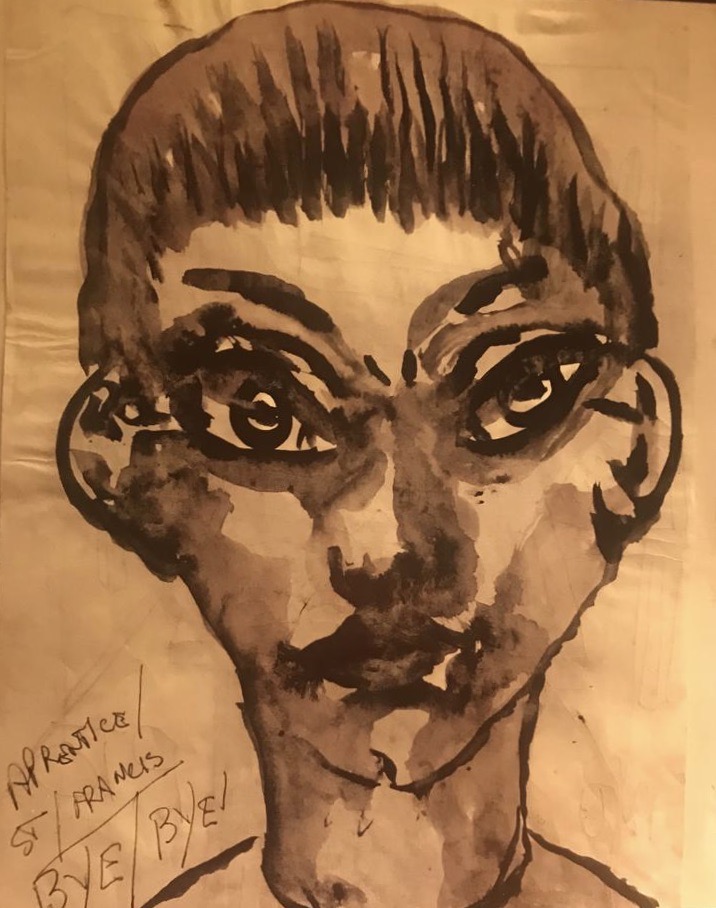
Steven was not particularly religious but he was extremely spiritual and dearly loved St Francis and everything he represented.
We would make annual pilgrimages to the Church in Assisi which houses the amazing Giotto frescoes of the life of the Saint. I remember he even volunteered to travel out to help in the aftermath of the earthquake that caused such damage to the town and the church.
He also brought along a young Franciscan friar to talk at the creative arts project (9 V) that he had set up to encourage the teenagers of the 9 rural villages around Stirling to get involved in various cultural activities from life drawing to script writing, film directing, music etc. It still resonates today with the young people who attended it all those years ago. Several of whom went on to careers in the arts.
Carol Campell
December 2021
 The Steven Campbell Trust